
In the complex world of vehicle ownership, understanding title transfers, registrations, and associated services is crucial for private car owners, small business fleet operators, car dealerships, and auto repair shops. A&G Auto Title Services and More, situated in Austin, Texas, offers an array of specialized services designed to navigate the nuances of vehicle transactions. With a focus on making the bureaucratic process more manageable, this article will delve into various capabilities of A&G Auto Title Services and More, including vehicle title transfers and registrations, notary and translation services, customer support experience, and a thorough understanding of legal compliance.
A&G Auto Title Services and More: Streamlining Texas Vehicle Title Transfers and Registrations for Everyday Ownership
Across the bustling landscape of Austin, Texas, a quiet lane of administrative clarity unfolds for anyone navigating the maze of vehicle ownership. A&G Auto Title Services and More sits at 1710 Montopolis Drive, Building C, a practical waypoint for customers who want to move from paperwork to ownership with confidence. The hours—Monday through Friday from 10:00 am to 6:30 pm—frame a theater of careful steps rather than a rushed sprint. In this context, the chapter moves beyond the surface of service descriptions to reveal how a local expert becomes an indispensable partner in the most ordinary and the most extraordinary vehicle transactions alike. The act of transferring a title or registering a vehicle is rarely exciting in itself, yet it is foundational to the freedom and responsibility that come with car ownership. Texas law, with its own rhythm and cadence, demands accuracy, timely filings, and a clear trail between seller, buyer, and the state. A&G Auto Title Services and More embodies a practical ethos: demystify the forms, align them to state requirements, and remove the friction that can stall an otherwise straightforward purchase or sale. This is not merely about stamping papers; it is about safeguarding ownership, ensuring legality, and preserving the certainty every driver deserves when they sign for a vehicle that will carry them through daily routines, weekend adventures, and occasional emergencies.
To understand why such services matter, one must appreciate the texture of title transfers and registrations in Texas. A title transfer is the formal change of ownership that follows a sale, a transfer within families, or the completion of a lien payoff. It is a legal instrument that records who owns the vehicle and under what conditions. Registrations, meanwhile, tie the vehicle to the person and the place where it will be operated. They link the state’s road-use system to the vehicle’s status, ensuring that the car remains in good standing to drive, be insured, and be inspected as required. When these processes go smoothly, the road ahead is straightforward. When they falter, a calendar of deadlines, required documents, and potential fees can loom like a traffic jam that drains time, money, and calm.
In such moments, A&G Auto Title Services and More becomes more than a storefront for forms. It becomes a navigator. The business specializes in guiding clients through the specific requirements of Texas Department of Motor Vehicles (TxDMV) processes, translating bureaucratic language into concrete steps. They handle title transfers for both private party sales and dealer transactions, a distinction that matters because the paperwork accompanying a dealer sale can differ from that of a private sale. They also manage vehicle registrations, a task that ensures that a car remains legally operable on Texas roads. Notary public functions are part of the repertoire, a reassurance that signatures and seals are authenticated with the gravity that legal processes deserve. And when language barriers or even the nuances of insurance complicate matters, the staff can offer translation support and insurance coordination assistance. Taken together, these services present a holistic, human-centered approach to what can feel like a cold, impersonal bureaucracy.
To frame the client experience, consider a family preparing to move a car into a new phase of ownership after a driveway sale. The seller brings the signed title, the buyer provides proof of identity and residency, and the vehicle’s current lien—if any—needs to be addressed. The forms must reflect the precise VIN, odometer reading, and the correct purchase price or trade-in value. If the car is financed, a lien release or payoff statement must be obtained and recorded. If the vehicle is new to the owner, the registration must be transferred along with the title. Each step has deadlines, and each deadline has consequences: late filings can trigger penalties, delays in registration can suspend the ability to legally drive, and misreported information can require resubmission, wasting time and money.
In this delicate choreography, the staff at A&G Auto Title Services and More stays in step with the rulebook so clients do not have to. The process becomes predictable rather than perilous. Rather than individuals wrestling with complex forms and ambiguous instructions, they encounter a team that has already walked the route many times. The goal is not merely to complete forms; it is to interpret the state’s expectations, confirm that every line on every document aligns with TxDMV criteria, and file everything in a way that minimizes back-and-forth with government offices. The outcome is twofold: peace of mind for the customer and compliance for the vehicle’s record. When a person stands in the office’s yellow-hued light, they are more than a client; they are a participant in a system designed to be fair, transparent, and efficient. This is the essence of why a title service exists—so ordinary ownership does not become an obstacle, particularly for first-time buyers or individuals unfamiliar with Texas’ legal landscape.
The significance of notary services within this sphere cannot be overstated. A notary acts as an impartial witness to the signing of critical documents, confirming identities and attesting to the authenticity of signatures. In a realm where a single misstep can trigger delays, the notary function is a stabilizing force. For some customers, bilingual staff or translation resources add another layer of clarity. When forms must reflect information in two languages, or when terms of sale or insurance terms require careful interpretation, having access to translation support makes the difference between a binding agreement and a fragile, misunderstood arrangement. This emphasis on accuracy and understanding is consistent with the broader mission of A&G Auto Title Services and More: to reduce friction, not to compound it.
Beyond the mechanics of forms, there is a broader narrative about the value of being welcomed into a professional community that treats paperwork as a service worth doing well. When customers walk through the door, they encounter a culture of patient listening. The staff asks precise questions to elicit the documents needed, then reviews each item to confirm its alignment with Texas rules. They flag potential issues, such as discrepancies between the seller’s name on the title and the buyer’s identification, or the presence of a lien that requires release before a transfer can be finalized. They anticipate common pain points—like delays caused by missing odometer disclosures, or the necessity of providing proof of insurance before registering a newly titled vehicle. In short, they anticipate what might derail a transaction and neutralize it before it becomes a problem. This proactive posture shapes a reputation that resonates with customers who want not just a service, but a reliable partner who keeps the process moving.
The reputation piece is reinforced by community feedback and word-of-mouth. For those who like to verify a local service before walking through the door, there is the option to consult public profiles and reviews. A&G Auto Title Services and More is known for its customer-focused approach and efficient processing of title transfers, with a long horizon of satisfied clients who appreciate the clarity of the process and the timeliness of updates. The practical, no-nonsense style of the staff makes the experience feel less like a bureaucratic ordeal and more like a guided journey toward clear ownership. Such a perception matters in a city where residents balance work, family, and a constant stream of errands—having a trusted partner for vital paperwork means less time spent navigating the maze and more time enjoying the car that carries you through it.
From the perspective of design and operation, what makes A&G Auto Title Services and More particularly effective is its commitment to treating every transaction as a unique story with a straightforward destination. A common, recurring arc appears: a customer arrives with a bundle of documents and a question about how to reach the finish line. A knowledgeable staff member conducts a brief intake, shoulder-to-shoulder with the customer, and translates that bundle into a checklist that maps to TxDMV requirements. The checklist becomes the map for the day, guiding the customer through each checkpoint: verifying the title, ensuring the seller’s information matches the buyer’s identity, addressing lien statuses, and assessing whether the vehicle’s registration needs immediate attention or can wait for a future window. If a novice buyer wonders whether this step matters, the staff’s patient explanations illuminate the stakes: proper transfer ensures a clean chain of title, reduces the possibility of future disputes about ownership, and protects both parties against the risk that a clouded title could complicate resale, insurance, or financing in the months and years ahead.
The practical value of this service ecosystem extends beyond the immediate sale or purchase. For many customers, the title transfer is a gateway to a broader set of responsibilities that come with vehicle ownership. It might be the first time they register a car in Texas, perhaps after an out-of-state purchase, or it could be the annual registration renewal that keeps a car legally drive-able. In either case, the service provided by A&G Auto Title Services and More acts as a stabilizing center—an anchor in the storm of regulatory requirements. The business recognizes that paper when done well becomes a kind of public trust. It ensures that records reflect the truth of ownership, that state systems stay accurate, and that buyers and sellers alike can move forward with confidence. This is where the human touch complements procedural rigor: the staff balance attentiveness with efficiency, listening to concerns while guiding customers toward the correct completion of forms, and never letting a misstep slip by unnoticed.
One of the most meaningful aspects of this work is how it adapts to diverse customer needs. Some clients arrive with straightforward, private-party transactions. Others, perhaps newer residents to Texas who are encountering the system for the first time, require a more deliberate walk-through of the steps. In some cases, bilingual support or translation services become essential to ensure every agreement is fully understood and fully compliant. In all cases, the outcome remains the same: the vehicle’s title is accurately transferred, the registration is registered, and the record remains clean. This consistency matters because it touches every future interaction a car owner will have with the state’s roadways—from insurance renewals to vehicle inspections, and even potential future sales. A&G Auto Title Services and More positions itself as a comprehensive resource that helps people navigate these continuing responsibilities with a sense of steadiness and control.
As you move through this chapter, you may notice how the narrative threads back to the broader topic of the article: a&g auto title services and more as a model for a certain kind of civic service in a modern city. The aim is not only to perform a service but to illuminate a process that otherwise might feel opaque. The office on Montopolis, the patient staff, the notary confirmations, the quiet confidence of translators—all become part of a larger story about ownership as an everyday right that comes with clear obligations. The ability to exercise that right requires institutions and businesses that can translate legal requirements into accessible steps, and to do so with respect for the person standing across the counter. In that sense, this chapter is about more than titles and registrations. It is about creating a reliable doorway through which residents can enter the responsibility and freedom that come with owning a vehicle.
For readers who want a tangible illustration of how this service fits into the broader ecosystem of automobile ownership, consider the small, practical act of form-checking before a client leaves the office. A staff member may review a vehicle’s VIN against the title, confirm the odometer disclosure if the vehicle is used, and verify that the current insurance information supports registration. Each of these checks is small, but together they form a bulwark against delays and errors. The careful ritual of verification protects customers from later complications, fosters trust in the process, and underscores why a dedicated title services office is essential in a busy city where many people are balancing multiple responsibilities. In this way, A&G Auto Title Services and More is not only a service provider; it is a careful steward of the everyday mechanics that allow people to move, quite literally, through their lives.
The narrative also reflects on the role of community feedback in shaping a service that is both reliable and humane. The stories of first-time buyers who left with a clear roadmap for ownership, or of longtime residents who needed to transfer a title after a family move, are testimonies to the value of patient expertise. The Yelp profile mentioned in their materials—though just one of many touchpoints—signals a public conversation about what makes this office stand out: accuracy, efficiency, and a genuine willingness to listen. The result is a service that minimizes the fear that often accompanies legal paperwork. When customers feel understood and see a clear path forward, the administrative bump on the road to ownership becomes a manageable step, not an intimidating wall.
In closing, the chapter ties back to the central premise of the article: a&g auto title services and more as a practical, dependable ally in the Texas car-market ecosystem. The combination of title transfers and registrations, supported by notary and translation services, offers more than convenience; it preserves the integrity of ownership and the law’s protections for all parties involved. The Austin location on Montopolis Drive is more than a physical address; it is a doorway to assurance, a quiet guarantee that paperwork can be navigated with clarity, accuracy, and care. For anyone stepping into the world of vehicle ownership—whether a first-time buyer, a seasoned seller, or a neighbor moving a car from another state—the chapter above serves as a reminder that the road to ownership is best traveled with a steady, knowledgeable guide at your side. And for readers curious to see how a related automotive service ethos can appear in other contexts, a linked exploration of related auto-care resources can offer additional perspectives on the broader landscape of vehicle care and ownership. AG Auto Service Repair.
External resource: https://veteranauto.us/rev-up-your-nostalgia-the-ultimate-goodwood-revival-experience-awaits/
Notarized Pathways to Ownership: How Notary and Translation Services Smooth Auto Title Journeys in Austin
Owning a vehicle is more than a bid price and a handshake. It rests on a quiet, persistent thread of paperwork that travels with every transfer of title, every registration renewal, and every signature that proves consent. In cities like Austin, that thread can fray under the weight of forms, deadlines, and regulatory jargon. This is where a local specialist emerges as more than a service provider: they become a lighthouse guiding people through the bureaucratic waves. A&G Auto Title Services and More embodies that role by focusing not only on the mechanics of title transfers and registrations but also on the human side of paperwork. Located at 1710 Montopolis Dr, Bldg C, Austin, TX 78741, the office is a steady point of contact for residents who want their ownership records to reflect reality without getting stalled in the maze of state requirements. The business hours, from Monday to Tuesday, 10:00 am to 6:30 pm, align with the rhythms of everyday life for working families, retirees, and new arrivals who are learning where to begin. In a sense, the operation functions as a bridge—one that connects the desire to own with the obligation to document that ownership correctly and legally.
What makes this bridge sturdy is its recognition of the varied needs that accompany vehicle ownership. People come with different levels of experience with official forms. Some are first-time buyers who confront more than a single title or registration task; others are longtime residents who are navigating Texas-specific requirements that differ from their previous states of residence. The core service—assisting with title transfers and registrations—remains a practical solution to a practical problem. But the value extends beyond mere submission. The team understands that paperwork can be intimidating, and when forms are completed incorrectly or signatures are misnotarized, delays mount and compliance is called into question. In such moments, the enabling role of notary and translation services becomes crucial. By coordinating these elements under one roof, the operation reduces the chance of missteps and makes the path to ownership more predictable and straightforward for customers who may feel overwhelmed by legal language or missing documents.
At the heart of the notary and translation offerings is a simple but powerful principle: accuracy and authenticity matter. In a world where a single misplaced initial or an ambiguous date can trigger a cascade of complications, notarization stands as a safeguard against fraud and misrepresentation. A certified notary public serves as an impartial witness to signatures, attesting that the individuals signing the documents did so willingly and with awareness of the contents. This function is not a cosmetic add-on but a foundational step in ensuring that the chain of title remains unbroken and that registrations reflect an accurate record of ownership. The notary process can feel procedural to the outside observer, yet it is deeply tied to the legitimacy of the entire ownership record. By handling this responsibility with care, the office provides customers with assurance that their documents carry the weight of legal recognition.
Translation services widen the scope of what can be accomplished within a single visit. Texas has a rich and diverse population, and not everyone entering the office speaks English as a first language. When forms arrive with complex terminology or jurisdictional references that might be obscure to someone new to the process, translation can be the difference between clarity and confusion. The availability of translation services ensures that critical requirements—such as notices of liens, proof of ownership, and consent forms—are understood before any signature is affixed. This comprehension reduces the risk of misinterpretation, which can lead to costly corrections, delays, or even invalid filings. In effect, translation acts not just as a linguistic bridge but as a practical safeguard for procedural integrity. The combination of notarization and translation under one roof creates a more inclusive, accessible experience for a broad cross-section of the community, from bilingual families to newcomers seeking to establish roots in a new city.
The team’s approach to guiding clients through each step reflects a respect for both regulatory demands and the emotional realities of vehicle ownership. For first-time buyers or individuals unfamiliar with Texas requirements, the process can be intimidating. The staff offers more than paperwork processing; they provide structured guidance that demystifies the task. They explain the sequence of events, clarify which forms require notarization, identify which translations are needed, and outline timelines for submission. In practice, this means fewer trips to government offices, fewer errors on forms, and a greater likelihood that ownership records reflect the truth of the transaction in a timely fashion. The result is a smoother, more confident experience for customers who may be juggling work, family responsibilities, or the anxieties that accompany a significant purchase like a vehicle. The benefit extends beyond the individual. By reducing backlogs and ensuring compliance with state regulations, the service contributes to the efficiency of the local system as a whole, helping the community move forward with fewer bottlenecks.
The surrounding ecosystem in Austin reinforces the value of integrated services. When a customer can rely on a single address for title transfers, registrations, notarial services, and translations, they experience a level of convenience that can be hard to find in larger, fragmented operations. The physical space—an address that clients can visit, call, or text—becomes a reliable waypoint in a city where bureaucratic requirements often change with policy updates or administrative shifts. This stability matters. It provides a sense of continuity for residents who might otherwise fear that a new rule could derail a planned purchase or a planned move. The approach also supports the local economy by keeping service tasks in the community, reducing the need for cross-town trips to multiple offices, and allowing customers to invest time where it matters most—whether that is at home with family or at work with colleagues.
In the spirit of community-focused service, the office invites clients to consider how these administrative steps fit into the larger picture of vehicle ownership. A clean title, a valid registration, and properly notarized forms together ensure a durable, legitimate record that will serve the owner for years to come. This is not simply about complying with regulations; it is about creating a reliable foundation for personal and financial planning. A well-documented vehicle history can be crucial when seeking financing, insurance, or resale. By ensuring the paperwork is complete and accurate, the office helps customers protect their investment and avoid unnecessary consequences that could arise from improper filings. The role of the notary and translator is, in this sense, both gatekeeper and facilitator—guarding the integrity of the process while guiding people toward a successful outcome.
From an organizational perspective, the integration of notary and translation services with auto title assistance speaks to a broader philosophy of accessibility without compromise. The staff recognizes that legality should not be a barrier to ownership but a framework that people can navigate with confidence. The careful handling of documents, the attention to language needs, and the clear communication about what is required at each stage all contribute to a more humane administrative experience. And when clients depart with the proper paperwork in hand, their sense of relief is tangible. It is the relief that comes from knowing they have complied with the law, that their records will be recognized by the state, and that they can focus on the other aspects of owning a vehicle—driving, maintaining, and enjoying the ride ahead.
For readers who are curious about how local auto service ecosystems intersect with administrative processes, a nearby example of a broader automotive services landscape can be informative. See AG Auto Service Repair for a sense of how local shops frame the hands-on side of vehicle ownership and repair within a connected network of services. This broader context helps explain why a single address offering title, registration, notary, and translation can be such a powerful resource in a community where time and accuracy matter. It is not about replacing traditional government channels but about complementing them with supportive, accessible services that help people complete essential steps with clarity and ease. The combination of practical documentation support and a human-centered approach to service creates a model that other communities could emulate, underscoring how essential it is to have knowledgeable, patient guidance when legal requirements touch every purchase and transfer.
Ultimately, the chapter on A&G Auto Title Services and More is about more than paperwork. It is about the quiet power of administrative competence to liberate people to own with assurance. When a customer walks into the Austin office and leaves with the confidence that their title transfer, registration, and notarization needs have been met—and translated into a language they understand—the transaction becomes not an obstacle but a milestone. It marks a moment of smooth transition from decision to ownership, a moment that can set a positive tone for years of responsible vehicle use. The availability of notary and translation services within a focused auto-title practice supports families navigating multilingual realities, small business owners managing fleets, and newcomers establishing themselves in a new city. In this sense, the office is more than a service point; it is a trusted partner in the ongoing journey of ownership and everyday living.
For readers who want to explore further within the wider automotive narrative, consider the broader cultural landscape of classic and contemporary cars as a backdrop to the practicalities of ownership. The journey through forms, signatures, and translations sits alongside stories of design, history, and community events that keep car culture vibrant. And while the specifics of notarization and translation are essential in daily life, they also connect to the larger story of car ownership as a shared experience that binds people to a neighborhood, a city, and a region. This layered understanding helps readers appreciate why services like these matter—because they transform a potentially daunting administrative rite of passage into a manageable, respectful, and human experience. For those who want to broaden their perspective on automotive culture and history, a related resource provides a glimpse into the venues and narratives that give car ownership meaning beyond the driveway. https://veteranauto.us/old-car-city-worlds-largest-classic-car-museum/
Navigating the Paper Trail with Care: A Customer-Centered Narrative for Austin’s Title-Services Anchor
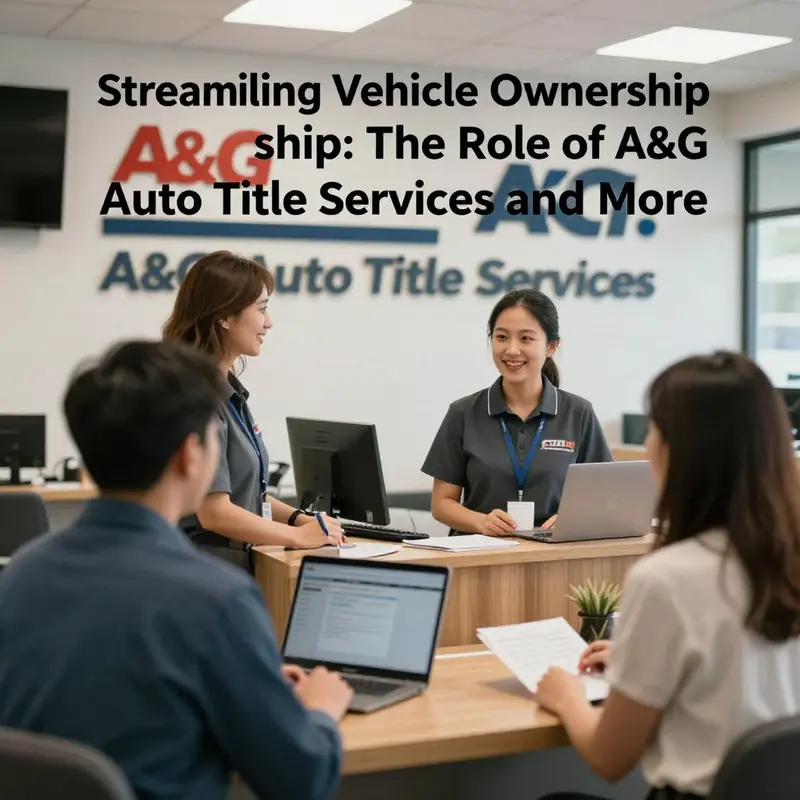
Administrative tasks are rarely celebrated, yet they shape the simplest moments of ownership into secure, legitimate realities. In the context of vehicle ownership, the routine acts of signing a title, registering a vehicle, or updating ownership documents are not mere paperwork; they are the legal heartbeat that keeps a noisy city moving. In Austin, an unassuming office near Montopolis Drive quietly embodies this truth. It serves not as a transactional shopfront but as a steady guide through a labyrinth of forms and regulations. The people there know the tempo of Texas paperwork as intimately as any driver knows the rhythm of a daily commute. Their work helps customers move from uncertainty to clarity, from ambiguity to a certificate that stands up to the scrutiny of state law. The service ethos is simple, yet powerful: make the process approachable, accurate, and reliable, so ownership can be a joy instead of a hurdle.
The address at 1710 Montopolis Dr, Building C, is more than a point on a map. It marks a local resource that many residents come to when they need calm in the face of bureaucratic urgency. The staff’s hours—open Monday through Tuesday from 10:00 a.m. to 6:30 p.m.—signal a readiness to accommodate working people, families, and newcomers who balance schedules, errands, and long to-do lists. A steady rhythm emerges: a client sits down with a clear question, followed by patient listening, then a careful walk through the steps that will transform a jumble of forms into something official and binding. The team understands that the clock matters. Texas has deadlines and requirements, and missing a single form can stall a vehicle’s legal status. The staff’s approach is to demystify, step by step, so clients feel empowered rather than overwhelmed.
What makes the experience consistent, and often memorable, is how staff couple procedural knowledge with genuine attentiveness. Customers repeatedly describe the staff as “super helpful and friendly,” a sentiment that echoes in the quieter moments after a session ends. It is not only the accuracy of the forms but the tone in which they are delivered that counts. The person at the desk might be the person who reassures a first-time buyer who worries about whether a signature is in the right box or whether a date is correct. They might also reassure a long-time resident who is navigating a translation need or a notary requirement for a family transfer. In every case, the human element—the willingness to listen, to verify, to explain—transforms a tedious transaction into a service experience that respects the customer’s time and dignity.
The transformation begins with listening. A client arrives with a stack of documents and a laundry list of questions. The team listens for gaps between what is on paper and what the law requires. They then translate those gaps into a precise checklist, guiding the client to collect exactly what is needed, without forcing unnecessary forms or extraneous steps. This clarity matters, especially for first-time buyers who may be unfamiliar with Texas rules or for individuals who have recently moved to the state and must adapt to a new system. In those moments, the service becomes less about pushing a request through and more about building a bridge over the moat of red tape. The effect is practical and reassuring: people leave with a plan, a set of expectations, and a sense that they are in capable hands.
Beyond the core processes of title transfers and registrations, the office extends practical support in two related areas that significantly broaden access. Notary services, often perceived as a separate obligation, are integrated into the workflow, ensuring that signatures are witnessed in ways that make the entire packet legally robust. For many customers, especially those who may not speak English as a first language or who must move quickly, having a trusted provider who can coordinate translation services becomes essential. Translation is not a superficial courtesy in this environment; it is an essential step toward equity in access. When every document must align with state vocabulary and legal nuance, misinterpretation can derail a transfer or introduce delays. The presence of translation support means more people can participate in ownership transactions with confidence, reducing the risk of mistakes that could otherwise require costly corrections later.
The chapter of experience is not merely about what gets done but how it gets done. The staff’s attention to accuracy matters because the consequences of errors are not small. A misread title number, a misspelled name, or an incorrect date can trigger delays, additional fees, or even legal complications. In contrast, a careful, informed approach yields results that support a smooth, legitimate handover of ownership and a clean path to vehicle operation. The team’s frame of reference is grounded in state regulations and the practical realities of everyday life. They understand that many clients may be juggling work, school, caregiving, or weekend errands. They anticipate those pressures and adjust the workflow to minimize friction, without cutting corners on compliance. This blend of diligence and empathy is the core value proposition of the Austin operation.
An essential social dimension of their work emerges when considering the diverse fabric of the local community. Austin has long welcomed newcomers and visitors who bring different languages, backgrounds, and expectations about how administrative tasks should unfold. The translation services offered in-house reflect a respect for linguistic diversity and a commitment to accessibility. The staff do not merely translate words; they translate implications—explaining why a form asks for a certain piece of information and what the next step will be. For someone who has just arrived in Texas, this kind of explanation can be transformative. It reduces fear, lowers the barrier to entry, and invites ongoing engagement with the legal system in a way that is humane and practical. The dialogue that forms in a quiet office can ripple outward, helping families ensure that the purchase or transfer of a vehicle does not become a source of stress but a milestone reached with clarity.
This work is especially meaningful for populations that may face systematic hurdles when navigating bureaucratic processes. The service pathway becomes a model of how to serve a city where mobility is a prerequisite for opportunity. It is about keeping people on the road—literally and figuratively—by ensuring that paperwork does not stand between someone and safe, legal, registered vehicle ownership. The office’s emphasis on clear communication, patient guidance, and a readiness to handle diverse needs aligns with a broader understanding of what it means to serve a community well. In this sense, the experience transcends individual transactions. It speaks to the relationship between a local business and the residents who rely on it to keep daily life functioning smoothly.
From a client’s perspective, the journey often starts with a simple question and ends with a signed, compliant file. The path can feel circuitous when one is unfamiliar with Texas-specific requirements, which can include a mix of state forms, vehicle disclosures, and proof of ownership. The office’s role is to distill complexity into a sequence of concrete steps, each with a clear purpose and reason. The team frequently revisits the client’s goals—ownership transfer, registration update, or notarization—and then calibrates the process to fit not only the letter of the law but the client’s schedule and temperament. This conversation builds trust and reduces anxiety. People leave with not only confidence in the process but confidence in the people who guided them through it. The tone of the interactions—calm, respectful, and precise—encourages clients to return when future administrative needs arise, whether for a new purchase, a title correction, or a necessary translation for a family member.
The customer experience here is not an isolated phenomenon but a reflection of how a local service can shape the everyday life of a city. When a resident faces a new car purchase or a vehicle transfer after a move or a life change, they do not just want a form processed. They want a sense of reassurance that the process will be handled correctly, that deadlines will be met, and that they will be treated as a person, not a transaction. The combination of friendly staff, careful handling of documents, and the integration of notary and translation support creates a tangible sense of companionship in a process that can otherwise feel impersonal. It is this shipment of reassurance—one client at a time—that compounds into a reputation for reliability and consistency. The Yelp reviews that highlight the team as “super helpful and friendly” are not merely anecdotes; they are a chorus that confirms a lived pattern. Customers who experience this service often express their intention to return for future needs, a rare but telling indicator of value in a market where options abound.
To connect the human experience with practical outcomes, consider how the service fits into the broader ecosystem of vehicle ownership. In Texas, the legal framework governs title transfers, registrations, and related documentation with a level of specificity that demands careful attention. Small mistakes can cascade into delays or compliance issues that ripple across a family’s schedule. A local office that treats these concerns with measured care acts as a catalyst for efficiency. It reduces the cognitive load on clients and enables them to focus on the more meaningful aspects of their lives—planning a move, starting a new job, or simply getting a child to and from school with a reliable vehicle. In this sense, the service becomes not a luxury but a practical necessity for a community oriented around movement and progress.
One practical reminder of what makes this experience possible is the continuity of human relationships in a world increasingly driven by digital automation. While many processes can be scanned, uploaded, or submitted online, the value of a real person who can listen, interpret, and explain remains unmatched. The office’s approach blends the efficiency of standard operating procedures with the warmth of human interaction. That balance is what yields not only correctly filed papers but also a sense of relief that comes from knowing someone is looking out for your best interests. It is a quiet form of stewardship—an assurance that your vehicle, your time, and your legal status are being handled with care. The result is a smoother path through the paperwork maze and a stronger sense of community trust in a local institution that can be relied upon when big life moments hinge on even the smallest signature.
For readers curious about related services or who wish to explore nearby options with similar capabilities, one example from the broader landscape of automotive support offers a parallel lesson in service quality and reliability. AG Auto Service Repair illustrates how a locally embedded provider can expand the sense of being cared for beyond a single transactional moment. While the specific offerings may differ, the underlying principle remains: accessibility, clarity, and a steady hand through the complex choreography of vehicle-related administration can transform a potentially arduous experience into one that respects a client’s time and dignity.
Ultimately, the value of a customer-centered title-service experience lies in its ability to translate legal complexity into human clarity. The Austin office embodies this translation by embracing not only the mechanics of forms but the emotional journey of ownership. The staff’s responsiveness, the integration of translation services, and the reliable notary support work in harmony to deliver outcomes that feel right—on time, on target, and with a personal touch. In a city that prizes ingenuity and pace, such an enterprise anchors the daily life of its residents by ensuring that the essentials of vehicle ownership are dependable, lawful, and accessible to all who seek them. And for those who are still learning the ropes, the door is open, the welcome is warm, and the path forward is clearly lit by patient guidance and a commitment to doing things correctly the first time.
External reference: for independent confirmation of the customer experience and service quality, see the Yelp page documenting verified feedback on the Austin operation: https://www.yelp.com/biz/ags-auto-title-services-and-more-austin
Unlocking Ownership: How a Local Auto Title Service in Austin Simplifies Texas Vehicle Compliance
On a bright Tuesday in Austin, a new car owner steps into a modest office near Montopolis Drive. The walls hold reminders of past transactions and the air carries the scent of ink and coffee. A stack of forms sits on the clerk’s desk, not as clutter but as a map of responsibilities. The conversation ahead will reveal how ownership is more than a moment of purchase; it is a sequence of steps that travels with the vehicle long after the key turns.
In Texas, the path to lawful ownership is governed by the Texas Department of Motor Vehicles, the TxDMV. The gatekeepers ensure that transfers are backed by proof of ownership and free of liens. The process protects buyers and sellers, prevents disputes over who owns what, and ensures the vehicle’s financial obligations are settled before ownership changes hands. For many, the system is complex, especially first-time buyers or those who move a vehicle across county lines or inherit a car.
At the heart of compliance are a few core requirements. Proof of ownership validates the claim; it can be a title showing the transfer or a bill of sale aligned with state forms and fees. A missing signature or a VIN mismatch can halt a transfer, causing delays and costs. Following ownership is lien clearance. A lien is a claim by a lender, and until it is released, the new title cannot be issued free of debt. The TxDMV makes clear that the lien must be satisfied for a clean, transferable title. This step is not optional; it is essential to secure the new owner’s rights.
Emissions testing adds another layer. Depending on location and vehicle type, tests may be required or waived. The environmental rules in Texas are geographic, not arbitrary, reflecting the state’s vast spread and diverse air quality needs. The outcome affects whether a car can be registered immediately, the timing of approvals, and the applicable fees. Old assumptions about a single statewide requirement give way to a mosaic of county-level practices, which is where a local title service can translate the law into workable steps.
Beyond the law’s skeleton are the soft skills of service. A dedicated local office coordinates documents, checks for consistency across records, and communicates clearly about what is needed and when. The value of notaries and translations becomes evident here. Notaries authenticate signatures to ensure legal weight, while translations bridge language gaps for families and lenders. This integrated approach helps prevent miscommunications that would otherwise slow down a transfer or jeopardize a loan.
The typical journey begins with an intake: the client describes the scenario—private-party purchase, inheritance, or a relocation—and staff outline the documents required by TxDMV guidelines. The preparation phase brings together the title, bill of sale, lien release (if applicable), proof of insurance, and any emissions paperwork. Attention to detail matters: names must match, addresses must align, and the VIN must be correct. A small error can trigger a cascade of back-and-forth with the DMV. A seasoned office reduces that friction by catching issues early and correcting them before submission.
Submission marks the moment of truth. Depending on the arrangement, filings can occur electronically or in person. A local intermediary adds value by vetting the packet for completeness, which often shortens the timeline and reduces the chance of a second round of requests. The outcome is more predictable: a title that is clear of liens, a registration that reflects the current ownership, and the confidence that the process met the law’s standards. For a first-time buyer, the difference between a rushed, error-prone effort and a calm, organized submission can be the difference between days and weeks of delay.
A real-world scenario helps crystallize the point. A first-time buyer purchases a used car from a private seller and arrives with a trunk full of forms. The seller cannot complete all the steps, and the buyer faces the risk of submitting incorrectly. A notary public present in the same office confirms signatures and identities, while a translator ensures that language barriers do not create confusion. The result is a smooth transfer and faster road readiness, with the additional benefit of a payment plan that aligns with the state’s fees and timelines.
This is the operating philosophy of a local title service: comply with the law, but do so through a service model that reduces friction, improves accuracy, and respects the client’s time. The notary and translation options are not afterthoughts; they are core components of a better customer experience. The aim is not to circumvent the process but to make it transparent and manageable, so that ownership histories remain clear and enforceable. The local provider’s oversight reduces the risk of misfiled documents and helps lenders verify a clean chain of ownership, which matters for financing and resale.
Even after ownership changes hands, ongoing compliance remains essential. The registration cycle is annual, and renewals require up-to-date insurance and accurate vehicle records. A thoughtful provider may offer reminders and monitoring, ensuring that deadlines are met and records stay fresh. This stewardship fosters long-term reliability, reduces the potential for penalties, and preserves the vehicle’s history as a trustworthy asset. It also helps create a smoother resale experience for future owners, who rely on clean documentation to secure financing and obtain plates without delay.
Culture and context matter. Austin’s growth brings diverse residents who relocate, inherit, or purchase vehicles through private sales. A local, accessible office with extended hours can be a practical lifeline, turning a bureaucratic obstacle into a guided, humane experience. The ability to handle notary and translation in-house signals a broader commitment to serving a multicultural community with respect and efficiency. When customers feel seen and supported, compliance becomes less about fear of penalties and more about confidence in ownership and mobility.
To bring the discussion full circle, the governing logic remains straightforward: accurate ownership proof, clear lien status, and proper documentation are the backbone of a trustworthy vehicle market. The TxDMV’s framework is not a gatekeeper designed to punish; it is a stewardship mechanism that protects buyers, lenders, and the public at large. A local title service translates the law into action, turning complexity into a practical workflow. The result is a smoother journey from purchase to road readiness, with peace of mind that the records will hold up under scrutiny.
Readers who want to deepen their understanding can consult official TxDMV resources for detailed steps, document checklists, and current fees. The landscape may evolve with changes in legislation, so staying informed through formal channels is prudent. For those who crave a cultural connection to their ownership experience, a world of automotive stories and events awaits—stories that remind us that ownership is about more than paperwork. If you are curious about the broader landscape of automotive culture and events, explore related experiences that celebrate the heritage of car ownership. rev-up-your-nostalgia-the-ultimate-goodwood-revival-experience-awaits.
To close with a practical takeaway: approach the process with a checklist mindset and a calm, collaborative spirit. Gather the title, the lien release, and all supporting documents. Double-check names, addresses, and VINs. Schedule time to talk with a local professional who can translate the language of the forms into actionable steps. A well-prepared submission minimizes back-and-forth with the DMV, shortens waiting times, and increases the likelihood of prompt approval. The goal is to move from ownership claim to road-ready status with confidence and compliance, knowing that a local expert stands ready to guide the way. External resource: Texas DMV — Vehicle Titles and Registration.
Final thoughts
A&G Auto Title Services and More stands as a vital resource for private car owners, small business fleet operators, car dealerships, and auto repair shops navigating the complexities of vehicle title transfers and registrations. By offering notary and translation services, prioritizing customer experience, and ensuring compliance with legal requirements, they simplify a daunting experience. Whether you are a first-time car buyer or managing a fleet, leveraging these services can enhance efficiency and peace of mind in maintaining your vehicle portfolios.