
Why a Code Is Not a Diagnosis
A check engine light comes on and most drivers expect the scan tool to name the broken part. It doesn’t. A diagnostic trouble code marks a symptom: a circuit or a reading that drifted outside the range the factory programmed. The part that actually failed can be somewhere else entirely. That gap is why A & W Auto Services doesn’t hand you a code and a parts list.
P0301 is a good example. The code says cylinder 1 misfired. It does not tell you whether the cause is a worn spark plug, a leaking injector, a vacuum leak, or a failing ignition coil. The computer reports what it observed. It cannot report why.
Below, we cover how OBD-II codes get set, where they tend to mislead, and how we use live data, circuit testing, and hands-on verification to find the fault behind the code.
The Gap Between the Code and the Cause
Automotive computers are literal. They watch voltages, resistances, and sensor signals against thresholds set at the factory. Cross a threshold and the module stores a code and turns on the light. Because the computer only sees the electrical path it monitors, one mechanical fault can trigger codes that point somewhere else. Low fuel pressure, a clogged catalytic converter, or a stretched timing chain will all do it.
The same code can have two completely different causes. A P0171 lean condition might come from a cracked intake boot on one vehicle and a failing mass airflow sensor on another. Chase the code alone and you end up replacing parts that were never broken, spending money while the real fault stays put. We treat every code as a question to be tested, not an answer to be trusted.
How Scan Tool Codes Actually Work
When the light glows on your dashboard, most drivers assume it is pointing straight at a broken part. Usually it isn’t. Knowing how scan tool codes are generated is the first step toward smarter check engine light diagnostics, and it explains why the same code can send two technicians down two very different paths.
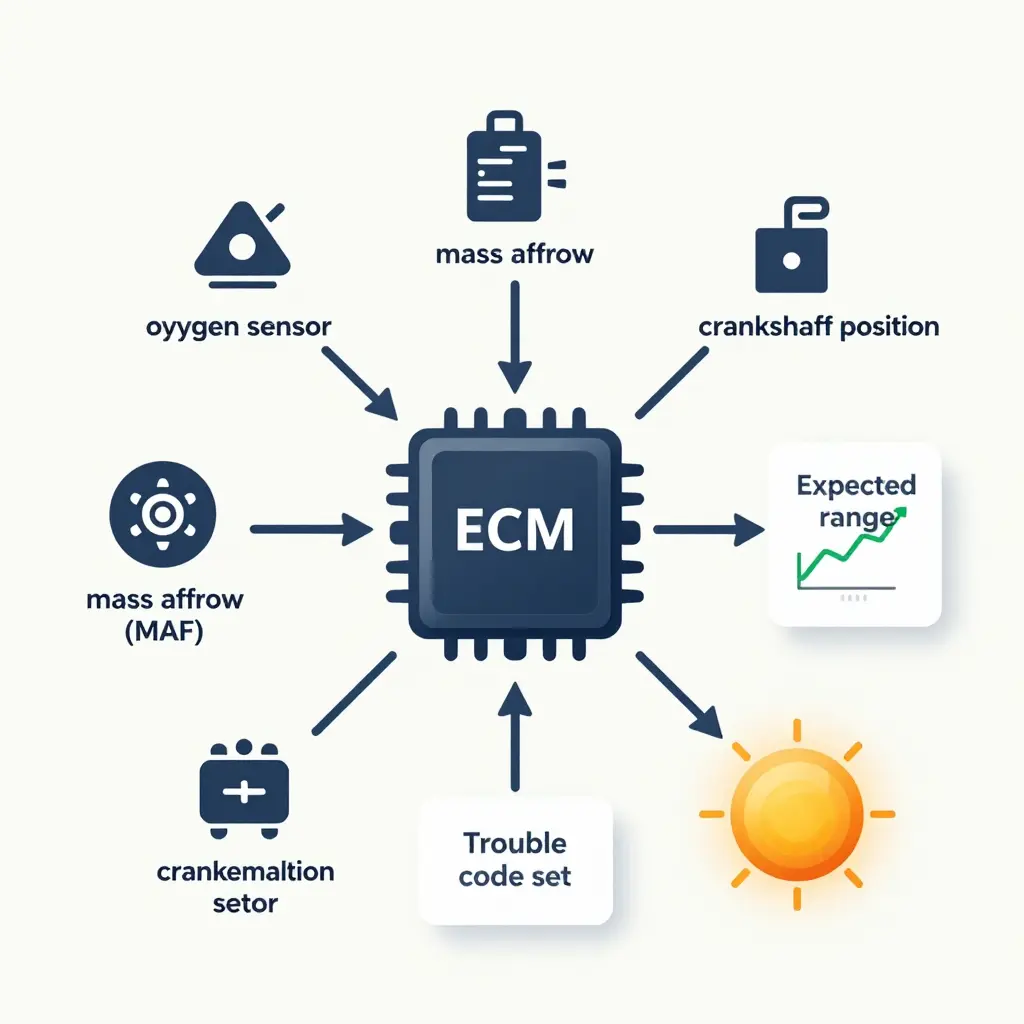
The OBD-II System: Your Car’s Built-In Reporter
Every car sold in the United States since 1996 carries an on-board diagnostics system, known as OBD-II. Think of it as a standard language that lets any compliant scan tool ask your vehicle, “What is going on?” OBD-II defines the connector, the communication protocol, and what the codes mean, which is why OBD-II codes always start with a letter: P for powertrain, B for body, C for chassis, or U for network.
The ECM: The Brain That Watches Everything
The engine control module (ECM), the computer that runs your engine, sits at the center of this system. It reads signals from sensors around the car:
- An oxygen sensor measures oxygen in the exhaust to judge air-fuel balance.
- A mass airflow (MAF) sensor reports how much air enters the engine.
- A crankshaft position sensor tracks engine speed and timing.
The ECM compares each reading against an expected range: a window of normal values programmed by the manufacturer.
When a Reading Falls Outside the Expected Range
If a sensor or the wiring it depends on drifts outside that window, and the condition repeats over a set drive cycle, the ECM sets a trouble code and stores it in memory. It may also switch on the check engine light. The code captures the symptom, not the culprit.
Codes Report Symptoms, Not Broken Parts
This is where drivers and even some shops get tripped up. A code such as P0300 (random misfire) does not say “replace the spark plugs.” It says the ECM detected combustion missing unpredictably. P0171 (lean condition) does not name a vacuum leak or a dying fuel pump; it reports that the engine is running with too much air relative to fuel.
In practice, a misfire could come from worn plugs, a weak ignition coil, a vacuum leak, or low fuel pressure. A lean code could stem from a dirty MAF sensor, a cracked intake gasket, or a failing pump. The code is a symptom report, not a diagnosis, which is why careful technicians confirm findings with live data and physical testing before touching a single part.
The table below lines up a few of the most common OBD-II codes with what they report and the fault that usually hides behind them.
| Trouble Code | What the Code Reports | Common Real Fault | Diagnostic Step Required |
|---|---|---|---|
| P0300 | Random or multiple cylinder misfire | Worn plugs, weak coils, vacuum leak, low fuel pressure | Read live misfire counters and check fuel trims |
| P0171 | System too lean (Bank 1) | Intake vacuum leak, dirty MAF, lazy O2 sensor | Smoke-test the intake and graph O2/MAF data |
| P0420 | Catalyst efficiency below threshold (Bank 1) | Worn catalytic converter, exhaust leak, bad rear O2 | Compare upstream and downstream O2 signals |
| P0455 | EVAP system large leak detected | Loose or faulty gas cap, cracked EVAP hose | Run a smoke test on the EVAP system |
| P0135 | O2 sensor heater circuit (Bank 1, Sensor 1) | Failed O2 heater, blown fuse, wiring fault | Check heater resistance and circuit voltage |
Classics built before 1996 predate OBD-II entirely, so reviving and upgrading vintage cars often calls for a different diagnostic path. The point stands either way: a code points to a symptom, not a solution. Confirm the real cause with live data and hands-on testing before you replace a single part.
Why Scan Tool Codes Miss the Real Fault
A scan tool reads what the engine computer stored, and the computer stores only what its sensors and monitors can see. Modern vehicles run dozens of self-tests. When a value drifts outside the expected range, the powertrain control module logs a diagnostic trouble code. The code points to a circuit or a system, not to the physical failure behind it. Closing that gap is the job of a technician, because the code starts the test; it doesn’t finish it.
Here is the practical version:
- Several parts can share one code. A generic code can describe a fault in any of several sensors, solenoids, or lengths of wiring on the same circuit, so the code alone cannot tell you which part failed.
- Codes fire on symptoms, not root causes. The computer reacts to a reading that fell out of range. A vacuum leak, low fuel pressure, or a bad ground can all produce that same reading without the code ever naming them.
- Intermittent faults often leave no code. A misfire that happens once every few hundred miles, or a wiring fault that shows up only on a rough road, can clear before the monitor finishes its test. No code, no stored evidence.
- One cause can set several misleading codes. A single vacuum leak can trip lean codes, misfire codes, and idle-quality codes at once, sending a parts-changer after three problems when there is only one.
- Wiring and connectors mimic component failure. A chafed wire, a backed-out pin, or a corroded connector throws the same code as a genuinely dead sensor.
- Definitions vary by make and model. The same number can mean different things across manufacturers, and a factory reflash can silence a code by shifting its thresholds while the mechanical problem keeps wearing the engine.
- A stored code is a snapshot. It was captured under one set of conditions and may not describe how the vehicle behaves during normal driving, idling, or a cold start.
The difference between a fault code and a fault matters. A fault code is a stored description of an abnormal condition the computer detected. A fault is the physical defect behind it: a cracked hose, a worn pump, a chafed wire. Chasing codes replaces parts. Chasing the real fault fixes the car.
The Diagnostic Decision Flow at a Glance
Good diagnosis is not a single scan. It is a repeatable sequence of checks, and the diagram below walks through it, from pulling the code to confirming the repair. Each stage tests the one before it.
A retrieved code is the starting point. Confirming the symptom, checking live data, testing the actual root cause, and re-checking after the repair are what separate a guess from a genuine fix.
For older and vintage vehicles, mechanical quirks add another layer of complexity, as explored in this guide to retrofitting vintage vehicles.
When the Code Points Somewhere Else
An OBD-II trouble code usually tells you which system is unhappy, not which part has failed. The scan tool reads what the engine computer sees, and what it sees is often a downstream symptom rather than the root cause. The chart below compares how often a stored code points to the defective component, and how often it points to something else, across the categories we diagnose most often.
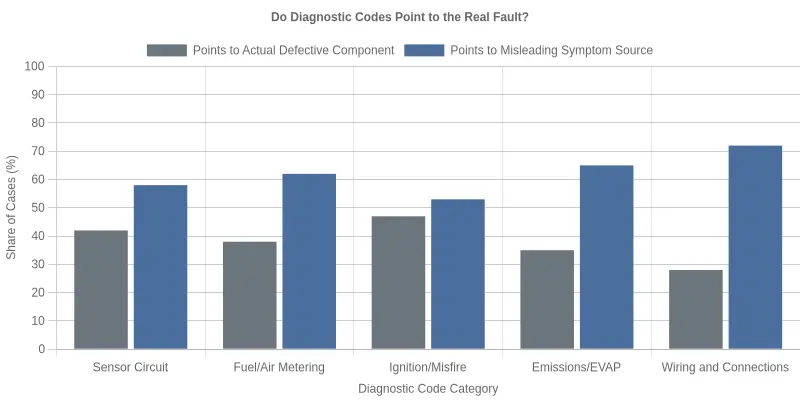
How to Read the Bars
In every category, the misleading-symptom bar is taller than the hits-the-real-part bar. That gap is the whole story.
| Code Category | Points to Actual Component | Misleading Symptom |
|---|---|---|
| Sensor Circuit | 42% | 58% |
| Fuel/Air Metering | 38% | 62% |
| Ignition/Misfire | 47% | 53% |
| Emissions/EVAP | 35% | 65% |
| Wiring and Connections | 28% | 72% |
What the Numbers Are Telling You
- Wiring and connections is the worst offender. 72% of codes in this group trace back to something other than the pin, plug, or harness the code named. A chafed ground or a corroded connector two feet away can throw a code for a component that is perfectly healthy.
- Emissions and EVAP follow at 65%. These are sealed circuits, so a loose gas cap, a tired purge valve, or a pinhole leak registers as a fault somewhere far from the leak itself.
- Ignition and misfire is the most honest at 53%. Even there, a misfire code on cylinder 3 is routinely caused by a worn plug, a leaking injector, or a vacuum leak that is not cylinder-specific at all.
- Sensor and fuel/air codes invite parts-swapping. Because the code names an oxygen sensor or a mass airflow sensor, techs often replace that exact part. It works only about 40% of the time.
The Takeaway
Treat a scan tool as a pointer, not a verdict. Before you buy a single part, verify the circuit, load-test the wiring, and confirm the symptom with live data. The code names a suspect; the diagnosis names the culprit. Replacing components on the strength of a code alone is how a $60 fix turns into a $600 guessing game.
At A & W Auto Services, we use scan data as the starting line of the diagnosis, not the finish. That habit is why the right approach to check engine light diagnostics at veteranauto.us keeps customers from paying for parts they never needed.
How A & W Auto Services Diagnoses Beyond the Code
Start With the Code, Then Question It
Every visit starts the same way: we pull the stored trouble codes. That is where a real diagnosis parts company with a scan-and-swap. A code is a clue, not a conclusion. When the scanner flags a misfire on cylinder three, it points us toward an area to investigate; it does not hand us the answer. That one number describes a symptom, never the root cause. A misfire can trace back to a worn plug, a failing coil, a vacuum leak, or a clogged injector, and the tool cannot tell the difference on its own. So we treat each code as the opening line of a longer conversation and start gathering evidence.
Confirm the Fault With Live Data and Real-World Testing
Next we confirm whether the indicated problem is a real fault or an intermittent glitch. We watch live sensor data with the engine running, including fuel trims, oxygen sensor voltages, ignition timing, and misfire counters, rather than trusting a single frozen snapshot. Then comes the hands-on work: physical and electrical checks of connectors, grounds, wiring, and mechanical condition, followed by loading each circuit with an oscilloscope or load box. Testing under load separates a genuinely failing part from one that merely looks suspicious, and it is often the only way to catch faults that vanish once the engine cools. Whether you maintain an everyday commuter or chase gremlins in one of your attainable dream cars, that accuracy is what protects your wallet.
Verify the Repair Before the Keys Go Back
The job is not finished when the new part is installed. We clear the codes, run a drive cycle, and confirm that the readiness monitors reset and the original symptom stays gone under the same conditions that first triggered it. If the data looks clean and the light stays off, we hand back the keys. A code is a clue, not a conclusion; that habit is how our check engine light diagnostics find the real fault the first time, without repeat trips and needless parts.
The Diagnostic Loop: Why a Code Is Only the Starting Point
A scan tool code tells you where to look, not what is actually broken. The real work happens in a repeatable loop: observe, test, compare to specification, isolate, repair, and re-verify, then loop back if the symptom is still there. The diagram below captures that principle. It is the same pattern whether you are chasing a stubborn misfire on a daily driver or an intermittent sensor on a vintage classic you have kept on the road.
![Illustrative diagram of the iterative diagnostic verification loop showing observe, test, compare to specification, isolate, repair, and re-verify connected in a circular flow of shapes and arrows](
Related Reading
If the discussion above has you thinking about maintenance or enthusiast cars, these articles go further.
- Cars That Look Fun Yet Aren’t examines a handful of vehicles whose aggressive styling and sporty marketing promise driving excitement their actual performance does not deliver.
- Attainable Dream Cars highlights enthusiast machines that deliver real performance and character without the six-figure price tags that usually accompany them.
- The Best American Cars of 2025 rounds up the domestic models that stood out this year for their engineering, value, and overall driving experience.
- Big Luxury Coupes: Reader Favorites and Experiences collects first-hand owner stories about the large two-door models readers keep coming back to.
- Experience the Rush: Your Favorite Big Luxury Coupes Reviewed puts those same grand touring coupes through a closer review covering comfort, power, and road manners.
Whether you diagnose faults in your own garage or simply enjoy reading about cars, these pieces pair well with the technical guidance here. Between them they cover practical ownership and the enthusiast side of the hobby.
Frequently Asked Questions About Check Engine Light Diagnostics
Drivers ask two things most often: what the code really means, and whether clearing it is enough. The answers below cover how scan tool codes work, where they mislead, and when to bring the car in.
What does a check engine light code actually tell you?
A diagnostic trouble code tells you which system or circuit the engine computer flagged as operating outside its expected range. It might report a misfire on a specific cylinder or a lean fuel condition on bank one. The code narrows the search area; it is not an instruction to replace a particular part.
Why can the same code mean different faults?
The engine computer only compares sensor inputs and outputs to expected values. It cannot see the physical cause. A single misfire code can come from worn spark plugs, a weak ignition coil, a vacuum leak, or low fuel pressure, so two vehicles showing the identical number can have completely different root causes. Testing beats guessing.
Can a scan tool find every problem?
No. A scan tool reveals only what the engine computer monitors and stores in memory. Many mechanical failures, intermittent wiring faults, and issues in unmonitored systems never set a code. It is a valuable tool, but one part of a full diagnosis rather than the whole answer.
How often are codes cleared without fixing the real fault?
Often enough to be a running problem. Clearing a code to switch off the light rarely solves anything. The warning usually returns once the monitor completes its next drive cycle, and the underlying damage keeps progressing. Erasing the code without locating the real fault can turn a small repair into an expensive one.
What does the real fault look like versus the code?
The real fault is the physical or electrical cause, while the code is only the symptom the computer noticed. A code might read “bank one lean,” but the real fault could be a cracked intake gasket or a dying oxygen sensor. Technicians confirm the actual cause with live data, voltage tests, and physical inspection before recommending any repairs.
When should a driver bring the vehicle to a shop like A & W Auto Services?
Bring the vehicle in right away if the check engine light is flashing, since that indicates an active misfire that can damage the catalytic converter. Book a visit if the light returns after a reset, or if you notice rough running, stalling, or reduced fuel economy. A shop with proper check engine light diagnostics can trace the real fault instead of replacing parts at random.
The Bottom Line: Read the Symptoms, Not Just the Codes
A scan tool is a starting point, not an answer key. As this article has shown, scan tool codes describe symptoms – a misfire here, a lean condition there – while the real fault often hides deeper, in the wiring, a vacuum leak, a faulty sensor ground, or a mechanical problem the computer was never designed to name. Treating a code as the diagnosis is how owners end up replacing parts that were never broken, and how frustrating return visits get stacked on top of an already stressful problem.
At A & W Auto Services, the difference is the process. Rather than stopping at the first code that pops up, the team verifies live data, tests components under real operating conditions, and confirms every hypothesis before a single repair is approved. That approach is what turns a vague warning light into a verified fix, and it is exactly what separates check engine light diagnostics that work from guesswork that only delays the problem.
Confirmation Is the Real Skill
One code reading is never enough. Confirmation and verification matter more than any single snapshot of data, because only proof of cause – not a description of a symptom – can restore your vehicle’s performance and your confidence in it. When a fault is properly confirmed, the repair holds the first time, and the light stays off.
That is the standard every driver deserves, and it is the standard A & W Auto Services delivers on every diagnosis.