
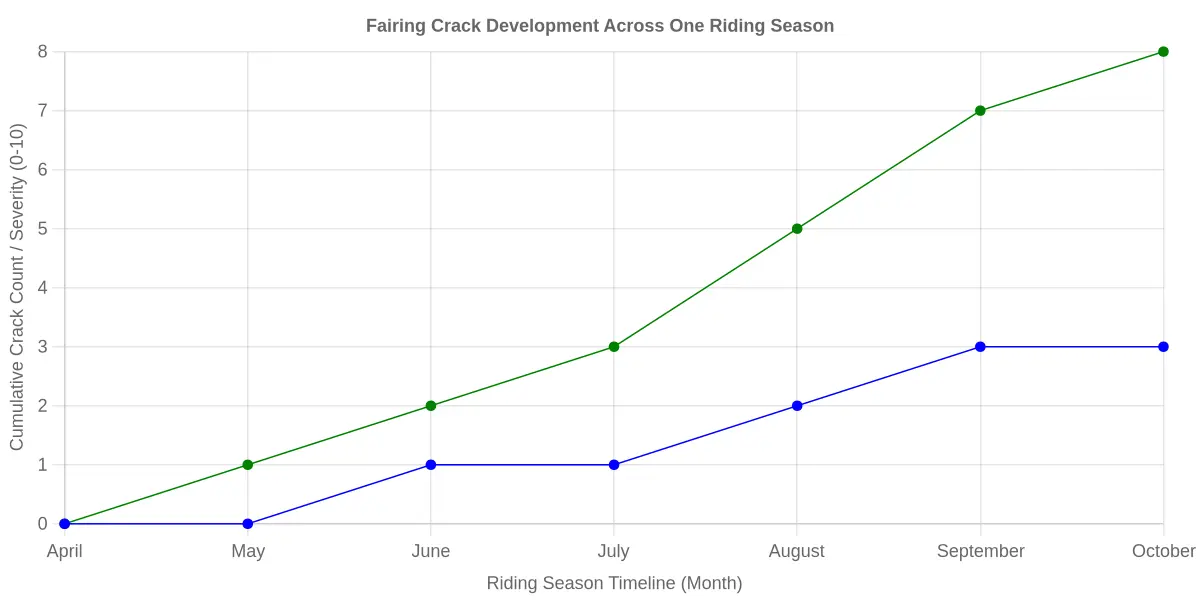
Stress cracks can show up in both ABS and fiberglass motorcycle fairings after a single riding season, and heat and vibration cause most of them. That is true whether the bodywork came from the factory or a custom fabricator, and it catches riders who assume one season is too short for structural damage. When mechanics compare ABS vs fiberglass fairings, they find the same stresses producing different damage: heat softens and warps ABS, while vibration fatigues fiberglass and fractures it. Knowing how those cracks start is the first step toward picking the right material and building bodywork that lasts more than one summer.
ABS vs Fiberglass Fairings: Material Property Comparison
| Property | ABS Plastic | Fiberglass (FRP) | Best Suited For |
|---|---|---|---|
| Base composition | Thermoplastic polymer (acrylonitrile butadiene styrene) | Thermoset resin reinforced with glass fiber cloth | ABS for mass-produced OEM panels; FRP for custom and race builds |
| Weight | Lighter per panel | Heavier for equal stiffness | ABS where weight savings matter |
| Flexibility | Semi-flexible, bends under load | Rigid with minimal flex | ABS for street impact absorption |
| Thermal expansion rate | Higher, expands more with engine heat | Lower, more dimensionally stable | FRP for hot-running engines and track use |
| Vibration damping | Better at absorbing high-frequency buzz | Transmits vibration to mounts and seams | ABS for cruising and touring bikes |
| Repairability | Replacement preferred; plastic welding possible | Easily patched with resin and mat | FRP for repairable, long-term ownership |
| Typical cost | Lower upfront cost | Higher upfront cost | ABS for budget repairs; FRP for one-off designs |
| Finish quality | Smooth, molded surface, paint-ready | Requires sanding and filler for a premium finish | FRP when show-quality gloss is the goal |
| Common failure mode after one riding season | Stress cracks at mounting points and clip tabs | Spiderweb cracks and gel-coat crazing near heat zones | ABS for daily riders; FRP for garaged and track machines |
How Heat Degrades ABS and Fiberglass Fairings
Heat damages a fairing long before you can see it. A panel rarely scorches before the material has already changed at the molecular level, and the hairline cracks, warped edges, and loose fasteners that follow usually trace back to temperature rather than impact.
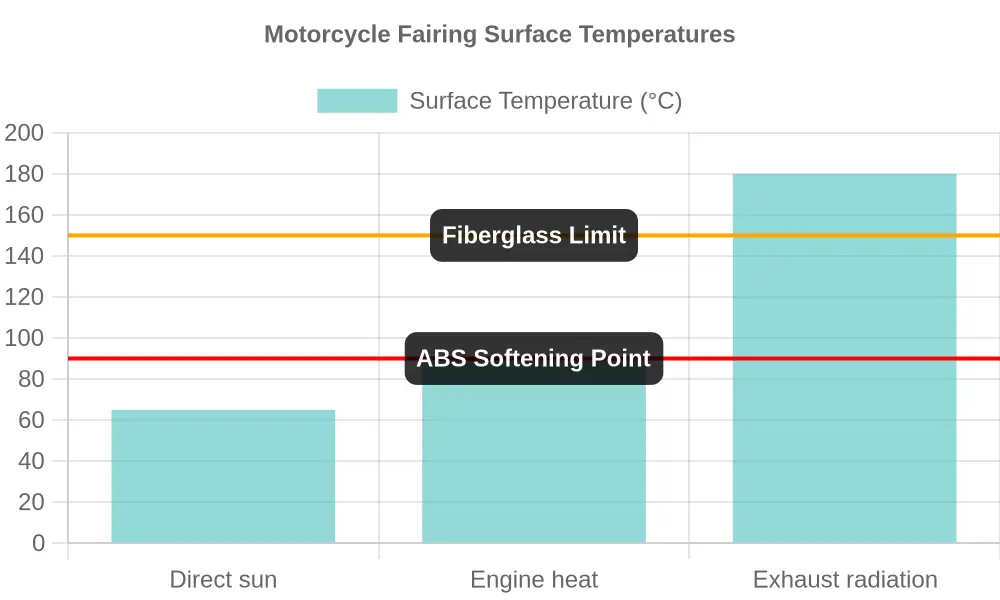
Where fairing heat actually comes from
Fairing surface temperatures climb from three overlapping sources, and they rarely act alone:
- Sustained engine heat radiates from the cylinder head, radiator, and inner panels, keeping large sections of the fairing warm for the entire ride.
- Exhaust radiation is the most intense local source, superheating whichever panels sit closest to the header and mid-pipe.
- Direct sun exposure adds a steady solar load to the outer skin, and dark-colored fairings absorb it fastest.
Together, these sources can push a panel far above ambient air temperature, even when the bike sits in the sun after a ride. The chart compares those real-world surface temperatures with the point where each material starts to fail.
Why ABS and fiberglass respond differently
ABS is a thermoplastic. As it warms toward its heat deflection range, it softens, loses stiffness, and expands quickly. Fiberglass is a thermoset composite: it holds its shape across a wider temperature band, but its resin still expands and contracts, and it does so unevenly against the rigid reinforcing fibers. Under the same heat load, an ABS panel grows more than a fiberglass panel of identical size, and each material pulls against its mounting hardware differently. Add vibration, and the joint between panel and frame becomes the first place damage starts.
Why repeated cycles create cracks
A single hot ride rarely destroys a fairing; repeated heating and cooling does. Each cycle lets the panel expand, then contracts it as it cools, and the material never returns quite to its original shape. Over one riding season, that expansion and contraction accumulates as internal stress. Cracks usually begin at stress raisers such as fastener holes, tight radii, and panel seams, where the material has the least room to move.
The main heat-stress failure points appear in a predictable order:
- Fastener holes and bolt tabs
- Panel seams and mounting brackets
- Sections nearest the exhaust header
- Tight-radius and compound-curve areas
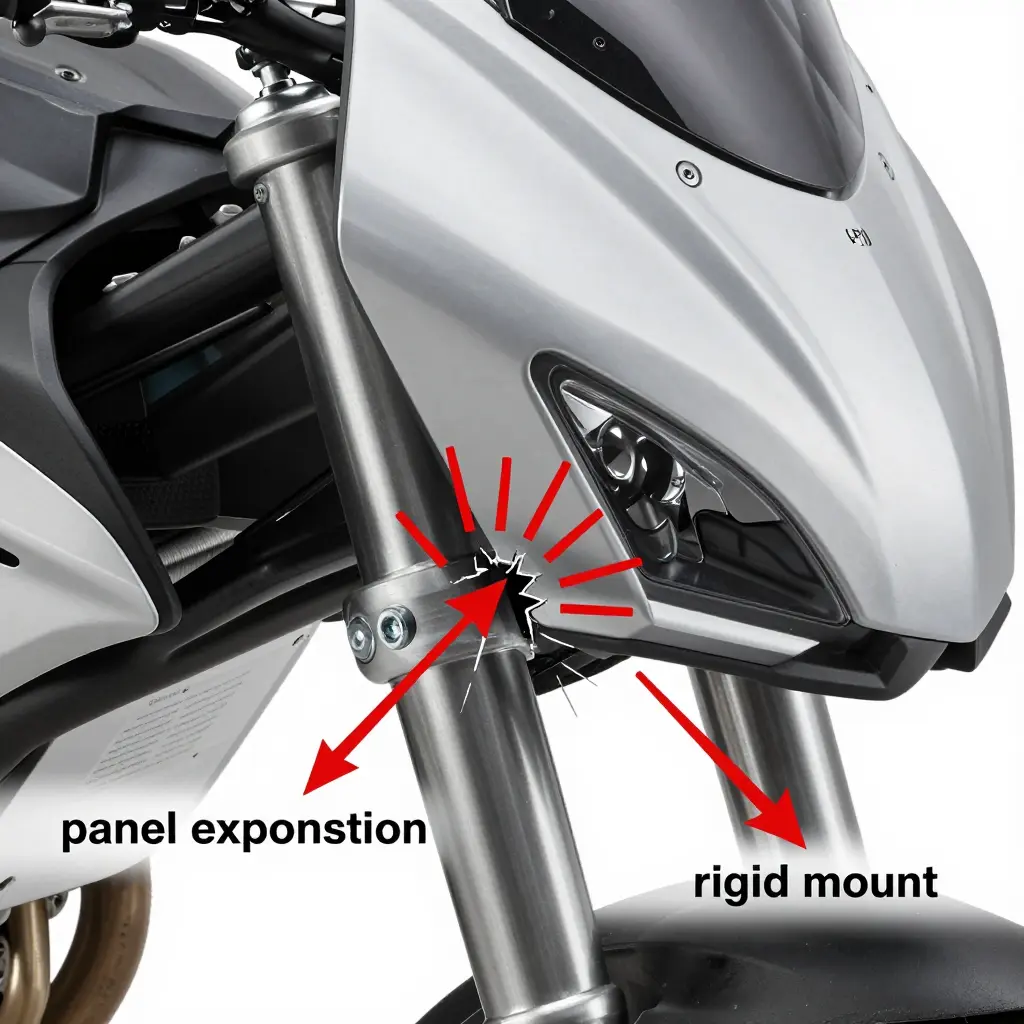
The rigid mounting problem
Rigid mounting points make all of this worse. When a fairing panel is bolted firmly to a stiff metal frame, thermal expansion has nowhere to go. The panel pushes against the mount, the mount pushes back, and the fastener becomes a pivot for concentrated stress. That is how a mounting bolt turns into a crack initiator. Flexible rubber grommets, slotted holes, and slightly loose tolerances give panels room to grow, which is why well-designed fairings survive heat far better than tightly clamped ones.
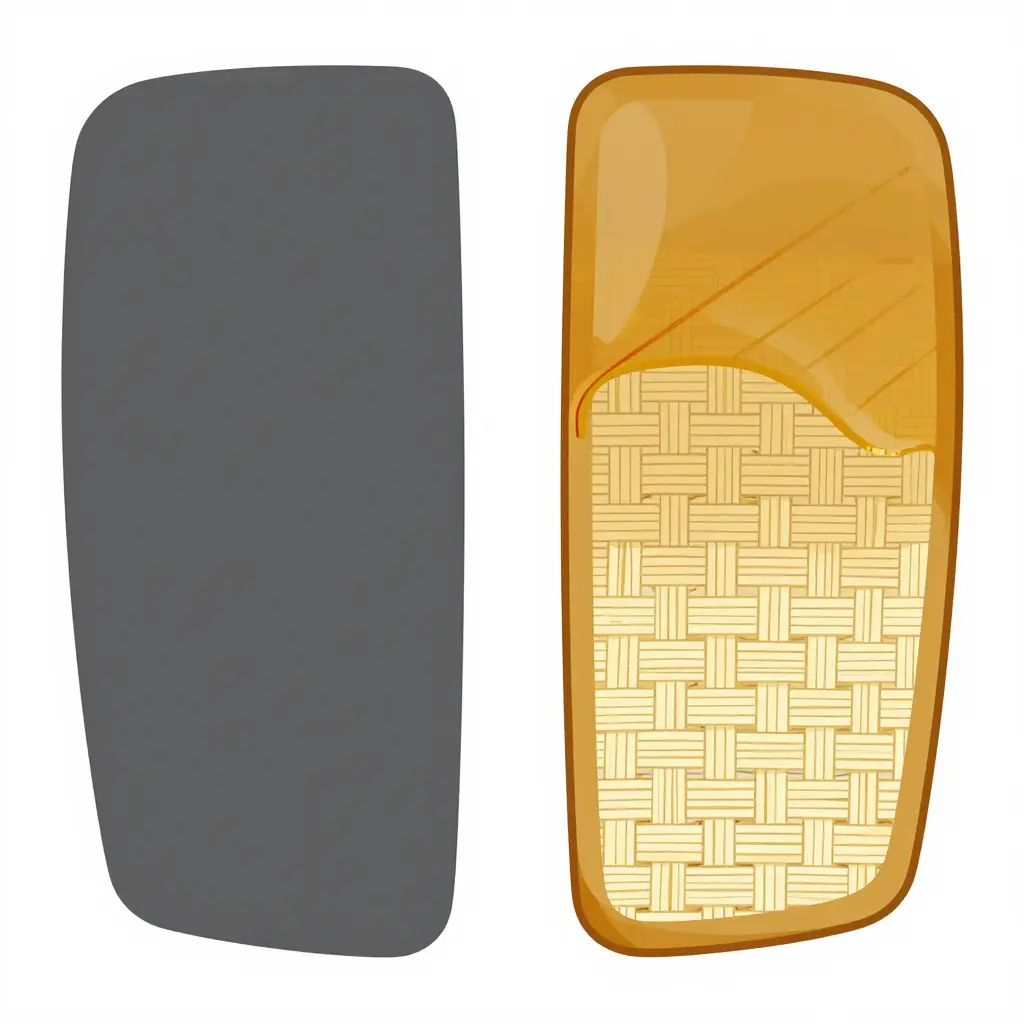
The cross-section diagram shows the structural difference that drives how each fairing ages. The ABS panel on the left is a single, homogeneous molded layer, so heat and vibration stress pass through one continuous material. The fiberglass panel on the right is a composite, a protective resin coat layered over woven fiber strands, so its strength comes from the bond between two materials rather than from one uniform body.
How Vibration Fatigue Cracks Motorcycle Fairing Panels
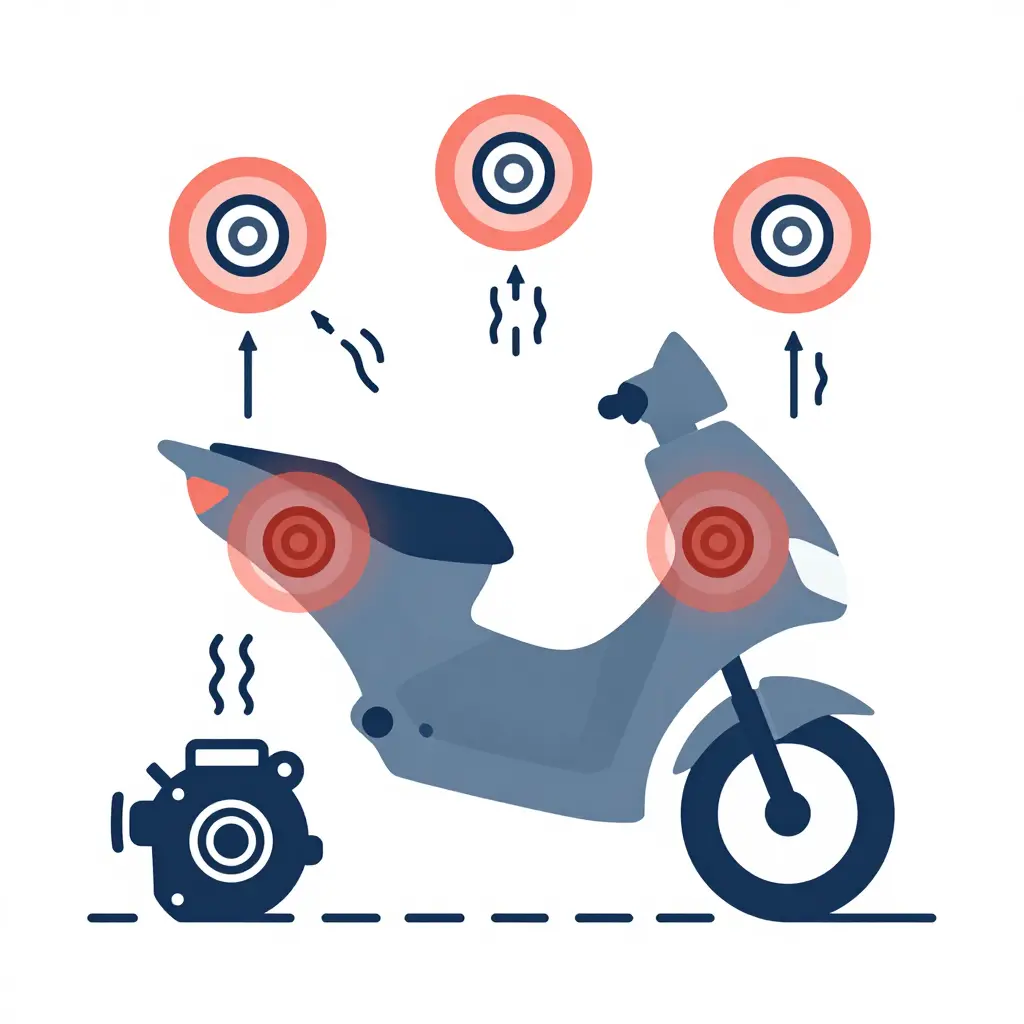
A motorcycle fairing looks like one solid shell, but it is really a set of thin panels held under tension by a handful of bolts and clips. Every ride feeds those panels a steady stream of energy from three sources at once, and the material pays for it over time.
Engine vibration is the most constant input. A twin, triple, or inline-four transmits high-frequency pulses through the frame and into the fairing brackets, and because those pulses repeat thousands of times per minute, they work the same spot on the panel again and again.
Road surface input adds low-frequency shocks. Potholes, expansion joints, and rough asphalt push the fairing up and down, flexing the panels exactly where they meet their mounts.
Airflow buffeting grows with speed. Wind pressure and turbulence behind a truck or an oversized windshield make the fairing flutter. The force is small, but it repeats constantly, and fatigue damage depends on repetition as much as on load.
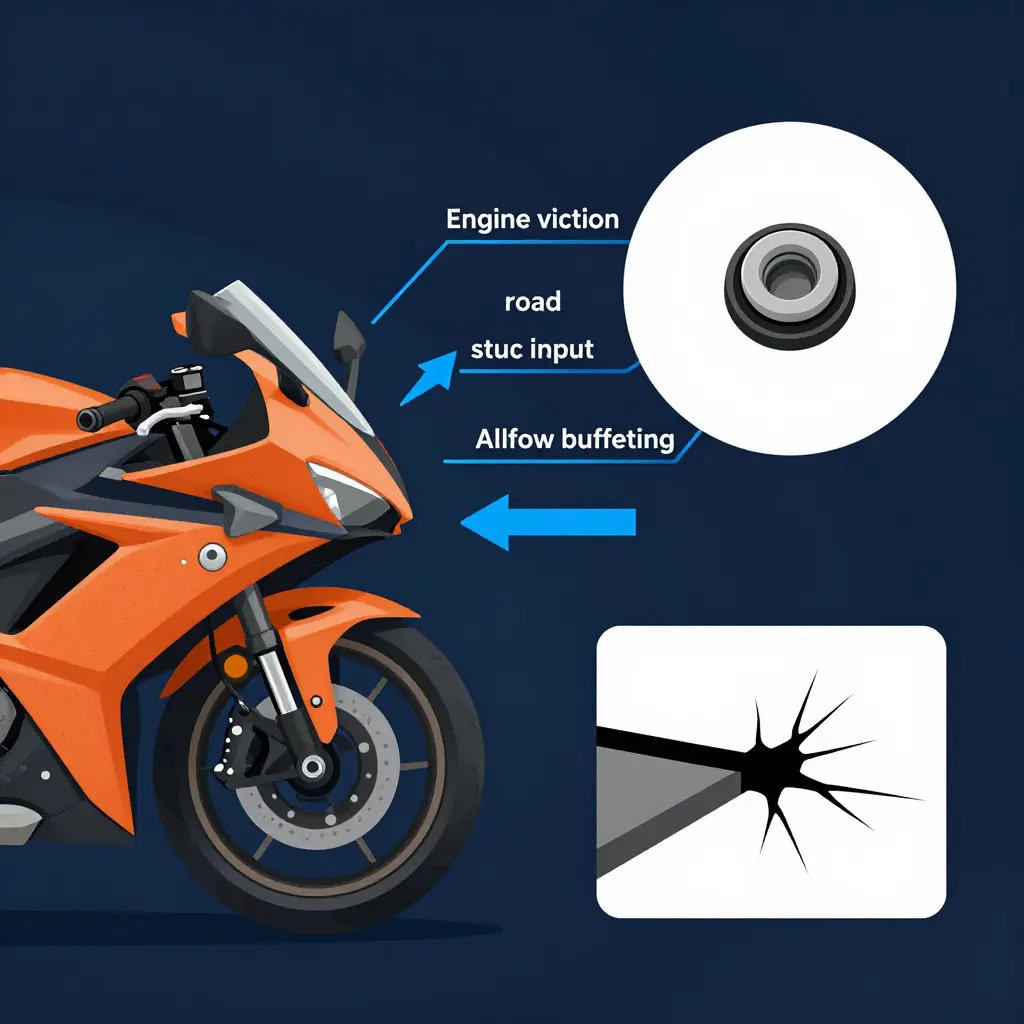
Where the Energy Piles Up
That energy does not spread evenly across the panel. It concentrates at the hard points, where a rigid fastener meets flexible plastic. These are the classic starting points for fairing cracks:
- Mounting bolt holes, where torque from the fastener squeezes the panel
- Rubber grommets and isolators that harden with age and engine heat
- Bracket welds and stress risers built into fiberglass layups
- Panel edges and seams near the headlight, windshield, and mirror stalks
This is where vibration fatigue begins. Each load cycle is tiny, far below what would break the panel in a single hit, but one ride can deliver tens of thousands of cycles. Slowly, micro-cracks form around a bolt hole, join together, and turn into a visible crack that runs toward the nearest edge.
ABS vs Fiberglass: Two Different Failure Stories
ABS and fiberglass handle those cycles in opposite ways. ABS is flexible, so it absorbs flexural energy by bending slightly and damping vibration, which buys real time before damage appears, until repeated flexing whitens, crazes, and finally splits the plastic.
Fiberglass is stiffer. It resists flexing and holds its shape well, but when vibration forces it to move, the resin cracks and the glass strands snap rather than stretch. ABS prefers to flex; fiberglass prefers to stay rigid, and cracks when it is forced to bend.
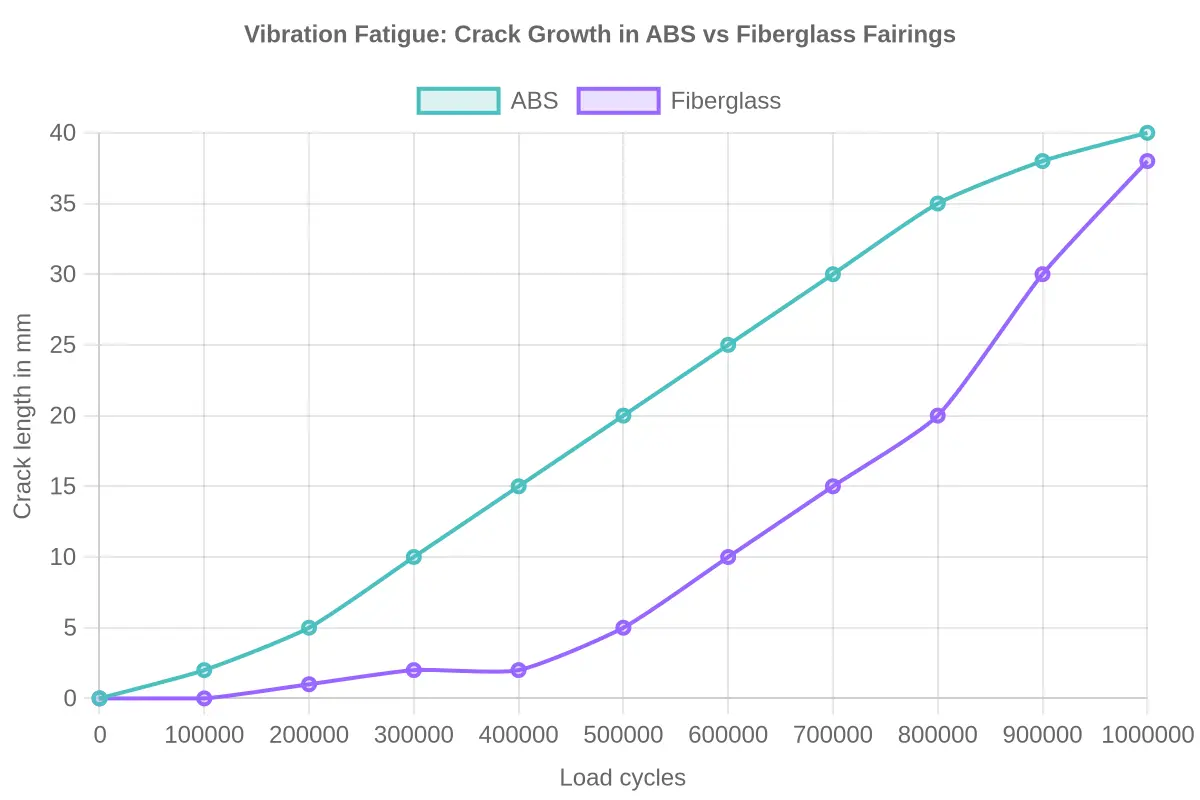
That contrast explains why fairing cracks after a single riding season are so common. The cause is rarely one big impact; it is thousands of small ones working the same mounting bolts, grommets, and panel edges until the material finally gives up.
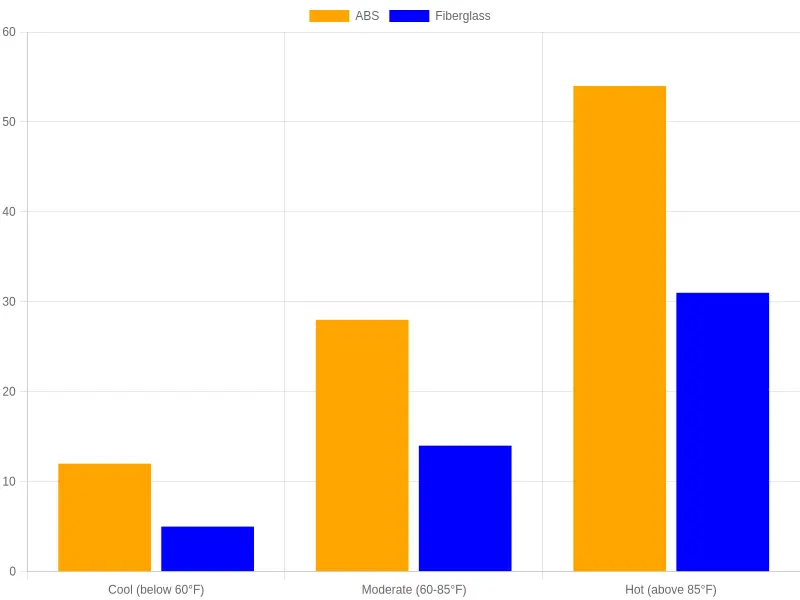
Chart: Fairing Crack Incidence by Material and Temperature Range
- X-axis: Temperature Range (Cool = below 60°F, Moderate = 60-85°F, Hot = above 85°F)
- Y-axis: Crack Incidence Rate (%)
- Legend: ABS (orange) vs. Fiberglass (blue)
| Temperature Range | ABS Crack Rate | Fiberglass Crack Rate |
|---|---|---|
| Cool (below 60°F) | 12% | 5% |
| Moderate (60-85°F) | 28% | 14% |
| Hot (above 85°F) | 54% | 31% |
The grouped bars show the same pattern for both materials: crack incidence climbs steeply as temperatures rise, and ABS cracks roughly twice as often as fiberglass in every range, peaking at 54% in hot conditions.
Early Warning Signs of Fairing Cracking
Fairings rarely fail without a warning. Long before a panel splits open on the highway, one hard riding season of heat cycles and engine buzz usually leaves clues. Check for these on every ABS or fiberglass fairing that comes through your shop or showroom:
- Hairline fractures around mounting holes. Tiny cracks radiating from bolt and grommet points are the classic first sign that a fairing is flexing more than its fasteners can handle.
- Stress whitening in ABS. A cloudy, chalky discoloration near bends and screw bosses means the plastic is yielding internally, even if the surface still looks intact.
- Resin crazing or spider cracks in fiberglass. A web of fine surface cracks signals that the gel coat and resin matrix are separating under repeated vibration.
- Loosening or fretting fasteners. Bolts that keep backing out, or washers that leave telltale wear marks, point to constant movement between panels.
- Paint cracking along seams. Hairline splits following a seam line show that the panel beneath is flexing and stressing the finish.
- Visible panel flex. Press gently on the fairing; movement or a soft, springy feel where the panel should be rigid is a red flag.
- Chalky or faded stress zones. Areas that turn dull or discolored near heat sources hint at thermal fatigue building up in the material.
- Rattles and new buzzes at speed. Fresh noises at certain RPM ranges often trace back to micro-cracks widening under vibration.
For repair professionals and retailers, catching these signs early decides the job. Addressing fairing cracks while they are still hairline-level means simple reinforcement, a dab of resin, or a fresh set of fasteners instead of a full panel replacement, which is cheaper for the customer and faster for the shop. Miss the warnings, and a small stress mark becomes a cracked, unsafe fairing that costs everyone more time and money.
Durability and Repair: What the Data Actually Says
Fairings rarely fail from a single catastrophic event. They fail slowly, season after season, as heat cycling and vibration quietly weaken the material. Once that pattern is clear, the service-life and repair figures below are easier to read, and they point in a consistent direction.
How Long Do Fairings Typically Last?
Service-life figures from shops and bodywork specialists point to a clear gap. ABS fairings generally hold up for roughly two to four riding seasons in hot, vibration-heavy environments before stress marks and fairing cracks begin to appear around mounting tabs and tight curves. Fiberglass fairings, by contrast, commonly last five to eight seasons or more, largely because their layered resin construction resists fatigue cracking far better.
The failure modes differ too. ABS tends to craze, discolor, and crack at flex points, while fiberglass fails through gel-coat spiderwebbing and delamination near fasteners rather than brittle snapping.
Repair Success Rates
When cracks do appear, two repair methods dominate the market. Plastic welding, the standard fix for ABS, succeeds in roughly 60-70% of cases, but results depend heavily on operator skill and whether the plastic was previously heat-stressed. Fiberglass re-lamination performs better, with success rates near 80-90%, because fresh resin and cloth bond chemically to the original material.
Repair vs. Replace Considerations
Before deciding, weigh these factors:
- Crack location: Hidden or structural cracks off high-stress zones repair cleanly; tab cracks often return.
- Part availability: If a replacement fairing is discontinued, which is common on older bikes, repair may be the only option.
- Cosmetic tolerance: A repainted repair can look factory-fresh; a visible patch often cannot.
- Resale value: Matching original panels typically command more than mismatched or visibly repaired ones.
- Labor vs. cost: A $90-120 repair versus a $550-650 replacement is a meaningful gap.
For project bikes where parts sourcing is already part of the build, this trade-off matters even more, much like the planning covered in this guide to sourcing and retrofitting vintage vehicles.
The Takeaway
The evidence favors fiberglass on lifespan and re-lamination on repair success, but cost, availability, and crack location can still make repair the smarter call, especially when replacement panels are scarce.
Frequently Asked Questions: ABS vs Fiberglass Fairings
Which material cracks more easily, ABS or fiberglass fairings?
ABS fairings crack more easily than fiberglass fairings under repeated stress. ABS is a thermoplastic that hardens and becomes brittle as it ages, so fairing cracks typically start at the thin mounting tabs. Fiberglass is stiffer and its layered laminate resists crack growth better, though it can still crack at poorly supported mounts.
Is heat or vibration the bigger cause of fairing cracks?
Vibration is usually the bigger cause of fairing cracks over a single riding season, though heat makes the problem worse. Continuous engine and road vibration fatigues the stress points in motorcycle fairings, while high heat softens ABS and speeds up that damage. In practice, the two forces act together.
How long should motorcycle fairings last?
Well-maintained fiberglass fairings commonly last five to eight seasons or more, while ABS fairings often show cracks within two to four riding seasons. Storage, sun exposure, and how well the fasteners are torqued all affect the lifespan. Harsh climates and heavy vibration shorten these numbers.
Can cracked fairings be repaired?
Yes, both ABS and fiberglass fairings can be repaired, but the techniques differ. Fiberglass is repaired with resin and fiberglass cloth, creating a bond that is nearly as strong as the original. ABS fairings require plastic welding or specialized adhesives, which can weaken again under flexing.
Which material suits hot climates better?
Fiberglass fairings handle hot climates better than ABS fairings. ABS can soften, sag, or warp in strong sunlight, while fiberglass keeps its shape and stiffness at high temperatures. That makes fiberglass the safer choice for riders in consistently hot regions.
Which resists vibration better, ABS or fiberglass?
It depends on how you measure it. ABS damps high-frequency buzz better because it flexes and absorbs energy, but repeated flexing eventually whitens and cracks it. Fiberglass is stiffer, so it resists fatigue cracking and usually lasts longer, but it passes more vibration through to its mounts. Rubber grommets and well-supported mounts matter as much as the material itself.
How do I choose a replacement fairing?
Choose based on your climate, riding style, and budget. Pick fiberglass fairings for hot, high-vibration environments and long-term durability, and ABS fairings for lighter weight and a lower upfront price. When you shop for sourcing quality replacement parts, always confirm fitment and material quality.
Quick comparison
| Feature | ABS Fairings | Fiberglass Fairings |
|---|---|---|
| Crack resistance | Lower | Higher |
| Heat tolerance | Softens in high heat | Stable in high heat |
| Vibration resistance | Moderate | High |
| Repairability | Plastic welding | Resin and cloth |
| Typical lifespan | 2-4 seasons | 5-8+ seasons |
| Weight | Lighter | Slightly heavier |
| Upfront cost | Lower | Higher |
Conclusion: Material, Mounting, and Heat Management Decide Whether Your Fairings Last
The cracked fairings sitting in garages after one riding season tell a consistent story: the brand on the box rarely matters. Heat and vibration, plus how well the panels were mounted and managed, decide whether bodywork lasts. Our comparison of ABS vs fiberglass fairings leads to one conclusion: material choice, correct mounting, and smart heat management determine durability, not logos or sticker price.
Key Takeaways From the Material, Heat, and Vibration Sections
- Material: ABS flexes and resists impact cracking but can soften and warp under sustained heat. Fiberglass is stiffer and heat-tolerant but can crack from vibration stress at poorly supported mounting points. Neither is universally superior.
- Heat: Header and engine heat, plus sun exposure, accelerate fatigue. Thermal expansion cycles open micro-cracks that grow into visible fairing cracks.
- Vibration: Fasteners that work loose and unsupported panels turn engine vibration into flexing that cracks a fairing long before a drop or crash would.
What This Means for You
Enthusiasts gain a clear shopping filter: match the material to how and where you actually ride. Repair professionals can build repeatable fixes around grommets, rubber isolation, and heat shielding instead of guessing. Retailers can guide customers toward the right motorcycle fairings and reduce returns driven by early failure.
For sourcing that puts these priorities first, Summit Fairings (summitfairings.com) stocks over 3,000 styles across almost all motorcycle models at 10-40% less than other sites, and its team answers questions within six hours.
Riders who get the most seasons out of their fairings match the material to their real riding conditions, whether that is a hot, high-vibration commuter or a cool-climate touring bike. Choose deliberately, mount carefully, and manage heat, and your fairings will outlast the season.