
Auto detailing service represents an essential investment in maintaining vehicle aesthetics and value. With a meticulous approach that extends beyond a standard wash, auto detailing encompasses a wide range of specialized techniques aimed at restoring and protecting both the interior and exterior of the vehicle. This article delves into the comprehensive guide of the detailing process, explores cutting-edge techniques, underscores the benefits of professional detailing for varied target audiences, and anticipates future innovations in the industry. As we navigate through the chapters, private car owners, small business fleet operators, car dealerships, and auto repair shops will gain an insightful framework for understanding this crucial service.
Beyond the Car Wash: The Artful, Systematic Journey of Auto Detailing

Auto detailing is more than a simple wash; it is a patient, methodical conversation with a vehicle, a dialogue between tools and surfaces that aims to restore and preserve more than just appearances. It treats the car as a layered instrument made of paint, plastics, leather, metal, and fabrics, each with its own needs and vulnerabilities. The detailing process unfolds as a sequence that respects a vehicle’s history while protecting its future, beginning with an honest assessment. A trained technician reads the car like a book—checking the paint depth, the condition of trim, the state of the interior, and any areas that reveal exposure, neglect, or wear. This initial inspection is not a formality; it becomes the compass that guides where time and care will have the greatest impact. Clients who see their vehicle as a valued asset benefit from this clarity, knowing what is realistically achievable and what the process will require to reach the desired result.
Externally, the ritual of revival hinges on control, humility, and a thoughtful sequence. It starts with a pre-wash, using a pH-balanced wash soap designed to loosen grime without sacrificing the integrity of the clear coat. The emphasis is on loosening, not scrubbing, so that the subsequent steps can work more effectively and safely. A foam cannon or a quality applicator ensures even coverage, reducing the risk of scratching from dirt trapped in a mitt. After the surface is loosened, the vehicle undergoes a thorough wash with a clean, soft microfiber mitt or two, moved systematically from the roof down to prevent recontamination of already cleaned areas. Water becomes an ally rather than an adversary, with clean rinse cycles and controlled contact, preserving any existing protection and exposing areas that require special attention. This stage sets the foundation for what follows and is the quiet acknowledgment that preparation matters as much as effort.
The next decisive phase is clay barring, a step that separates the surface’s visible shine from the contaminants embedded within the microscopic pores of the paint. A lubricated clay bar is gently manipulated over the finish to pull away iron particles, tree sap, industrial fallout, and rail dust that washing alone cannot remove. When done correctly, the paint becomes perceptibly smoother; it’s the difference between a surface that merely looks clean and one that truly feels flawless to the touch. Should the surface show deeper abrasions, oxidation, or swirl patterns, paint correction becomes the next act. This is where technique and restraint converge. Compounds and polishes are chosen with care, and a machine polisher—often a dual-action model—is employed to minimize heat buildup and control abrasion. The process is incremental: test a small area, monitor color and clarity, adjust the aggressiveness, and proceed with precision. The painterly part of detailing emerges here as much from judgment as from technique, with the goal of restoring depth while avoiding new marring.
Once the exterior gleam has been restored, attention shifts inside. Interior detailing is a different kind of meticulous discipline, one that respects materials as multifaceted as the exterior. The job begins with a thorough vacuum of carpets, upholstery, and hard-to-reach crevices, followed by targeted cleaning of dashboards, consoles, and door panels using an all-purpose cleaner that is safe on plastic, vinyl, fabric, and metal. The versatility of the cleaner is essential because interior surfaces vary in porosity, texture, and sensitivity. Leather seats are conditioned and nourished to prevent cracking and to maintain suppleness, while vinyl and plastic trims are treated to resist UV degradation and color fading. For fabric sections that show significant soil, a fabric-safe shampoo or hot-water extraction may be employed to lift stains without soaking the foam. In many shops, odor control becomes an avenue for restoring a cabin’s sense of calm. Odor elimination might involve targeted treatments or, in some cases, more advanced solutions designed to neutralize stubborn smells rather than mask them. The interior detail is not only about cleanliness but about reviving a sense of freshness that makes occupants feel they are stepping into something almost new.
Protection and finishing touches are the quiet culmination of the day’s work. Exterior protection can take the form of a traditional wax, which adds warmth and depth to the color and provides a sacrificial layer that sheds water and resists minor contaminants. For longevity and ease of maintenance, many owners opt for a ceramic or polymer sealant that bonds to the paint to form a harder, more durable shield against UV rays, water spots, and micro-scratches. The choice between wax and coating is a conversation about lifestyle, climate, and how much maintenance the owner wants to invest. The same philosophy extends to the wheels, tires, trims, and glass. Tires are treated with dressings that restore their texture and appearance while avoiding sling onto paintwork; windows are cleaned to a crystal-clear finish that makes the interior feel brighter; and the engine bay—a space some owners prefer to see cleaned—can be carefully degreased and tidied to reveal a well-kept core rather than a neglected mess. The aim here is not ostentation but completeness; the vehicle should look and feel as though every surface has been returned to its proper state.
Even as the hands work, the craft relies on a shared vocabulary of discipline and materials. Microfiber towels are the unsung heroes of detailing, chosen for their softness, absorbency, and lint-free performance. The same set of towels should not be reused across different tasks; separate cloths prevent cross-contamination and help keep finishes pristine. The machine polisher, whether a dual-action or a more traditional rotary, demands patient handling. Speed settings, pad choice, and pressure must be managed to avoid heat build-up and to maintain the integrity of sensitive coatings. Technicians also recognize safety as a core element of the craft. Proper ventilation, eye protection, and protective gear for those handling chemical cleaners are routine practices because the work environment matters as much as the outcome.
The detailing ecosystem rests on a foundation of standards and knowledge that continues to evolve. Practitioners increasingly rely on guides that map the performance characteristics of tools and products, ensuring compatibility with different paints, trims, and interior surfaces. This maturation matters because it empowers detailers to tailor approaches to each vehicle rather than applying a one-size-fits-all method. For car owners, the deeper understanding of options—what a sealant does differently from a wax, how long a coating lasts, or what level of interior protection is appropriate—transforms a service from a commodity into a partnership. When clients know the language of the process, they can participate more actively in decisions that affect the vehicle’s aesthetics and longevity.
Cultural context also plays a role. The practice is not isolated to modern machines; it sits at the intersection of car culture, restoration, and everyday ownership. People seek detailing not only to preserve resale value but to maintain the tactile and emotional experience of driving. A well-detailed car invites touch, invites attention, and invites respect for the work that keeps it looking vibrant in the face of sun, rain, and road grime. In this sense, detailing becomes a ritual of care rather than a chore of upkeep.
To connect experience with context, the broader world of automotive passion offers meaningful inspiration. The meticulous care given to classics at events like the Goodwood Revival embodies a philosophy of surface care that translates into contemporary detailing practice. For readers who want to explore this ethos further, the journey to the Goodwood Revival experience awaits provides a gateway to understand how care, history, and performance converge in a shared language of preservation and pride. Goodwood Revival experience awaits.
The detailing craft also invites readers to broaden their technical literacy by consulting external resources that outline the standards, grades, and performance of detailing supplies and equipment. A comprehensive, technically grounded reference helps ensure that the products used are appropriate for the task and that methods reflect best practices. For readers seeking a deeper, standards-driven perspective, an external guide offers a rigorous overview of the materials and their capabilities. This outside perspective complements the hands-on work and promotes a culture of continual learning within the detailing community. If you want to explore the technical backbone behind the supplies and equipment, you can consult the detailed guide available online.
In sum, auto detailing is a disciplined blend of science and artistry. It demands a clear plan, steady hands, and the patience to let each step reveal the next. It is a process that respects the vehicle’s story, protects its future, and elevates the owner’s daily experience of the car. The end result is not merely a shinier surface; it is a restored sense of poise that makes every drive feel a little more intentional, a little more cared for, and a little closer to showroom perfection. For a deeper technical reference on supplies and equipment, see the detailed guide on detailing standards and performance at the external resource linked above.
Precision and Care: Techniques That Preserve Shine and Value in Auto Detailing
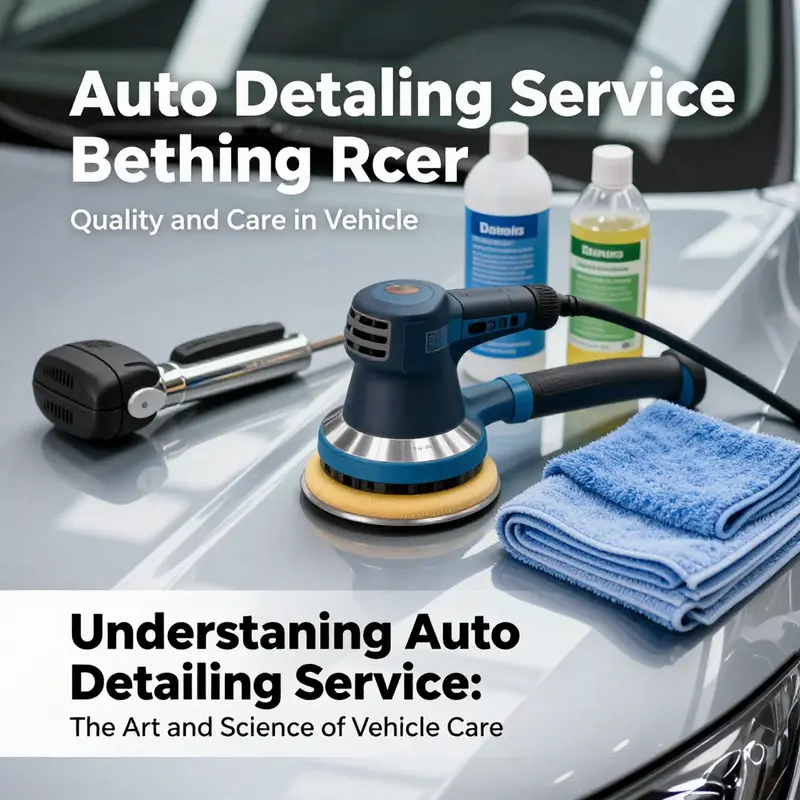
Auto detailing sits at the intersection of craftsmanship and science. It is a disciplined sequence of steps and choices that respects the vehicle as both a machine and a canvas. Unlike a routine car wash, detailing treats every surface with calibrated methods, using high-quality products and exacting tools to restore and protect. The goal is not just a brighter finish for a moment but a lasting condition that preserves value, comfort, and the sense of ownership that a well-cared-for car conveys. This is a practice that blends artful technique with strict standards, a balance that can be felt in every stage of the process and recognized by drivers who have come to see detailing as an investment in longevity as much as in appearance.
The exterior unfolding of a detail begins with a thoughtful approach to cleansing. A proper wash must do more than remove surface dirt; it should minimize micro-damage while loosening contaminants that will later challenge the finish. Professionals begin with a pre-wash rinse and an intentional soap choice that is pH-balanced to protect existing wax or sealant layers and to guard the integrity of the clear coat. The wash itself is followed by a meticulous decontamination phase where embedded particles—those that cling to the paint and feel like rough sandpaper to the touch—are removed. This is where clay barring comes into play. Clay barring is not a rough scrubbing of the surface; it is a refined, tactile engagement that lifts embedded contaminants without engaging the paint with harsh abrasion. The result is a paint surface that feels smooth as glass and is ready for the next critical step: paint correction.
Paint correction is a careful, sometimes painstaking, procedure. It involves removing the micro-swirls, micro-scratches, and oxidation that accumulate over time from washing habits, environmental exposure, and routine use. The method relies on controlled abrasion with progressive refinement. A technician selects the appropriate pad and an appropriate polish to abrade only the affected layer and to preserve the integrity of the clear coat. The objective is not to remove material aggressively but to harmonize the surface back to a uniform reflection. When this correction is complete, the paint reveals a depth and clarity that speak to the condition beneath—the vehicle’s color enriched by preparatory work rather than dulled by neglect. After correction, a protective layer is applied. A wax or a ceramic sealant lock in the corrected finish, providing a barrier against UV rays, dirt, water spots, and minor abrasions. These coatings create what many describe as a deeper, more durable gloss and a barrier that lasts longer than a simple wash can deliver. The coating is not merely cosmetic; it is a shield that sustains the improved appearance and helps maintain the underlying substrate against environmental challenges.
Inside the vehicle, the detailing narrative continues with the same commitment to care. A precise interior cleaning protocol is designed to restore freshness while protecting sensitive surfaces. Exterior-acquired dirt can easily migrate inside, so the interior starts with targeted vacuuming to lift debris from carpets and upholstery. The next stage uses pH-balanced car wash soaps for exterior surfaces as a reference point for interior cleaning, ensuring compatibility with later steps and preventing any cross-contamination. Every surface is treated with the right tool for the job. Medium-bristle brushes are ideal for general interior cleaning, dislodging grime from fabric and vinyl without scratching. Hard-bristle brushes take on tougher tasks such as engine bays and undercarriage components, where robust scrubbing power is justified. The cleaning suite extends to the dashboard, center console, door panels, and trim—each surface receiving attention tailored to its material composition. Plastic and vinyl are cleaned with non-abrasive, dilutable all-purpose cleaners that break down oils and soils without weakening surface finishes.
Leather, when present, receives careful cleaning and conditioning to maintain suppleness and prevent drying or cracking. The conditioning step is as important as the cleaning; it replenishes natural oils and helps prevent premature wear. For fabrics and carpets, shampooing or hot-water extraction is employed to dislodge embedded soils while preserving fibers. Odor elimination is a common but often overlooked part of interior detailing. Contemporary practices include targeted odor control and, in some cases, ozone treatments for more persistent smells. Such treatments are carried out in controlled environments to ensure safety and effectiveness. Windows receive attention as well, with streak-free cleaning that improves visibility and enhances the overall sense of cleanliness. The detailing experience often extends to the less visible but equally important elements: the engine bay, where dirt can accumulate and degrade performance clues; the wheel wells; and the undercarriage. Each area benefits from a tailored approach, recognizing that the goal is not only cleanliness but also the long-term health of the vehicle’s systems.
The modern detailing landscape has evolved into a premium service model that emphasizes a controlled, almost boutique environment. The expectation is not simply a shine but a transformation that respects the owner’s relationship with the vehicle. In this context, the detailing studio becomes a space where meticulous process, quiet efficiency, and careful product selection communicate value. The vehicle is treated as a personal statement and a valuable asset, deserving professional care that extends beyond appearance to preservation and resale potential. In the space between complete sessions, there is a growing appetite for convenience that does not compromise quality. Quick-refresh products and light maintenance procedures exist to bridge the gap between professional treatments, allowing owners to refresh a coating’s appearance or to extend protection between appointments. These solutions are designed to be easy to use, low risk, and compatible with the coatings already on the vehicle, making routine touch-ups a practical extension of professional work rather than a shortcut.
The craft of detailing rests on the hands of skilled technicians who bring a deep understanding of surfaces and finishes to every vehicle. Tools matter as much as technique. Microfiber towels, chosen for their absorbency and softness, are essential for drying and finishing without marring. Dual-action polishers, used with a patient, measured touch, enable consistent results across a broad spectrum of paint conditions. The choice of brushes—medium for general interior cleaning and hard for engine bays and heavy-duty tasks—reflects a pragmatic use of equipment that respects the different textures and vulnerabilities within a car’s interior and underbody. The right combination of pads, compounds, and coatings—selected with a sense of proportion and restraint—allows technicians to correct and protect without overworking the surface. The emphasis on appropriate materials extends to the cleaning solutions themselves. Car wash soaps used on the exterior are formulated to be gentle enough to preserve protective layers yet strong enough to remove contaminants. Non-abrasive, dilutable APCs clean vinyl, plastic, rubber, and fabric surfaces without damage, while pH-balanced exterior cleaners preserve wax and sealants while providing effective cleansing.
Quality assurance is the standard that binds all these elements together. Consistency in process, meticulous attention to each surface, and adherence to established industry practices define the service. A high-quality detailing session leaves no surface neglected, and every step is calibrated to protect and enhance the vehicle’s long-term integrity. The promise of high-quality detailing is not merely a surface-level transformation; it is a disciplined approach to maintenance that supports resale value and the owner’s ongoing pride in their vehicle. The chain of care does not end with the last wipe of a door panel. It extends to documentation, reminders, and follow-up maintenance—parts of a modern detailing ecosystem that help owners stay on track and keep their vehicles in peak condition over time.
Technological advances have reshaped how professionals manage this work. Remote detailing services, for example, bring the precision and care of a studio to the customer’s location. A fleet or a busy professional can schedule regular care without disrupting daily routines, and technicians can tailor services to the specific environmental exposures a vehicle faces. Digital tools, including automated service reminders and detailed maintenance logs, support a proactive maintenance mindset. Platforms that track appointments, service histories, and future care needs help owners stay organized and informed. These digital layers complement the hands-on craft, providing a transparent record of work and a predictable maintenance rhythm that can extend a vehicle’s life while preserving its appearance.
The strategic use of the right supplies is another pillar of quality in detailing. Technicians select cleaners, detergents, and protectants with care, recognizing that cleaners must be compatible with paint, trim, fabric, and leather. Wheel cleaners, for instance, are chosen to address different levels of contamination and corrosion risk, with options that are tailored to the surface’s susceptibility to acids and abrasives. The goal is to prevent damage while achieving a thorough clean. This attention to compatibility reduces the risk of dulling, etching, or discoloration and ensures that every product in the toolbox serves a precise function in the overall detailing plan.
As the field evolves, so too do expectations about environmental responsibility and efficiency. The future of detailing leans into higher-performance equipment that can deliver superior results with less waste and downtime. Eco-conscious formulations are increasingly prioritized, aligning the care of a vehicle with broader environmental considerations. At the same time, smart maintenance tracking and data-driven scheduling are changing how owners think about upkeep. The best detailing experiences blend technical skill, premium materials, and forward-looking systems to deliver outcomes that endure beyond a single shine.
For readers who want to explore the broader care ecosystem beyond detailing alone, many shops offer integrated services that cover both cosmetic care and fundamental maintenance. This interface between aesthetic improvement and mechanical upkeep reinforces the idea that a car’s health is not a series of isolated tasks but a coordinated program. When detailing is approached as part of a broader maintenance strategy, the value of the vehicle becomes clearer, and the owner’s confidence in protecting their investment grows.
In reading about the full arc of vehicle care, it is helpful to consider the practical implications of these techniques for daily life. A detail does not have to be an occasional luxury; it can be a regular, well-planned part of ownership. A robust detailing routine, anchored in sound methods and supported by smart tooling and scheduling, creates a living record of care that speaks to pride in ownership. It is a narrative of stewardship: surfaces restored to their best, interiors renewed, and the vehicle as a whole maintained in a state that respects both aesthetics and function. This is the essence of auto detailing as described by practitioners who treat it as a disciplined craft, and it is also the experience that owners seek when they choose a detailer who combines technique with accountability.
To connect with broader vehicle-care services and the continuity of maintenance, some readers may find it useful to see how professional shops integrate routine repairs and cosmetic care. For a broader view of car repair and maintenance services, you can explore this resource: car-auto-repair-services.
For those who want to deepen their understanding of maintenance principles and care tips from a wider industry perspective, an external resource with detailed guidance on vehicle care and maintenance is available. This reference provides additional context and practical tips that complement the detailing approach described here: https://www.autocar.co.uk/article/vehicle-care-and-maintenance-tips-2026
Beyond the Shine: How Auto Detailing Protects Your Investment and Elevates Your Vehicle’s Value

Detailing is not merely a cosmetic ritual; it is a disciplined approach to preserving a vehicle’s health and appearance over time. It treats the car as a tightly engineered system, where every surface—exterior paint, glass, trim, wheels, and every nook of the interior—benefits from a carefully curated sequence of cleaning, decontamination, protection, and conditioning. The aim is not only to restore a showroom gleam but to create a resilient barrier against the daily onslaught of pollutants, UV exposure, moisture, and wear. When done with precision, detailing can slow the subtle processes that degrade value and diminish the driving experience, keeping a car closer to its original character and appeal for longer. In this sense, auto detailing becomes a practical investment strategy, one that pays dividends in aesthetics, longevity, and resale potential. The process embodies a fusion of artisan care and scientific method, where the choice of tools, surfaces, and products matters as much as the technique itself. Although the steps may unfold in a familiar rhythm—wash, decontaminate, polish, protect—the outcome depends on the technician’s ability to read a surface’s needs and respond with the right measures at the right time. This is especially true for vehicles that have lived in varied climates or that carry a history of daily drivers and weekend adventures; here, detailing is less about chasing a fleeting gloss and more about reinforcing the structure of a car’s finish and interior materials so they endure and remain functional through years of use.
The exterior begins with the simple act of a thorough cleanse, but it quickly evolves into much more. A detailed wash removes loose dirt, but that is only the first chore. The exterior undergoes a careful decontamination phase that includes the removal of embedded pollutants—contaminants that lie beneath the surface and can fuel long-term damage if not addressed. Clay bar work is employed to lift these particles from the paint without abrading the surface, creating a clean slate that is receptive to protection. After decontamination, the paint often reveals micro-imperfections that the naked eye might miss but that can impinge on the vehicle’s long-term value. This is where paint correction comes into play: a measured sequence of polishing steps that smooths out swirl marks, light scratches, and oxidation to restore depth and clarity. The goal is not to erase character but to remove the layers of wear that dull color and compromise reflections. The final flourish is a protective coating, which may range from traditional waxes to advanced ceramic sealants. These coatings do more than impart a glossy, glassy finish; they create a hydrophobic barrier that repels water, reduces the adhesion of dirt and minerals, and resists UV-induced fading and minor abrasions. By forming a tougher surface with superior resilience, coatings help maintain the paint’s integrity between visits and extend the interval before another correction becomes necessary.
Inside the cabin, the narrative is equally meticulous. Detailing treats interior surfaces as living components that endure sun exposure, temperature swings, and daily use. Deep-cleaning digs beneath the surface where dirt and odors accumulate, lifting out stains from carpets and upholstery and refreshing fabrics with specialized cleaners and conditioners. Leather, if present, is cleaned and conditioned to preserve suppleness and prevent cracking—an action that both preserves tactile quality and supports resale value by maintaining the seat’s integrity. The dash, consoles, and trim are treated to careful cleaning and conditioning to slow color fading and fading-induced cracking, while plastics and vinyls are protected against UV damage and brittleness. Sanitizing the cabin becomes more important in a modern context, where the quality of air and the absence of allergens contribute to a healthier driving environment. Odor control, often including targeted odor neutralization methods, is not a single trick but a process that aims to neutralize persistent sources rather than simply masking them. The result is a fresh, balanced interior atmosphere that endures through daily use.
A complete detailing package often reaches beyond the obvious to offer broader benefits tied to the vehicle’s longevity and market appeal. Windows receive a precision clean, delivering clarity that not only improves visibility but also promotes safer driving and better aesthetics. Tire dressing is applied to revive the wheel wells’ appearance and to create a finished, showroom-ready look that frames the vehicle’s body lines. Some premium services extend to the engine bay, where careful cleaning can reveal a tidier, more organized presentation of one of the car’s most visible under-hood spaces. While not all owners need or desire every optional service, the availability of these refinements reflects a contemporary detailing culture that treats car care as an elevated, almost boutique experience. In controlled environments, technicians can work with reduced dust and better lighting, allowing for more precise correction and a longer-lasting outcome. This white-glove approach aligns with a broader mindset among car lovers who see vehicles as personal statements and valuable assets worth meticulous stewardship.
The benefits of detailing extend far beyond appearance. A well-executed exterior protection routine slows the progression of oxidation and fading, preserving color richness and gloss for longer periods. Protective coatings form a barrier against moisture, dirt, and sun exposure, reducing the cumulative impact of environmental stressors on the paint. Because these coatings create a more hydrophobic surface, washing becomes faster and more efficient, with dirt less likely to cling and mineral deposits less likely to etch into microscopic imperfections. This is not about chasing a perpetual mirror finish; it is about sustaining a durable, healthy surface that resists the forces that wear finishes down over time. Inside the vehicle, the conditioning and sealing of materials help prevent cracking, fading, and staining, especially from sun exposure and everyday use. In this context, detailing becomes a proactive practice that protects the investment by maintaining the vehicle’s visual appeal and the functional integrity of its components. The resale value of a well-detailed car often benefits because buyers see evidence of conscientious ownership, a car that has been cared for with a disciplined routine rather than subjected to random cleaning or neglect.
From a strategic standpoint, regular detailing contributes to longevity in unexpected ways. When surfaces are cleaned, decontaminated, and protected on a consistent schedule, there is less risk of long-term damage that can require costly repair or restoration work. The maintenance of trim, glass, and upholstery helps preserve the overall sense of newness that buyers and enthusiasts prize. The careful attention to detail provides reassurance to prospective buyers, who are more likely to be attracted to a vehicle that has clearly been maintained with thought and expertise. In a used-car market where condition often dictates price, the impact on resale value can be meaningful. The car may not fetch a higher price solely because of a single detailing session, but over time, the accumulated effect of consistent care is a more pristine appearance, better condition of interior materials, and a stronger sense of overall durability. These are tangible signals that buyers perceive, and they can influence negotiating leverage and market appeal.
The science of detailing sits at the intersection of craft and technology. It relies on skilled technicians who can interpret the condition of a surface and select the appropriate tools and methods. Microfiber towels, a range of polishing tools, and carefully chosen applicators all play a role in achieving a flawless finish. The process emphasizes restraint and precision—polishing too aggressively can remove more clear coat than intended; neglecting a surface can leave micro-scratches that accumulate with time. The careful calibration of time, pressure, and product is essential to avoid introducing new imperfections while correcting existing ones. In this light, detailing is as much about judgment as it is about technique. The goal is not to overwrite a vehicle’s character but to preserve its integrity, to keep its glimmer underpinned by durable protection and thoughtfully restored surface clarity.
For enthusiasts who cherish classic or vintage cars, detailing carries additional weight. The value of a well-preserved older car often hinges on its originality and its outward presentation, which communicates a narrative of care and provenance. In this context, a detailed regimen is a central part of preservation, helping to safeguard original paint and interior materials that may be irreplaceable or costly to reproduce. It is not unusual to see owners who view detailing as a stewardship practice—an ongoing discipline that sustains the car’s authenticity while ensuring it remains a compelling and spirited asset for years to come. For those who lean into the nostalgia of classic autos, this care becomes a bridge between past and present, preserving the visual language of a bygone era while enabling comfortable and reliable use today. Within the vintage community, the attention paid to finish, trim, and interior surfaces often translates into better market reception and a more enthusiastic, informed set of buyers. If you are curious about how this preservation mindset translates into practical steps for classic or vintage vehicles, you can explore resources like Revive Your Classic: the ultimate guide to sourcing and upgrading vintage cars legally, which speaks to the ethos of careful restoration and ongoing care even outside routine detailing. Revive Your Classic: the ultimate guide to sourcing and upgrading vintage cars legally.
The ultimate takeaway is a simple one: auto detailing, when executed with care and expertise, is a practical form of investment protection. It is the choice to engage with a process that treats a car as a dynamic, living asset rather than a disposable object. The benefits accrue in stages—the momentary delight of a showroom shine, the longer arc of preserved materials and finish, and the lasting impression of a vehicle that continues to perform and look its best week after week, year after year. This approach is consistent with a growing consumer preference for meticulous care and lasting value. It rejects the notion that the car’s best days are behind it and instead asserts that high-quality detailing can extend the life of a vehicle’s aesthetics, maintain its functional components, and preserve its market appeal. For readers seeking a deeper understanding of protective coatings and their performance metrics, a comprehensive resource provides a rigorous foundation for evaluating the long-term benefits of different surface protections and finishes. See the authoritative guide on detailing supplies for a broader technical perspective: https://www.autocar.com.au/vehicle-care/detailing-supplies-guide. In the end, the decision to detail is a decision to honor a car’s past while investing in its future—an investment that pays dividends not just in price, but in the pleasure of ownership and the pride of stewardship.
Beyond the Shine: The Next Era of Auto Detailing—Automation, Data, and Eco-Conscious Precision

The surface of the car has always been a stage where craft meets chemistry, where reflections reveal not just a vehicle’s identity but the intent of its owner. Today, as the automotive world tilts toward smarter mobility and greener practices, auto detailing stands on the brink of a broader transformation. It is no longer enough to remove dirt and buff a gloss; the discipline is evolving into a data-driven, technician-assisted, technology-enabled process that treats the car as a living system within a complex ecosystem of roads, weather, and wear. In this light, the future detailing service unfolds as a carefully choreographed sequence of precision, personalization, and responsibility, a blend of artistry and algorithm that preserves value while anticipating needs before they are even clearly felt by the driver. The shift is not a rejection of traditional care but an expansion of it, a move from the ritual of a showroom shine to the science of sustained, measurable condition across both exterior and interior surfaces, and across the miles that lie ahead.
Automation is the most visible and consequential thread weaving through this future. The image of the detailer bent over a car, slowly hand-polishing, still holds a recognizable place in the industry’s soul, but the arc of progress is pulling the industry toward a no-hands paradigm. Automated wash systems, already common in many facilities, are being refined for higher accuracy and lower water use. These systems arrive with intelligent sensors that map the vehicle’s contours and surface hardness, adjusting pressure and contact in real time to minimize abrasions and maximize uniformity. The promise extends beyond the wash bay. Robotic detailers—sophisticated machines capable of polishing, waxing, vacuuming, and even interior cleaning—are targeted to mimic the multi-stage rhythm of a human technician. They map a vehicle in three dimensions, learn its paint behavior with repeated passes, and adapt their approach to different model families with a degree of precision that is difficult for even seasoned craftsmen to guarantee consistently across thousands of vehicles. The trend toward “no-service” or autonomous detailing, where a customer can summon a robotic unit through a smartphone and watch the process unfold remotely, seems futuristic only in its immediacy of access. It is becoming a practical reality in spaces designed to host automated workflows, where environmental control, dust mitigation, and dedicated detailing substrates create an ambience that supports a uniformly excellent result.
But automation does not erase the human element. Rather, it redefines it. The human technician, once the sole conductor of the process, now coordinates with machines, interprets sensor data, and makes judgment calls that require nuance and intuition. The disciplines of paint correction, for instance, are increasingly informed by real-time data about a panel’s micro-marring and the paint’s underlying chemistry. Sensors can detect residue levels, surface hardness, and UV-induced oxidation in situ, guiding the technician to concentrate effort where it matters most. This is not a narrowing of craft but an expansion of it—where the human eye collaborates with machine-perceived signals to deliver a finish that is both visually striking and durably protected. The practical upshot is a standardization of outcomes across different operators and facilities, which is particularly meaningful in the context of franchise models, fleet partnerships, and high-volume shops. Customers gain predictability; operators gain scalability without sacrificing quality.
Digital integration deepens this shift. The concept of a vehicle health digital twin—an always-on, cloud-based representation of a car’s condition—moves detailing from a scheduled event to a continuous service proposition. As cars become more connected, service providers can draw from IoT feeds: paint condition indicators, tire wear progression, interior humidity levels, and even cabin particulate counts. With those data strands, a personalized detailing plan can be generated automatically, tuned to climatic exposure, driving patterns, and prior service history. A sedan that spends fifty percent of its miles in dusty urban corridors might prompt a more frequent exterior detail with a focus on paint protection. A luxury SUV with nested leather and exotic trim might trigger an interior deep-cleaning regimen that prioritizes conditioning and UV protection for delicate surfaces. The point is not to advertise a one-size-fits-all package; it is to offer a living, dynamic program that evolves with the vehicle.
The customer experience is also undergoing a digital renaissance. AI-enabled customer journeys—through chatbots, virtual assistants, and robust self-service portals—promise to streamline everything from quotes to appointment scheduling and post-service care guidance. The most successful models converge with the vehicle’s owner life cycle: an automated reminder when certain driving conditions predict accelerated wear, a proactive offer when a known seasonal risk is near, or a tailored renewal path following a fleet vehicle’s recurring maintenance plan. Personalization here is not mere marketing; it is a practical service strategy designed to maximize value while reducing friction for the customer. In this new order, the detailing process feels less like a single event and more like a continuous relationship, one that respects the owner’s time and the vehicle’s evolving needs.
Sustainability is no longer a footnote but a central criterion. Water conservation has moved from a preference to a mandate in many jurisdictions, pushing the industry toward waterless or low-water techniques and highly efficient spray systems that minimize waste while maximizing surface cleanliness. The products themselves reflect a growing demand for eco-certified formulations: biodegradable cleaners, UV-protective sealants with low environmental impact, and waxes formulated to deliver long-lasting protection with a lighter ecological footprint. The move toward a circular economy is visible in every facet of practice, from waste handling and chemical recycling to the careful management of worn polishing compounds and consumables. Facilities increasingly design workflows that minimize stock redundancy and energy use, while training programs emphasize correct dilution practices, waste stream segregation, and safe disposal. This eco-conscious mindset resonates with consumers who view their vehicles as extensions of personal values—careful, conscientious, and durable, not merely flashy.
New business models are emerging to harness these capabilities and expand access. The idea of service as a product—what one could frame as a recurring detailing subscription—offers predictable budgeting for owners and steadier revenue streams for providers. Instead of a single appointment, customers commit to a chosen cadence of sessions, with automated scheduling and robotic execution as the default mode. Fleet operators, including ride-hailing and delivery services, present another substantial opportunity. When autonomous fleets become more common, the need for consistent, scalable, and discrete maintenance and detailing grows exponentially. For providers, this creates a blueprint for scalable, robotic-enabled solutions that can service dozens or hundreds of vehicles with minimal human intervention, yet with highly personalized outcomes. A related trend is the expansion of on-demand mobile detailing apps, which leverage GPS to dispatch the nearest robotic unit or technician. The result is shorter wait times, smarter route optimization, and a smoother handoff between the customer, the vehicle, and the service ecosystem. The business model also invites a convergence with warranty and insurance frameworks, as real-time data about vehicle surfaces and cabin conditions can feed into maintenance records and coverage decisions.
The interplay of data and expertise raises questions about privacy, security, and trust. As detailing services gather ever more granular data about vehicle surfaces, interior materials, and owner habits, the question of data stewardship becomes central. Providers must articulate transparent policies about data collection, storage, usage, and consent, while ensuring robust cybersecurity to protect sensitive information. The best practitioners will not only comply with regulation but demonstrate a commitment to responsible data practices as a differentiator—treating data as a shared asset that enhances service quality rather than a barrier to access. Likewise, professionals will need to adapt their training pipelines to a hybrid model where machine-driven precision and human judgment coexist. This means updating curricula to cover robotics operation, sensor interpretation, and digital health monitoring alongside traditional detailing techniques and material science.
This future also sets the stage for a broader cultural shift in how owners perceive car care. If buying a vehicle is increasingly an investment in technology, then protecting that investment becomes a lifelong commitment. Owners will come to expect an ongoing, optimized care routine rather than occasional polish, much as people expect regular software updates for their devices. The detailing industry, therefore, must position itself as a partner in asset management, offering transparency in outcomes, predictability in service intervals, and clarity about value delivered. In that sense, the detailer’s craft becomes a form of performance engineering for automobiles—a discipline that merges aesthetic judgment with measurable durability.
A final layer of meaning emerges when considering the intangible benefits: pride of ownership and the story of a car that travels through time with care. Even as robots shoulder more of the routine labor, the narrative of meticulous attention remains crucial. Owners will seek experiences that feel refined, almost boutique in their execution, yet underpinned by scalable processes. The future detailing studio may look like a showroom in design terms but operate like a precision workshop, where the ambience accentuates the care process and the sound of a quiet robotic arm becomes a familiar cadence rather than a disruption. In other words, the future is not about replacing human skill but elevating the entire experience to a higher plane of consistency, accountability, and intimacy with the vehicle. The result is a form of care that respects both the science of materials and the art of perception—the kind of detailing that keeps a car’s beauty legible across seasons, miles, and generations.
For readers who crave a concrete sense of what this future looks like in practice, imagine an exterior detailing session that begins with a digital survey of paint thickness, contamination indices, and cured clear coat integrity. A robotic unit then follows a tailored protocol, guided by real-time sensor feedback, to deliver a swirl-free finish and a protective layer optimized for the vehicle’s exposure profile. Simultaneously, an interior detailing robot navigates the cabin with a map of surface sensitivities—leather, soft-touch plastics, and high-gloss trim—while a parallel digital stream logs cabin air quality and humidity, calibrating sanitization steps to each environment. A human supervisor monitors the progress through a dashboard that translates complex sensor data into actionable recommendations for post-service maintenance, whether that means advising a lighter ceramic top-up between sessions or scheduling a climate-controlled storage interval to prevent UV degradation. The outcome is a deeply consistent, visibly stunning result that is also verifiably protective and aligned with the owner’s values and calendar.
The future of auto detailing, then, is not a single destination but a trajectory that redefines what it means to care for a car. It blends the precision of robotics with the nuance of human judgment, leverages data to personalize care, and champions sustainability as a core operating principle. It reshapes the role of the detailing studio from a place where surfaces are cleaned to a place where surfaces are understood, protected, and enriched over time. It invites owners to participate in a transparent, data-informed journey that respects their time, their assets, and the ecological footprint of their choices. And it promises a future where the shine is not merely superficial but a reliable signal of ongoing stewardship—where the gloss you see is the visible sign of a system that continuously analyzes, learns, and improves. In that sense, the next era of auto detailing is about more than making cars look new; it is about sustaining their sustained beauty through intelligence, care, and responsibility that extend far beyond the moment of the polish.
For those interested in a broader sense of how performance testing and precision discipline translate from the track to the workshop, the world of automotive care can be illuminated by exploring the domain of track testing and retro experiences with classic cars. It offers a parallel illustration of how rigorous standardization, meticulous attention to surface behavior, and the disciplined application of technique yield reliable outcomes—whether on a race circuit, a museum floor, or a service bay. This cross-pollination helps the detailing profession envision not only what comes next but how to measure it, verify it, and communicate its value to customers who increasingly demand proof of performance along with the promise of beauty. Track-testing retro experiences with classic cars stands as a reminder that even as technologies evolve, the core objective remains enduring: to transform a vehicle into a better version of itself, responsibly and with intention. The future of auto detailing is thus both a technical evolution and a cultural refinement, a movement that honors tradition while embracing innovation, and a commitment to care that endures through every mile ahead.
Final thoughts
Understanding auto detailing service is key to maximizing the longevity and appearance of your vehicle. The depth and intricacy involved in the detailing process reflect the care required to maintain not only aesthetic appeal but also the vehicle’s overall value. Each chapter has illuminated aspects of auto detailing that benefit individual car owners, fleet operators, dealerships, and repair shops alike, fostering both education and awareness. As the industry evolves, future trends promise even more innovative techniques. By investing in auto detailing, you safeguard your asset while enjoying the pride that comes with a well-maintained vehicle.