
The allure of free car maintenance often misleads private car owners, small business fleet operators, and auto service professionals. Advertised as complimentary, these services typically cover only the most basic necessities, leaving many unaware of the substantial costs that redound from necessary upgrades, labor fees, and additional recommended services. Whether managing a fleet or ensuring your vehicle’s longevity, understanding what truly constitutes ‘free’ maintenance is critical. This article will unpack the nuances of free auto services—a concept that often hides various costs behind a glossy marketing facade. Each chapter will delve deeper into facets like hidden costs in maintenance, material upgrades, labor fees, the impact of additional services, and the restrictions that come with these offers, ensuring clarity for all stakeholders involved in auto care.
The Real Price of ‘Free’ Maintenance: How Hidden Costs Inflate Auto Service Bills
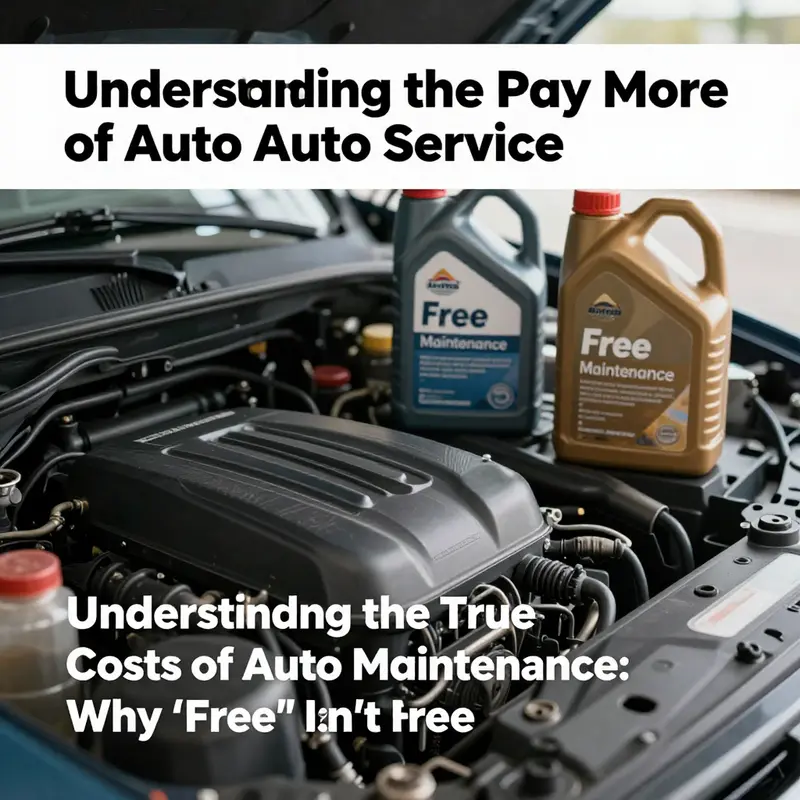
The Real Price of ‘Free’ Maintenance: How Hidden Costs Inflate Auto Service Bills
Car buyers are often drawn to the promise of free maintenance. The idea is simple and persuasive: a few scheduled services included with a purchase, alleviating future hassle and cost. What that marketing line rarely communicates is how narrowly “free” is defined, and how the omitted pieces—upgrades, labor, time limits, and dealer-only restrictions—shift expense back to the owner in less obvious ways. This chapter unpacks those trade-offs and explains why paying more for auto service sometimes protects your wallet over the long run.
At its core, a free maintenance package is a base-level offering. Dealerships and manufacturers design these plans to cover foundational tasks: a standard oil change using a basic mineral or semi-synthetic oil, a generic oil filter, and quick safety checks. These actions are essential, but they are the minimum required to meet warranty or safety standards—not necessarily the choices that deliver the best long-term protection for your vehicle. Upgrading any material or asking for extra thoroughness invites an additional charge. For example, switching from a mineral blend to full synthetic oil can carry a simple per-liter premium. That premium is small per liter, but it adds up over the life of a car and compounds when combined with labor fees.
Labor itself is another area where the word “free” loses weight. Some plans advertise that parts are covered without clarifying whether shop labor is included. Independent shops often itemize labor separately; dealerships sometimes bundle it into a larger service charge. Even when parts are free, labor fees for routine tasks can range widely. A basic oil and filter change may be listed as complimentary on paper, yet labor charges can still appear on the invoice if the fine print allows it. That dissonance between advertising and the final bill is a common source of frustration and creates the perception that “free” maintenance is a bait-and-switch.
Beyond basic services, many recommended extras fall outside any complimentary package. Throttle body cleaning, engine carbon deposit removal, cabin and air filter replacements, air conditioning system cleaning—these services are often pitched as value-adds rather than necessities. Some are genuinely helpful, especially for vehicles that see heavy use or long highway miles. Others are preventive suggestions that benefit from timing but are not urgent. Because they are optional, they are prime upsell targets for service advisors. A vehicle owner who does not know the difference between urgent repairs and recommended maintenance is more likely to pay for services that can be deferred or performed more affordably elsewhere.
Restrictions tied to free maintenance vouchers further erode value. Vouchers often require service at a specific location and within a narrow time or mileage window. They may be non-transferable, invalidated if ownership changes, or contingent on purchasing additional products like dealer insurance. These constraints reduce flexibility and can force owners into higher-cost service channels. If you move or prefer a trusted independent mechanic, the voucher’s limitation can make the supposed savings impossible to realize.
A broader issue is the way free maintenance is financed. Seller-provided plans are rarely financed separately; instead, their cost is embedded in the vehicle price or monthly payments. This packaging obscures the true cost from the buyer. When a dealership includes a maintenance plan in the purchase price, the buyer is paying for future service up front, sometimes with interest. That approach benefits cash flow for the seller and for lenders, but it can be an expensive way to prepay routine maintenance. Paying cash at the time of service or shopping around often yields better pricing and better alignment of service needs with actual vehicle condition.
Transparency is the counterweight to these tactics. Businesses that clearly list which materials and labor are included and which are optional win trust. An honest invoice shows each item, the parts cost, the labor hours, and the applied warranty credits or vouchers. For a consumer, asking direct questions before approving any service can prevent surprises. Confirm whether a “free” offer covers both parts and labor, identify the exact oil grade and filter type, and get written confirmation of what upgrades will cost. If the advisor proposes additional procedures, request a brief demonstration or inspection report showing why the work is necessary.
Understanding typical annual ownership costs also reframes the value of free maintenance. National surveys show that vehicle ownership involves many significant ongoing expenses. Fuel and insurance often dominate the budget, but maintenance and repairs are meaningful too, especially as a car ages. Considering free maintenance as only one piece of the larger financial picture helps you make a more rational evaluation. A small up-front premium for a comprehensive, transferable maintenance plan might be a smart hedge for someone who drives high miles or plans to keep the car a long time. For others, the flexibility to choose independent shops or to perform simple maintenance themselves can be cheaper.
There are practical steps to avoid paying more than necessary. First, read the terms of any free maintenance agreement carefully. Look for explicit inclusions and exclusions: which fluids, how many liters of oil, which filter spec, and whether labor is covered. Second, get a clear price list for common upgrades such as synthetic oil or high-performance filters. Third, decline non-essential add-ons on the spot if you’re unsure; you can always revisit them later after a second opinion. Fourth, consider learning to perform simple tasks yourself. Replacing cabin or engine air filters, checking fluid levels, and even changing oil are attainable for many owners and save both parts markup and labor.
It also pays to compare quotes from local independent shops. Independent mechanics often provide equal or better service at lower prices because they have lower overhead and don’t rely on brand-specific parts. For owners who want an up-sell guardrail, a trusted independent shop can offer straightforward estimates and honest advice. If you prefer dealer care for warranty reasons, explicitly ask whether an independent shop can perform certain services without voiding warranty coverage. Many routine procedures can be done by certified third parties while keeping warranty protections intact.
Finally, weigh the long-term trade-offs. A penny saved today on a cheap oil change might cost more in repairs later if cheaper materials accelerate engine wear. Conversely, buying an extended dealer maintenance bundle that you never use is wasted money. The smart approach is to match service decisions to your driving patterns, vehicle needs, and budget. Keep records, follow manufacturer-recommended intervals, and prioritize preventive maintenance where it demonstrably extends component life.
If you want to explore independent options in your area, researching local shops and reviews can help. For example, a local directory of auto service providers can reveal alternatives to dealership maintenance and help you compare costs and reputations. More disciplined consumers will find that clarity and careful questions reduce the likelihood of surprise bills and make the term “free maintenance” less alluring and more honest.
For more detail on average ownership costs and how maintenance fits into overall expenses, see the Bureau of Labor Statistics consumer expenditure data: https://www.bls.gov/cex
For local service options and independent shop listings, consider checking resources that list nearby auto service providers.
When Better Materials Mean Bigger Bills: Why Upgrades Drive Auto Service Costs
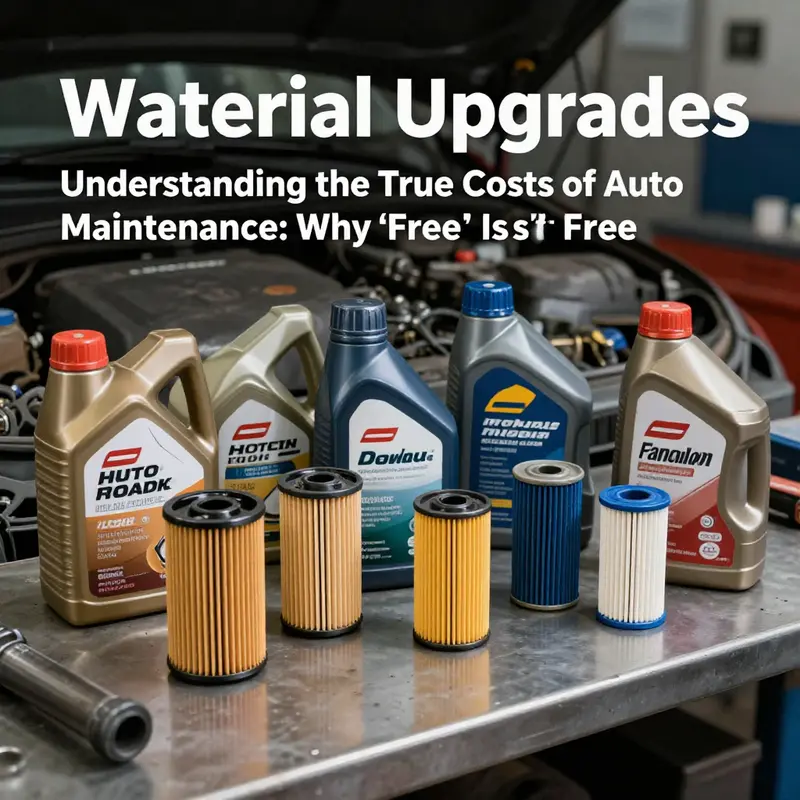
When material choices change, so does the bill. Luxury and premium vehicles justify higher sticker prices in part by using advanced materials across brakes, engines, suspension, and interiors. Those same choices influence every service visit. Understanding how material upgrades affect parts costs, labor, and required maintenance routines helps you decide when paying more makes sense — and when to push back.
Premium materials are selected for performance, longevity, and weight savings. Carbon-ceramic brake rotors and pads resist heat and wear far better than conventional cast-iron systems. High-strength aluminum and specialized alloys reduce mass while maintaining rigidity in engine blocks, subframes, and suspension members. Genuine leather, real wood trim, and carbon-fiber accents elevate the cabin but demand precise cleaning, conditioning, and repair techniques. Each of these benefits is real: improved stopping power, better fuel efficiency, superior corrosion resistance, and an enhanced tactile experience. Each also costs more to replace or maintain.
The chain reaction starts with parts pricing. Advanced composites and rare alloys require complex manufacturing and tighter quality control. A brake pad made of carbon-ceramic composite is not a drop-in replacement priced like a generic metal pad; it is engineered to specific tolerances and often sold through a narrower supply chain. The consequence is that when replacement is necessary, the parts alone can be several times more expensive than a standard alternative. That price difference is not arbitrary. It reflects material costs, machining or molding complexity, and, in many cases, certification testing that ensures the part performs as intended under extreme conditions.
Labor is the next link. High-end materials often require specialized procedures. For instance, repairing or replacing components made from lightweight alloys may need torque values and fasteners different from mass-market models. Technicians must disassemble with extra care to avoid damaging expensive nearby components. Carbon-fiber components can crack if pried incorrectly; alloy threads may seize without proper anti-seize compounds and technique. Dealerships and authorized shops train their technicians and invest in tooling specific to these materials. Those costs are recovered through labor charges that can exceed what you would pay for work on a conventional vehicle.
Upgrades also change maintenance frequency and scope. Some premium materials are designed to last longer but require particular fluids or inspection intervals to deliver on that promise. High-performance engines may recommend full synthetic oils and specific viscosity grades to protect bearings and turbochargers. Using a lower-grade oil shortens component life and voids claims about durability. Thus, maintaining a premium car on the cheap often results in a false economy: savings on a single visit can lead to accelerated wear, more frequent repairs, and higher lifetime costs.
Dealership promotions that advertise “free” maintenance often hide these realities. The fine print typically covers only the most basic service items: a standard oil change, a generic filter, and a cursory inspection. If your vehicle’s manufacturer specifies premium fluids or upgraded filters for your model, the “free” package might not cover the actual materials needed. Upgrading to full synthetic oil or a high-flow filter will generate a price differential for materials, plus any labor not included by the voucher. Always confirm whether the complimentary package applies to your model’s required spec or just a baseline that may be inappropriate for premium variants.
Interior and exterior materials add another layer of nuance. Genuine leather requires pH-balanced cleaners and conditioners, and some finishes used in premium cabins need specific solvents to avoid staining or fading. Repairing scratched wood trim or replacing a carbon-fiber exterior lip often means ordering from the manufacturer rather than sourcing aftermarket alternatives. That restricts options and keeps prices higher because supply is controlled, and parts are matched to strict aesthetic tolerances. If you value the look and feel that came with the car, expect those costs when things need attention.
Not all expensive parts are unavoidable. The choice to preserve factory materials, or to accept aftermarket alternatives, is often yours. For wear items like brake pads, rotors, and filters, reputable third-party manufacturers produce options that match many OEM specifications at lower cost. However, choosing non-OEM parts can affect warranty coverage or resale value; it may also change long-term reliability. The smarter decision balances immediate savings against how long you plan to keep the vehicle and how much you value factory-original performance and materials.
Another hidden cost is inventory management. High-end manufacturers often limit parts distribution to authorized dealers or certified repair centers. That restriction reduces the number of suppliers, creating scarcity that drives prices up. When a part must be special-ordered, it can also extend repair times, increasing labor costs and creating the inconvenience of longer downtime. If a worn component is shared across several premium models, demand can spike for a replacement, especially after updates or recalls, and that too affects price and availability.
Value-added services pitched at routine visits can further inflate costs. Shops may recommend carbon-deposit cleaning, throttle body service, or specialized conditioning treatments for leather and trim. While these services may extend component life or restore performance, they are not always necessary on a strict maintenance schedule. Some are preventative and sensible, others are upsells that deliver marginal benefits. Being able to distinguish between required care for premium materials and optional treatments gives you leverage to decline unnecessary charges.
To manage these costs without sacrificing the benefits of better materials, take a few practical steps. First, know your vehicle’s maintenance specifications before you accept any “included” service. If the manual calls for full synthetic oil, a basic mineral oil service is not equivalent. Second, get a written list of what the complimentary service covers and what would be charged as an upgrade. Third, compare quotes between the dealer and independent shops that have experience with premium materials — some independents can source correct-spec parts and fluids at lower cost, while offering competent labor. Fourth, consider a hybrid approach: accept dealer service for warranty-critical work, and use a trusted independent for routine maintenance where the materials and procedures are well understood.
Owning a premium vehicle means intentionally paying for certain advantages. Advanced materials give you improved braking, sharper handling, lower weight, and a more luxurious cabin. Those advantages are not free; they are embedded in the maintenance lifecycle. But higher costs do not have to translate into blind overspending. Clear communication with service providers, informed choices about parts and fluids, and selective use of dealer resources let you protect your investment without leaving money on the table.
If you want a deeper look at how premium materials and service choices affect long-term ownership costs, an industry analysis that examines maintenance patterns across different vehicle segments provides useful context. It explains why premium cars often cost more to service and how that cost is distributed across parts, labor, and specialized procedures: https://www.cars.com/articles/why-premium-cars-cost-more-to-maintain-20251115/.
For owners who enjoy the driving experience of higher-end vehicles but want to manage costs, reading owner forums, consulting maintenance manuals, and seeking specialists who publish clear pricing can help. If you prefer hands-on work, some filter and fluid replacements remain suitable for DIY, provided you follow the manufacturer’s specifications. And if preserving factory materials matters to you, factor the higher maintenance requirements into buying and ownership decisions from the outset.
Understanding the relationship between upgraded materials and service costs moves the conversation beyond simple sticker shock. It reframes maintenance as a predictable outcome of material selection. When you accept that advanced materials require advanced care, you gain the ability to budget, negotiate, and choose services that keep the car performing as intended without paying for unnecessary extras.
For examples of vehicles across the premium spectrum and to see how enthusiasts and reviewers experience those differences, check out this roundup of luxury coupes that highlights how material choices influence driving feel and ownership impressions: experience the rush: your favorite big luxury coupes reviewed.
Labor Fees in Why Pay More Auto Service: The Costs Beyond Parts
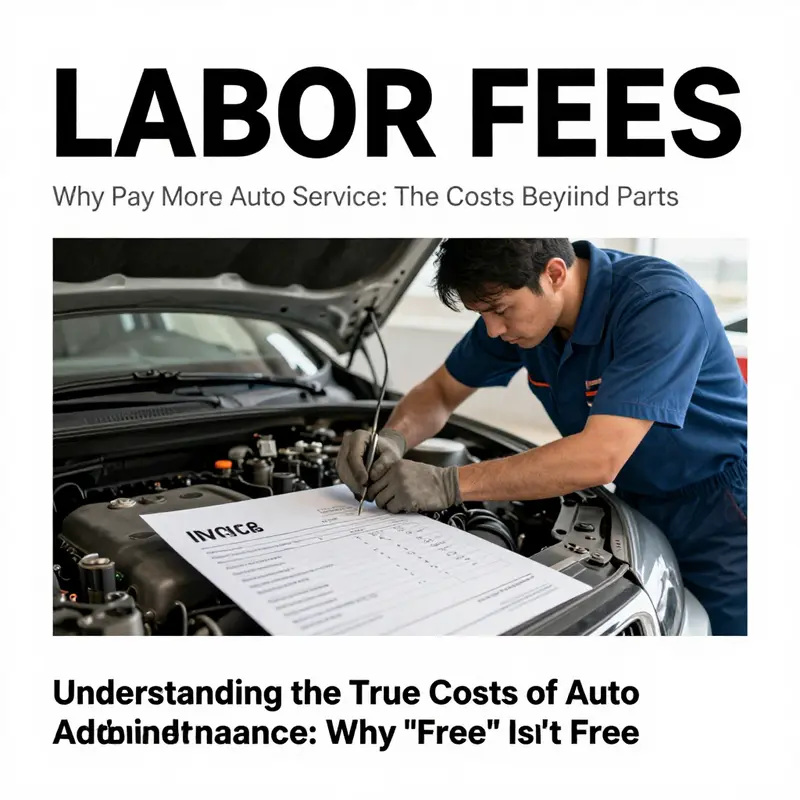
Labor fees are the shadow price of the skilled work that keeps a car reliable, safe, and ready to perform. When a dealership or shop markets a “free” service, the consumer often imagines a zero-cost experience. In practice, the only thing that tends to stay free is the parts or basic routine compliance, not the expertise, time, and diagnostics that modern vehicles demand. This chapter dives into why labor fees exist, how they’re calculated, and what that means for a driver who wants value without sacrificing quality. The goal is to illuminate the unseen costs behind a maintenance bill so readers can navigate the auto-service landscape with confidence rather than fear of surprise charges. The journey begins with the system most shops use to price labor: the flat-rate framework that governs how technicians are paid for their work and how customers perceive the affordability of a given repair or service.
Under the flat-rate system, a shop assigns a standard time to each job. A brake-pad replacement, an oil change, or a diagnostic procedure is given a code and a time estimate, usually expressed in minutes or tenths of an hour. The technician is paid not for the actual hours spent in the stall but for the designated standard time. If the job takes less time than the code allows, the shop benefits from efficiency because the labor charge remains fixed, and the technician earns more relative to the actual time worked. If the job stretches beyond the standard, the shop can still meet its staffing costs, but the technician’s earnings for that task may lag behind the hours actually spent. This model promotes consistency across shifts and locations, offering a predictable margin for the business and, ideally, predictable quotes for customers. Yet it also demands speed and accuracy, which can intensify the perception of high labor costs, especially on complex repairs or newer models with dense electronics and sophisticated safety systems.
What makes labor fees feel especially steep is not only the time element but also the skill depth and the tools required. A modern car is a network of hardware and software. A routine inspection might be simple by appearance, but it often hides a web of micro-sensors, computerized control units, and data streams that must be read, interpreted, and validated. A technician today must stay current with evolving systems, from advanced driver-assistance to hybrid powertrains, which means ongoing training and sometimes certification costs. The result is a labor rate that reflects expertise and equipment: specialized scan tools, controlled testing environments, compliant calibration procedures, and, in some cases, the need to rent or allocate space for software updates. All of these inputs show up in the bill as labor—even when the customer sees a minimal parts charge under a bundled offer.
This is where the line between a legitimate, value-driven labor charge and a marketing illusion can blur. Free maintenance promotions often highlight only the basic provisioning, such as oil and filter changes with routine inspections. The real cost ledger appears when you add filters with higher filtration efficiency, upgraded fluids, or more precise air-quality components. Upgrades-to-arms-length options are priced separately, and the labor for installing them is typically billable even if the base service is advertised as free. A high-quality synthetic oil, for example, carries its own price differential; the cost of the oil itself is a materials charge, and the labor involved in a careful, code-compliant swap is billed in addition. The combination can transform a seemingly generous deal into a routine forking of extra charges that compound over the vehicle’s life.
More than the oil and filter, diagnostic work stands out as a major contributor to labor costs. With the rise of embedded software, a driver may encounter intermittent performance issues that can’t be reproduced immediately. A technician may need to hook up multiple diagnostic modules, monitor live data streams, and perform controlled road tests. The time required and the expertise demanded in diagnosing a misfire, a shifting transmission behavior, or an errant sensor readout go beyond simple replacement tasks. That diagnostic phase is where some customers see a dramatic jump in the final price, even when the parts cost is modest. In many shops, the diagnostic fee is part of the labor, not a separate line item designed to soak the customer; it reflects the skill, risk management, and time that a precise diagnosis requires.
The discussion about labor costs also intersects with the choice between OEM and aftermarket components. For non-critical items like some lights, trims, or certain suspension components, aftermarket or remanufactured parts can offer substantial savings without compromising safety or performance. The trade-off centers on warranty coverage, long-term reliability, and compatibility with the vehicle’s control systems. OEM parts come with the guarantee of factory specifications and often longer warranty coverage, but they come at a premium. When a service involves more than simply bolting on a new part—such as aligning sensors, calibrating a steering assist system, or reprogramming an electronic module—the labor component can be where the real cost difference appears. A well-judged choice, balancing part selection with labor implications, can deliver meaningful savings without sacrificing integrity.
From a consumer perspective, the path to cost control lies in understanding what is included in the quoted price and how to compare apples to apples across shops. A transparent estimate should break down parts and labor separately, specify the labor time or flat-rate code used, and spell out any unavoidable shop fees. When a quote sounds suspiciously low, it is worth asking for the standard time code and the exact rate per hour. If a promotion promises a free service, ask explicitly whether labor is included, whether the time code accounts for diagnostic steps, and whether any add-ons shadow the savings with hidden costs. A small habit—asking for a written, itemized estimate before proceeding—can save hundreds of dollars over the life of a vehicle.
For drivers who want value without surrendering quality, several practical strategies emerge. One is to seek quotes from multiple shops and request a side-by-side comparison that includes labor times, hourly rates, and a clear delineation of what is included in the base offer. Another is to insist on upfront diagnostic work when a problem exists rather than approving broad, unsolicited repairs. If the engine, brakes, or electrical system is functioning within acceptable parameters, lifting the hood for a routine service should not automatically trigger a bouquet of recommended add-ons. Yet another option is to evaluate the potential savings from using aftermarket or remanufactured parts where appropriate. In some cases, a small compromise on brand-new OEM components can yield substantial labor savings with little risk to performance. Still, it’s essential to confirm compatibility, warranty coverage, and the remanufactured part’s expected lifespan.
In practice, the labor-time framework offers predictability, but it also invites scrutiny. A shop that publishes transparent labor times and adheres to a consistent application of those times earns trust. Conversely, a shop that plays with time estimates to justify higher prices or to close deals on aggressive upsells risks eroding trust over repeat visits. If a consumer can request a clear estimate that shows the standard labor time, the technician’s actual time, and the final price inclusive of all parts and taxes, the likelihood of sticker shock decreases. The more a driver knows about the system—how labor is priced, what factors drive the time, and how upgrades affect the bill—the more empowered they become to steer decisions toward genuine value.
The internal dynamic between labor and parts is not the only dimension shaping a repair bill. Some shops design promotions that focus on attracting customers with a low initial price, then layer in non-mandatory services as a condition for completion. The cautionary note here is simple: decline non-essential add-ons unless the vehicle truly requires them at that interval. Throttle body cleaning, engine carbon-deposit removal, or cabin- and air-conditioning-system cleanings may be beneficial over the long term in specific conditions, but they are not universally necessary for every vehicle or every maintenance cycle. A careful, evidence-based approach to maintenance—guided by the vehicle’s service manual and an experienced technician’s assessment—usually yields a better balance of cost and performance.
For readers seeking a tangible example of how to navigate cost structures, some shops offer clear, consumer-friendly pricing frameworks that separate diagnostics, labor, and parts with explicit hourly rates. In this environment, a driver can request a preliminary diagnostic to confirm the root cause before authorizing repairs, ensuring that every dollar spent is tied to a demonstrable need. An important adjunct is to cultivate a relationship with a trusted shop. Loyalty can translate into better price guidance, priority scheduling, and ongoing interpretations of what is truly required versus what is merely suggested as a convenience upgrade. Consumers who invest time in building this trust often avoid the most aggressive upsell strategies and keep their ownership costs more predictable over time.
To make this discussion more concrete for readers who want to explore options, consider a resource that outlines industry-standard labor times and pricing models. See the Automotive Service Association’s labor time standards for a baseline understanding of how shops justify labor costs and what customers can reasonably expect in terms of time estimates and pricing. This external benchmark helps frame the conversation with a broader, professional perspective rather than relying solely on anecdotal experience. For further reading, you can consult the ASA’s guidelines and related materials at the official site: https://www.asa.org/labor-time-standards.
As the landscape of auto care continues to evolve, the key takeaway remains consistent: labor fees are a legitimate, essential component of servicing modern vehicles. They represent the expertise, time, and tools required to diagnose, repair, and calibrate increasingly sophisticated machines. Free maintenance is a marketing promise, but its real value lies in the overall package—how much of the ongoing protection is covered, how transparent the pricing is, and how well a consumer can align the service with the vehicle’s actual needs. By understanding the structure of labor fees, asking precise questions, and choosing the right combination of parts, service, and timing, drivers can navigate the costs beyond parts and keep their cars safely on the road without paying more than necessary.
For readers who want a practical starting point in comparing shops and managing expectations, consider exploring a broad range of shops that emphasize transparent pricing and clear communication. This approach helps ensure you’re not just chasing the lowest price but seeking true value—where labor quality, technical expertise, and the right mix of parts come together to deliver reliable, long-term performance. Remember, the goal isn’t to avoid paying for labor but to invest in service that genuinely preserves your vehicle’s safety, efficiency, and resale value. In the long run, that investment is what keeps you cost-efficient and confident behind the wheel.
External resource: https://www.asa.org/labor-time-standards
Internal link reference: For readers shopping around for value across different shops, you can explore a broad market approach at one of this site’s examples of cost-conscious auto-service providers: Auto Services Costco.
null
null
When ‘Free’ Stops Being Free: Understanding Restrictions and Usage Limits in Auto Service Offers
Free maintenance offers sound simple: a few visits, some basic checks, and you pay nothing extra. The reality is more complicated. Manufacturers and dealerships frame these packages as a value-add, but they are often structured with precise restrictions that shape what you can actually use and when. If you accept the headline at face value, you risk surprise costs, denied claims, or services rendered only after a sales pitch persuades you to upgrade. This chapter explains how usage limitations work, why they exist, how they can turn a promised saving into additional expense, and what to track so the benefit actually helps you rather than confuses you.
At the heart of most free maintenance deals is a narrow definition of what counts as the included service. Advertisements rarely list every detail; instead they give a few examples: oil change, filter replacement, basic inspections. These represent a base layer of care meant to keep a vehicle operable, not optimized. The fine print, however, sets boundaries on the materials used, the service frequency, the location of service, and the time or mileage window you must meet. Those boundaries are the real instrument of limitation. They turn an open-ended promise into a checklist of conditions that must be satisfied—exactly the moment you need a benefit most.
One common limitation is the scope of materials and procedures covered. Free oil changes often specify a type and quantity of oil and a standard filter. If your vehicle requires or would benefit from premium full synthetic oil, a larger volume, or a specialized filter, the difference is billed to you. This is not a hidden charge so much as a contractual choice: the supplier elected to underwrite only the basic consumables. For owners who want better protection or who drive in harsher conditions, the upgrade becomes an unavoidable expense that the free package was never intended to cover.
Labor is another frequent blind spot. Some offers waive the component cost but leave labor fees in place. Changing an oil filter and performing a multi-point inspection takes shop time. If labor is excluded, the dealer recoups effort by invoicing hours worked. Sometimes promotions shift costs into labor, making the “free” material a loss leader that stimulates service visits while the business recovers margin elsewhere. Always ask explicitly whether labor is included, and get an estimate for labor up front so you can compare the overall outlay against independent shops.
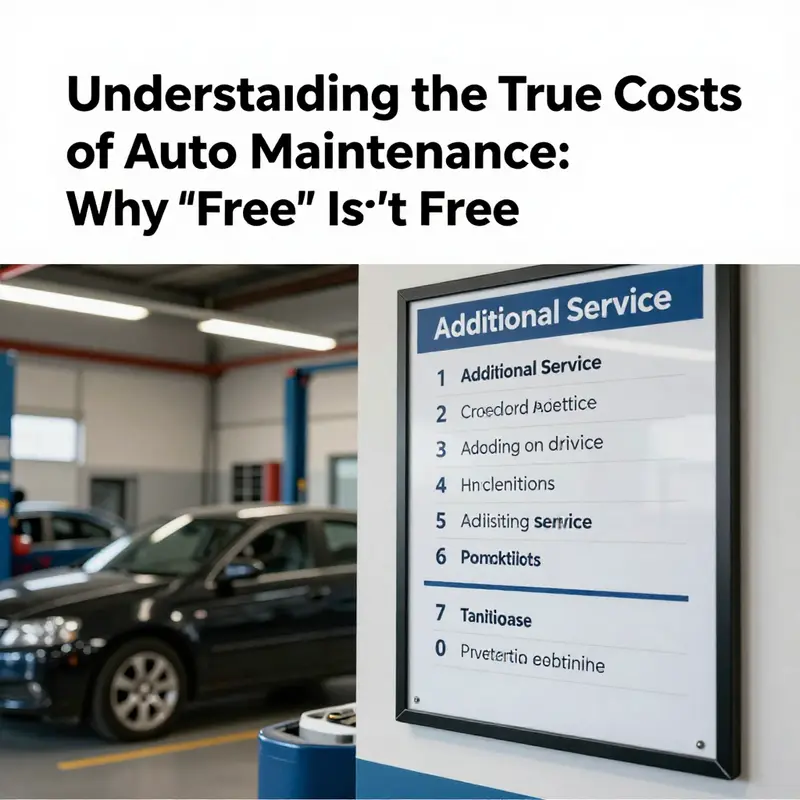
Beyond materials and labor, dealerships commonly attach conditional requirements that restrict where and how the benefit can be used. A voucher might be valid only at the selling dealership, non-transferable, and usable only within a defined mileage or date range. The combination of location lock and time or mileage limit means an owner who moves, sells the car privately, or simply misses the narrow window will lose the advantage. In some cases, eligibility is tied to buying additional products, such as insurance or extended warranty from the same dealer. That ties the free maintenance to a larger purchase decision and can make the initial offer contingent on other purchases that carry their own costs.
Another layer of restriction shows up as usage caps that terminate service when a quantitative threshold is reached, regardless of time. In contexts where service coverage is measured by volume or count, once the specified units are exhausted the coverage stops. Although this description comes from a different product category, the principle applies: service agreements can end on utilization benchmarks, not just elapsed time. For vehicles, that might translate to a maximum number of free services, a limited number of liters of oil, or a cap on replacement parts. If your driving habits exceed typical use cases—frequent short trips, towing, or heavy loads—you can quickly hit those thresholds and find yourself paying full price for otherwise expected maintenance.
Service staff also play a role. Many dealerships are eager to present value-added work: throttle cleaning, carbon deposit removal, air conditioning service, or premium detailing. These can be helpful but are often pitched as urgent to encourage immediate spending. The dealership benefits from higher average ticket values, and customers who expect everything to be covered are more susceptible to upsells. When your free service is accompanied by a litany of recommended add-ons, pause and evaluate whether each is necessary. Seek a second opinion or request a written diagnostic before agreeing.
Documentation and record-keeping matter more than many owners expect. Free maintenance often requires presenting vouchers, original purchase documents, or proof of prior service. If paperwork is lost or incomplete, the dealership may refuse coverage. Keep digital copies of vouchers and any service records in a secure, easily accessible place. Note service dates, odometer readings, and the specific items performed. That record protects you when dealing with borderline cases where the dealer disputes coverage or misapplies the terms.
You can avoid most surprises by taking control early. Read the full agreement before your next service is due. Ask direct questions: which oils and filters are included, is labor covered, can I use another authorized location, and what are the exact time or mileage limits? If the answer is vague, request the relevant clause in writing. Decline non-essential add-ons and insist that only specified tasks be performed. If a recommended service seems unnecessary, ask for an explanation of the symptoms it addresses. Many routine items—air filters, cabin filters, and basic inspections—are simple to evaluate and, in some cases, to perform yourself if you are confident and equipped.
Compare offers. Independent garages and national service chains often provide transparent pricing and may include higher-grade materials as standard or at a modest premium. Getting a few quotes helps you see whether the free offer is genuinely competitive once upgrades, labor, and common add-ons are included. Dealers sometimes position free maintenance as a convenience rather than a savings play. If convenience is your priority, weigh that against the potential cost of upgrades and the dealership’s insistence on proprietary parts or locked-in services.
A final practical step is to monitor actual usage closely. Keep track of how many free services you have used and what remains. If your contract has an explicit count or volume cap, calculate your typical use and estimate when the limit will be reached. Spread out discretionary services to make the most of the coverage while avoiding unexpected cutoffs. If you expect high usage—frequent commuting, towing, or performance driving—budget for additional maintenance outside the free plan.
Understanding restrictions turns a marketing phrase into a manageable benefit. Free maintenance can offer real value, but only for owners who know the boundaries and plan around them. Read terms, confirm inclusions and exclusions, refuse unnecessary add-ons, track usage, and compare alternatives. Those steps convert a vague promise into a predictable outcome: you either benefit from genuine savings or you choose to upgrade for better protection, with full awareness of the cost. That clarity is what separates a good deal from a costly surprise.
For a practical look at how service coverage can terminate when usage limits are reached, consult the official care-pack documentation that explains monitoring and termination rules in detail: https://support.hp.com/us-en/document/c06287951. For comparisons and local service options, consider researching nearby repair providers such as car auto repair services to find transparent pricing and clear policies: https://veteranauto.us/car-auto-repair-services/
Final thoughts
Comprehending the unvarnished reality of auto maintenance costs empowers car owners, fleet managers, and repair professionals. As this article has demonstrated, the marketing allure of ‘free’ maintenance often obscures significant hidden charges related to materials, labor, additional services, and restrictive usage terms. Awareness of these factors enables better decision-making and ultimately promotes a more efficient, budget-conscious approach to vehicle care. Avoid unwelcome surprises by delving into the fine print and equipping yourself with the knowledge necessary to navigate the complexities of auto service costs adeptly.