
Navigating the complexities of auto repair and maintenance can often be a daunting task for private car owners, small business fleet operators, and dealerships. At A & B Auto Tech, a local auto repair shop, a commitment to comprehensive services ensures that a broad spectrum of vehicular issues are addressed effectively. This article delves into the various offerings of A & B Auto Tech, spanning engine and transmission services, brake and suspension repairs, electrical system diagnostics, and air conditioning and heating repairs. By exploring these core areas, vehicle owners and operators can grasp the importance of regular maintenance and timely repairs, ultimately improving performance, safety, and comfort. Each chapter of this article provides insightful details about our services and how they cater to the unique needs of different types of customers, equipping you with the knowledge to make informed decisions regarding your vehicle’s care.
Under the Hood and Between the Gears: Engine and Transmission Mastery at A and B Auto Service
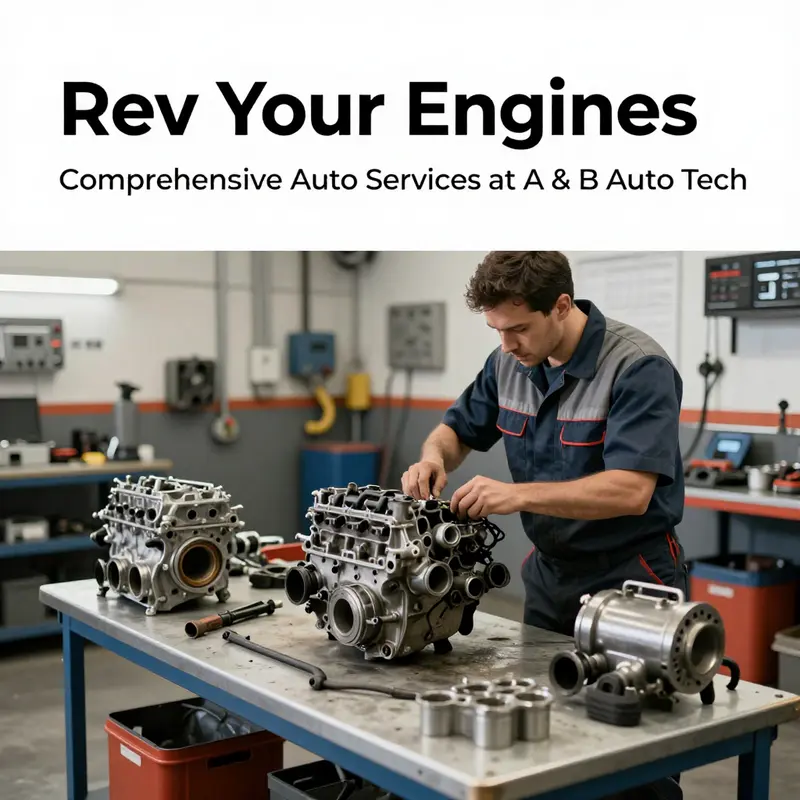
The workshop hums with a language of small sounds—the subtle clunk of a gear engaging, the smooth rise of RPMs when a pedal is pressed, the quiet sigh of a cooling system returning to its steady cadence. In this environment, engine and transmission health emerges as the core of dependable transportation. A & B Transmission and Automotive Service has built a reputation around the conviction that the heartbeat of any vehicle is not just its engine, but the way its gears translate power into motion. Their approach blends precise diagnostics with hands-on skill, a combination that transforms everyday driving into a confidence that lasts beyond the first mile after a repair. In practical terms, this means they focus on two intertwined domains: the engine’s ability to burn fuel efficiently, generate power, and respond to driver demand; and the transmission’s job of delivering that power to the wheels with smoothness, reliability, and the right amount of control under varying loads and speeds.
From the moment a vehicle arrives at 261 E 5th St, San Bernardino, CA, the team treats engine and transmission work as a continuum rather than two separate repair tracks. They offer comprehensive diagnostics that honor the complexity of modern powertrains, including both automatic and manual transmissions. This reflects a clear understanding that even vehicles with very different gearing share core challenges: wear on moving parts, fluid degradation, sensor drift, and the evolving demands of on-board computers that monitor and adjust performance in real time. The technicians here do not merely replace parts; they interpret data from a spectrum of sources, from live sensor readings to the subtle feedback a driver narrates in the chair of the repair bay. The result is a repair or maintenance plan that respects the vehicle’s design, the customer’s budget, and the realities of daily driving in a community that relies on reliable, practical transportation.
Engine work at this shop runs the gamut from routine maintenance to more involved performance tuning, repair, and, when necessary, replacement. Routine maintenance acts as a shield against more expensive failures down the road. It includes attention to ignition systems, fuel delivery, air intake, and emissions controls, areas where even modest neglect can compound into noticeable power loss, rough running, or poor fuel economy. The technicians emphasize not just what to fix, but why: a misfiring cylinder, for instance, can trigger a cascade of inefficiencies that affect exhaust gas composition and sensor signals, ultimately stressing the engine’s control systems. By prioritizing early detection and proportional responses, the shop helps customers avoid compounding issues and protects the long-term reliability of the vehicle. In parallel, engine-related work can involve performance tuning—an approach that acknowledges the driver’s desire for responsiveness while balancing efficiency and emissions. Tuning in this sense is not a flashy upgrade but a careful recalibration that helps the engine deliver power smoothly when the accelerator is pressed, across a wide range of speeds and load conditions.
Transmissions, whether automatic or manual, present a different but equally critical set of responsibilities. The transmission’s core job is to transfer the engine’s energy to the wheels without slip, hesitate, or harsh engagement. A & B Auto Service understands that when a transmission falters, the consequences extend beyond the drivetrain. Hesitation between gears, slipping under load, delayed engagement, or unexpected shifts can undermine control in traffic, degrade braking performance, and increase fuel consumption. The team’s work begins with diagnostics designed to clarify the exact nature of the problem. They interpret transmission codes, analyze fluid condition, and observe shifting behavior under controlled road tests. Fluid health is a prominent indicator; dark, burnt-smelling fluid or conversations about prolonged warm-up periods can be telltale signs of internal wear or overheating. Yet the expertise here goes beyond fluid analysis. The technicians examine clutches, bands, gears, bearings, and the hydraulic or electronic control systems that govern modern gearboxes. When parts wear or sensors drift, the result is not only rough shifting but also the potential for vibration and noise that can mask more serious issues. The approach, therefore, centers on precision: identifying the root cause, whether it lies in the valve body, the torque converter, the shift solenoids, or a simple seal leak, and addressing it with the right solution.
Yet diagnosis is only the beginning. The heart of the service lies in the partnership with the customer. The technicians explain what they find in clear terms, translating technical observations into practical next steps. This dialogue helps customers understand the value of preventive maintenance versus reactive repairs. For example, transmission wear does not occur overnight. It accumulates through miles driven, torque loads, and temperature cycles. The shop translates this understanding into actionable maintenance plans, such as timely fluid changes, filter checks, and software updates where applicable. Engine health, likewise, benefits from a scheduled approach that can include coil and plug inspection, fuel system cleaning, air filtration checks, and a review of timing components where relevant. The overarching philosophy is not to push for unnecessary replacements but to deliver lasting solutions that extend the life of the powertrain and preserve resale value.
The value proposition here is reinforced by a team of certified technicians who bring a mix of experience and contemporary training to the bench. In an industry that evolves with electronics, sensors, and increasingly complex control strategies, maintaining certifications is a practical pledge to customers. The technicians’ familiarity with advanced diagnostic tools enables them to read the language of the vehicle’s onboard systems with confidence. They cross-check warnings with live data streams, perform road tests to validate changes, and confirm that the remedy aligns with the vehicle’s design goals. This diagnostic discipline reduces guesswork and minimizes the risk of unnecessary part replacements, which translates into time saved and money well spent for customers who rely on these vehicles daily.
The integrated nature of engine and transmission work means that a repair in one area often touches the other. A transmission issue can degrade engine efficiency, while engine misbehavior can place unusual loads on the transmission. The shop’s method respects these interactions. When, for example, a software update or recalibration is necessary to optimize engine-torque management, it is done with awareness of how the changes will ripple into the transmission’s shifting patterns. Aftercare is also integral. Every repair or maintenance action is paired with testing and verification steps. The vehicle is driven under varied conditions to ensure that the original symptoms have not returned and that the vehicle communicates with the driver’s control inputs in a predictable manner. The goal is not simply to fix a symptom but to restore reliable, repeatable performance across the vehicle’s entire operating envelope.
For drivers who depend on consistent reliability, the shop’s openness about hours and accessibility matters as well. Open Monday through Friday from 7:00 am to 4:00 pm, the service window aligns with many families’ routines, work schedules, and commuting patterns. This practical schedule supports timely diagnostics and streamlined return-to-road timelines. The local focus is evident in the way the team listens to residents’ concerns and adapts recommendations to fit the realities of daily life. In communities where every mile matters, a repair that keeps vehicles on the road rather than in the shop becomes a quiet but powerful kind of service—one that sustains work, school, and family activities across the week.
The engine and transmission chapter of A & B Auto Service’s broader service philosophy is anchored in three practical principles. First, precision through diagnostics. Advanced tools coupled with experienced interpretation guide every decision. Second, respect for the customer’s budget and life flow. The shop explains trade-offs and offers maintenance plans designed to prevent costly failures without turning routine service into financial stress. Third, a commitment to reliability that extends beyond the repair itself. Test drives, follow-up checks, and transparent communication are part of the normal workflow, ensuring that the vehicle remains dependable for the long haul. This approach resonates with drivers who see their vehicle as more than a machine; it is an extension of daily life—trustworthy, predictable, and ready when needed.
To illustrate the ongoing conversation about engine and transmission care, consider the broader ecosystem of independent auto service. The reference point provided by a well-regarded local shop can illuminate how these core systems deserve ongoing attention. For those who want a wider perspective on how independent shops approach engine and transmission care, a look at similar service models can be instructive. See a-auto-service-north-charleston for an example of how local shops frame their engine and transmission services within a community-first mindset. a-auto-service-north-charleston
In the end, the work at A & B Auto Service demonstrates that engine and transmission health is not about remarkable single repairs. It is about a steady, informed practice aimed at preventing failures, extending powertrain life, and preserving the driver’s confidence behind the wheel. The technicians understand that every vehicle tells a story through its performance—how it starts, how it accelerates, how it handles hills and traffic, and how smoothly it settles into a steady idle. Their craft lies in listening to that story, reading its clues, and composing a plan that keeps the car moving forward. The result is a service experience that honors the complexity of modern vehicles while delivering practical, measurable value to the people who depend on them most. For the community, this translates into fewer disruptions, more predictable maintenance costs, and a stronger sense of safety when even daily commutes demand more than routine driving. The engine and transmission, once viewed as separate puzzles, become a coordinated system whose health is made visible through careful diagnosis, honest dialogue, and dependable, lasting repair work.
External reference: https://www.yelp.com/biz/a-b-transmission-and-automotive-service-san-bernardino
Balancing Braking Power and Smooth Handling: Brake and Suspension Repair at A and B Auto Service
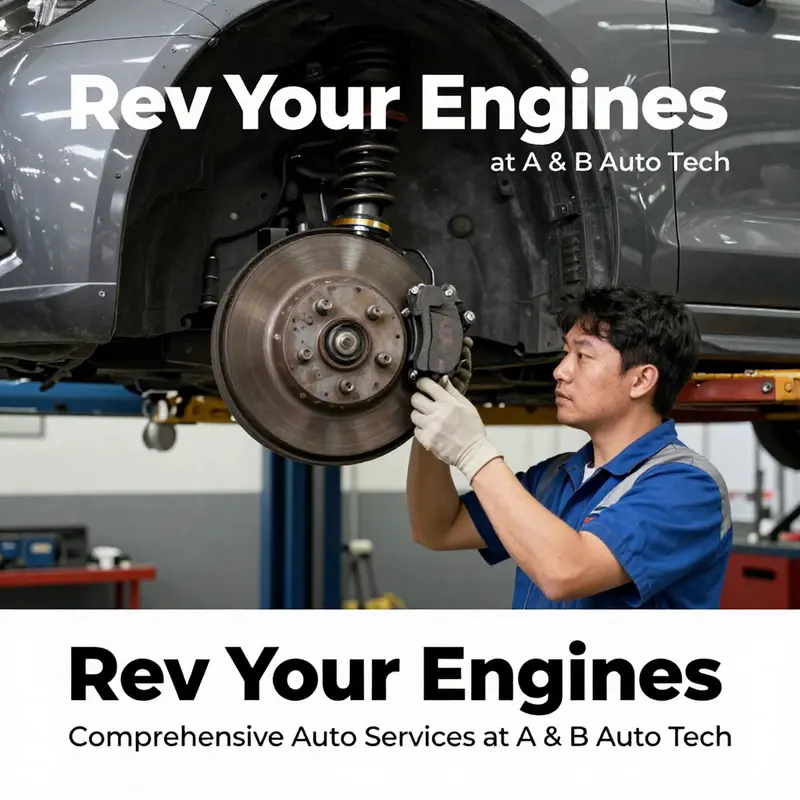
The brake and suspension systems are the vehicle’s nervous system in motion, translating driver intent into controlled, confident responses from the road. At A & B Auto Service, this understanding informs every step of the repair process, from the first glance at a worn rotor edge to the final torque check on a control arm bolt. When a vehicle arrives with a dragging feel, a pulsating pedal, or a cornering imbalance, the shop’s approach blends methodical diagnostics with a disciplined repair discipline. The result is not just a fix for the moment but a restoration of handling, stability, and stopping power that owners can trust across thousands of miles and many seasons of weather. The work revolves around two crucial systems that must communicate as a single team: the brakes, which halt the vehicle, and the suspension, which keeps it planted and controllable as it changes speed and direction. A well-executed brake and suspension service therefore reads like a well choreographed performance, where observation, analysis, and precise mechanical action converge to produce a safer, smoother ride for everyday drivers who rely on their vehicles for work, family, and community life.
The inspection begins long before the hood opens. Certified technicians at A & B Auto Service perform a thorough, layered assessment of every brake component and every suspension member they can access. They rely on advanced diagnostic tools that provide real time data about wear, alignment, and hydraulic integrity. A careful eye searches for subtle cues: a pad that shows uneven wear indicating caliper sticking, a rotor with heat-induced blue discoloration, or a hydraulic line that swells slightly under pressure. They listen for noises that tell a story—squeaks from worn bushings, clunks from loose ball joints, or a grinding sound that betrays a rotor already well past its effective life. This meticulous approach matters, because every symptom can be traced back to a root cause rather than treated as a one size fits all problem. The aim is to prevent repeat failures, protect stopping power, and preserve vehicle dynamics across road surfaces and load conditions.
During the brake inspection, the team examines wear on brake pads and the condition of rotors with the same seriousness they would give to a fuel system’s most critical seal. Pads are measured with precision, not guessed at, because thickness communicates the urgency of replacement before heat and friction begin to compromise rotor integrity. Rotors are checked for scoring, grooves, and runout, because uneven surfaces degrade bite and can introduce pulsing through the pedal. Calipers are tested for smooth movement and proper piston retraction, with attention to any sticking that would cause continued pad contact and uneven wear. The hydraulic system—lines, hoses, master cylinder, and the brake fluid itself—is evaluated for leaks, pressure loss, and fluid condition. Any anomaly found in this network prompts a clear, manufacturer-recommended plan for restoration, rather than a patch for a symptom. It is this level of scrutiny that distinguishes a routine brake service from a repair that returns the vehicle to its best possible braking temperament.
The suspension evaluation mirrors the brake inspection in its insistence on precision and its respect for the vehicle’s overall geometry. Shocks and struts are checked not only for external leaks but for their real-world performance: how well they dampen rebound, how quickly the vehicle settles after a bump, and how evenly the suspension components respond to changes in load. The control arms and associated linkages are checked for play, worn bushings, and alignment shifts that may alter toe and camber. Ball joints—those humble joints with a surprising impact on steering feel—are tested for vertical and lateral movement. Springs are examined for sag, corrosion, or fatigue that would alter ride height and weight distribution. The result of this inspection is a clear map of what must be replaced or refreshed, and a design of the repair plan that keeps the vehicle aligned with its original engineering intent. The techs understand that any change in suspension geometry affects steering response, tire contact patch, and tire wear, so every recommended repair is tied to a broader guarantee of handling stability and predictable braking performance.
With findings documented, the team at A & B Auto Service translates data into action. They advocate a parts strategy that favors high quality, manufacturer-recommended replacements, and they apply procedures that respect the vehicle’s engineering. A pad replacement may be paired with rotor resurfacing or rotor replacement, depending on rotor wear, heat checks, and runout measurements. If calipers show signs of sticking or uneven pad wear, they will either rebuild the caliper with new seals or replace it, ensuring that piston movement remains clean and predictable. Hydraulic lines are replaced if flexibility or breakage is detected, and brake fluid is refreshed to the specification of the vehicle’s braking system. The emphasis is on restoring a consistent pedal feel, proper brake line pressure, and balanced braking across all four corners. The entire brake repair sequence is executed using torque specs and fastener guidelines that reflect the manufacturer’s intent, a practice that minimizes the risk of rotor warp, pad noise, or uneven braking forces after the job is finished.
On the suspension side, the team considers shock and strut replacement or rebuild where damping has become inconsistent, along with bushing and control arm replacements when wear introduces incorrect alignment and steering asymmetry. If a vehicle has high mileage or has endured rough roads, technicians may recommend replacing multiple components as a kit to avoid future misalignment and additional wear. They also consider the role of alignment in achieving the intended steering geometry after any suspension repair. After the mechanical work is complete, they perform an alignment check that verifies toe, camber, and caster settings against the manufacturer’s specifications for the specific model and trim. The goal is not simply to restore a vehicle’s stance but to ensure that steering response and tire contact are optimized for both subjective driving feel and objective safety metrics. The result is a car that tracks true on straightaways, resists wander, and stops in a straight line without the need for steering corrections under braking. This is not a cosmetic adjustment; it is a fundamental recalibration of the roadway interface that makes every drive safer and more predictable.
The repair philosophy at A & B Auto Service is underpinned by a simple, but essential, conviction: the best brake and suspension work respects the vehicle’s original design while acknowledging the realities of wear and aging. That balance requires not only precise parts but disciplined processes. Technicians rely on precise torque and fastener sequences to ensure that components seat correctly and stay in place under vibration and load. They bleed the brake system to remove air and contaminants, confirm line pressure across all calipers, and verify pedal firmness through a controlled test. They verify rotor runout with the appropriate dial indicators and ensure that any surface machining is done within the manufacturer’s limits to prevent rotor wobble and brake judder. The same careful attention applies to suspension components; bushings are pressed in without overstressing the material, and control arms and linkages are torqued to specification to maintain intended geometry. The road test that follows is as much a validation as it is a test drive. It gives the technicians confirmation that the vehicle responds with consistent bite at the front, balanced braking at the rear, and a stable, controlled ride over typical road undulations. Only after this process do they present the customer with a clear, comprehensive repair summary, including why each part was chosen, how it contributes to safety and performance, and what maintenance tasks should be tracked in the months ahead.
What distinguishes A & B Auto Service in this domain is not only the depth of its diagnostic approach but the way it communicates with customers about the repair plan. The shop translates mechanical language into practical, actionable information. When a customer asks why two components were replaced instead of just one, the technicians explain the reasons in terms of safety margins, wear patterns, and the likelihood of future failure under normal driving conditions. They discuss expected improvements in stopping power and vehicle stability, and they outline the maintenance schedule that will help preserve these gains. This conversational clarity is part of a broader commitment to community service, letting vehicle owners understand what was done and why it matters for daily life. It also reinforces a philosophy that good auto service is an ongoing partnership rather than a one-off fix. A driver who understands the mechanics behind brake fade, rotor wear, or suspension sag is more likely to notice the early signs when a future service is due and to schedule timely maintenance instead of waiting for a failure to occur.
For readers seeking further technical context, the detailed confirmation and methods described here align with established industry practices. If you would like to explore more about the standards that guide brake and suspension work, the official brake and suspension guide offers a comprehensive reference to parts, procedures, and safety considerations that technicians rely on across the industry. For a broader sense of how repair professionals communicate the value of these services to customers, see the general car auto repair services overview that explains how service providers structure maintenance plans and explain purchase decisions in plain language. These resources complement the on-site expertise at A & B Auto Service by anchoring the shop’s approach in widely recognized standards and customer-centered communication.
Internal link reference: Car Auto Repair Services. This broader context helps readers understand how the specific brake and suspension work described here fits into a complete maintenance strategy for any vehicle. Car Auto Repair Services
External resource: External reference to a detailed technical guide can be useful for readers who want more depth on the subject. See the following resource for a structured overview of brake and suspension best practices: https://www.abautotech.com/services/brakes-and-suspension
null
null
Restoring Comfort and Confidence: Air Conditioning and Heating Repairs at A and B Auto Service
When a vehicle’s climate control system behaves unpredictably, the driver’s comfort—and sometimes even safety—depends on a precise, patient approach to diagnosis and repair. At A and B Auto Service, air conditioning and heating repairs are treated not as isolated fixes but as parts of a broader mechanical conversation that unfolds with the engine, electrical system, and overall performance. The shop’s philosophy rests on the idea that a well-tuned climate-control system reflects a trained technician’s ability to listen to the car’s signals, interpret subtle changes in idle and load conditions, and translate those signals into durable, replicable repairs. This is especially true for light trucks and work vehicles that must perform reliably across varying climates and road conditions. The journey from a customer’s first concern to a comfortable cabin can be approached like a careful audit: validate the symptoms, verify the operating modes, and confirm that every component is doing its job within safe tolerances. A and B Auto Service leans into that approach, offering not only repairs but also the education and guidance that empower drivers to protect comfort without compromising performance or safety.
Consider a typical scenario that illustrates the careful logic behind the shop’s diagnostic process. A fleet manager brings in a medium-duty truck that cools adequately on the highway but blows warm air when idling in traffic or in a loading yard. The request is straightforward in words but revealing in outcome: cooling at speed, warmth or tepid air at idle. The technician begins with listening to the system’s behavior under different engine speeds, then confirms with a few fundamental checks. The aim is to separate symptoms caused by heat rejection limitations from those caused by component wear or electronic miscommunication. The first step is to verify that the engine’s cooling system itself is functioning optimally, because excessive engine heat can impair the condenser’s ability to shed heat, and without adequate cooling from the engine, the air conditioning system cannot perform as intended. It is in this phase that a technician’s careful observation becomes critical: the temperature rise, the pressure readings, and even the feel of air temperature at the vents all narrate threads of a larger story about how heat flows through the vehicle’s mechanical heart.
The five most frequent culprits behind AC performance that fades at idle—when the engine’s RPM is low and the cooling fan’s work is intermittent—emerge from that patient storytelling. First, fan motor issues can be the quiet saboteur in a warmed cabin. At idle, the cooling fan may not spin quickly enough to dissipate heat from the condenser. A failing or poorly performing fan motor can allow the condenser to overheat, causing the system to compensate by reducing refrigerant pressure or cycling off the compressor early. When the compressor ceases to cycle properly, the result is not cold air but a steady whisper of warmth that grows as the engine sits and heat builds.
Second, low refrigerant levels often reveal themselves most clearly at idle. Refrigerant is the lifeblood of the system, and even modest leaks tend to become more impactful when airflow through the evaporator and condenser is reduced. A leak might be invisible at a quick glance, but a careful pressure test, combined with a dye-based inspection or leak detector, can map the exact path of a loss. The reality is simple: once refrigerant is low, the compressor has to work harder to maintain cooling, and that demand translates into diminished performance at idle when the system’s overall efficiency is already strained by engine RPM.
Third, a clogged condenser can silently throttle heat rejection. Debris, dirt, or insect buildup on the condenser fins disrupts the essential airflow that allows the condenser to shed heat. At highway speeds, air movement can partially compensate for a clogged condenser, but at idle, the lack of natural airflow makes the restriction acute. The result is a warmer cabin and increased load on the rest of the system because the refrigerant isn’t releasing heat efficiently enough to maintain a cold outlet.
Fourth, a faulty compressor clutch can prevent the compressor from engaging at idle. The clutch relies on consistent electrical current and precise wear tolerances to engage and disengage the compressor. If the clutch fails to engage, the refrigerant never gets compressed with sufficient pressure, and the system can deliver warm or room-temperature air even when the engine is running. The diagnosis requires checking the clutch’s engagement signals, the coil resistance, and the electrical circuitry that feeds them. A misfire in any one of these areas can produce symptoms that mimic other issues, which is why a thorough, methodical approach is essential.
Fifth, thermostat or temperature sensor malfunctions can misread engine or cabin temperatures, prompting the system to behave oddly during low-RPM operation. These sensors serve as the system’s internal gauges, guiding when to switch to cooling, when to ramp fan speed, and when to throttle back. A faulty reading may cause the system to overreact, delivering inconsistent comfort even when the mechanical components are sound. Replacing a sensor or recalibrating the thermostat’s control logic is sometimes all that is needed to restore natural, steady performance.
The diagnostic arc that follows these five culprits is where the shop’s experience truly shines. A and B Auto Service emphasizes a balanced evaluation that blends mechanical checks with an eye for electrical integrity and software behavior. The technician might begin with a visual inspection, then move to functional tests: measuring condenser air flow, checking for obstructed airflow paths in the radiator and condenser, and confirming that the fan operates at the correct speeds under different load conditions. The refrigerant system is then interrogated with gauges that reveal pressures aligned to the ambient and engine temperatures. If the pressures appear normal yet the cabin remains warm at idle, the technician will consider a localized issue such as a restricted condenser or a malfunctioning sensor rather than defaulting to a refrigerant replacement. Each step is a thread in a tapestry that reveals the true source of the problem.
The narrative of a diagnosis is never a solitary act. It is a collaborative moment with the vehicle and with the customer. The team explains findings in plain language, outlining how each potential cause affects performance and what the repair will entail. The goal is not merely to correct a symptom but to restore consistent climate control across all operating ranges. In light of that, the shop’s approach to repairs is careful and transparent. If a fan motor is found to be weak, the replacement is performed with proper electrical grounding and secure mounting to prevent future rattle or misalignment. If refrigerant is low due to a leak, the system is evacuated, repaired, and recharged to exact manufacturer specifications, followed by a leak test to ensure the restoration holds. A clogged condenser is cleaned thoroughly, with attention paid to the fins so that airflow remains unimpeded. When the compressor clutch is at fault, the coil and drive mechanisms are examined, and replacement is conducted with the correct pulley alignment to avoid belt wear and future engagement problems. A faulty thermostat or sensor is replaced or recalibrated, and the system’s fault codes are cleared so that the control module can again interpret readings accurately.
This attention to detail does more than fix a temperature problem. It reinforces the trust that customers place in a local shop to care for a vehicle that supports daily life and work. A and B Auto Service understands that the climate control system can influence everything from driver fatigue to window defogging in damp mornings, and even the delicate balance of cabin air quality for sensitive occupants. For the team, the work is about keeping the vehicle’s occupants comfortable while preserving the vehicle’s overall health. It also reflects a broader community commitment: a neighborly, reliable place where people can bring cars that are essential to their livelihoods and daily routines. The service menu that follows the diagnosis—routine inspections, component cleanings, refrigerant management, and precision repairs—speaks to a philosophy of proactive care rather than reactive fixes. In other words, the shop aims to prevent the next idle-time cooling failure by educating drivers on what to look for and how to maintain systems between visits.
As with any specialized discipline, ongoing learning matters. The technicians stay current on refrigerant handling procedures, safety practices, and the evolving controls that govern climate systems in modern vehicles. They apply that knowledge not in isolation but in conversation with the vehicle’s entire operating profile. The result is a climate-control solution that is resilient, repeatable, and tailored to each vehicle’s unique needs. The emphasis on light trucks in particular highlights the shop’s readiness to handle larger, more demanding systems that must keep cab temperatures comfortable under varied labor and travel conditions. It is that readiness—the combination of diagnostic rigor, practical repair capability, and community-centered service—that defines the experience of bringing a vehicle to A and B Auto Service for air conditioning and heating work.
For drivers who want to keep their systems performing well between service visits, there are practical steps that align with the shop’s philosophy. Regular visual checks for obvious signs of damage or corrosion around the compressor, hoses, and wiring can catch the early warnings of wear. Listening for unusual noises when the AC cycles on, such as grinding or squealing, can prompt a sooner diagnostic check before a small issue becomes a larger repair. Keeping the cabin air filter clean and ensuring that debris does not accumulate around the condenser helps preserve airflow and efficiency. Finally, if a vehicle begins to show a drop in cooling efficiency only at idle, scheduling a diagnostic appointment before the season’s peak heat arrives is a prudent move. The overarching message is simple: climate comfort is a function of consistent maintenance, thoughtful diagnosis, and a local partner who treats the vehicle as more than a machine.
Internal link: For those seeking a nearby reference point that mirrors this level of care and the same commitment to dependable service, consider the practical model provided by A Auto Service North Charleston at https://veteranauto.us/a-auto-service-north-charleston/. This example reflects the type of community-focused auto care that underpins the approach taken at A and B Auto Service, where the goal is to keep work-ready vehicles comfortable and reliable no matter the climate outside.
External reference: https://www.aandbautoservice.com/services/air-conditioning-repair
Final thoughts
In conclusion, A & B Auto Tech stands out as a reliable partner for private car owners, small business fleet operators, and auto dealerships seeking comprehensive repair solutions. The detailed exploration of engine and transmission services, brake and suspension repairs, electrical diagnostics, as well as air conditioning and heating repairs has highlighted the shop’s dedication to vehicle maintenance and performance. By prioritizing these essential services, individuals and businesses can greatly enhance safety, reliability, and comfort on the road. Taking proactive steps towards vehicle care not only prolongs the lifespan of vehicles but also ensures peace of mind for their owners.