
In the competitive landscape of auto detailing, pricing holds paramount importance for both private car owners and fleet operators. Understanding how to effectively price auto detailing services can significantly impact a business’s success and reputation. For car owners, well-priced detailing services ensure that they receive the value they expect for maintaining and enhancing their vehicle’s appearance and longevity. Just as critical, small business fleet operators need to find a balance between cost effectiveness and high-quality service to ensure their vehicles remain in top shape without breaking the bank. The right pricing structures not only attract customers but also build trust and loyalty, which are vital for repeat business in the auto detailing industry. Additionally, transparent pricing strategies can set businesses apart from competitors, leading to long-term profitability amidst fluctuating market trends. In this guide, we will delve into various factors that influence pricing in auto detailing services, helping you make informed decisions whether you are a car enthusiast seeking top-notch services or a fleet operator managing multiple vehicles. Together, we can navigate the intricacies of pricing to maximize value without compromising on quality.
Factors Affecting Auto Detailing Pricing
Understanding the various factors that influence auto detailing pricing is essential for both service providers and clients. Here’s an ordered list of key considerations:
-
Type of Vehicle
Larger vehicles like SUVs and trucks typically cost more to detail than compact cars due to the extra time and materials required. -
Service Package Offered
The specific services desired (e.g., exterior wash, interior cleaning, waxing, or engine detailing) can significantly impact the total price. -
Location
Geography plays a vital role; services in urban areas may be more expensive due to higher competition and overhead costs compared to rural settings. -
Competition
The number and type of detailing services available in an area can drive prices higher or lower depending on local demand. -
Condition of the Vehicle
Cars requiring extensive restoration or cleaning will generally incur higher costs due to the additional labor and materials involved. -
Market Trends
Current market trends and consumer preferences can influence pricing strategies for detailing services, including any premium offerings.
For a deeper dive into auto services, check out this article on car detailing trends for more insights.
Best Practices for Pricing Auto Detailing Services
Setting the right price for auto detailing services is crucial for attracting customers while ensuring profitability. Here are several best practices that can help car owners, small fleet operators, and auto repair shops determine competitive pricing strategies:
Understand Your Costs
A foundational step in setting prices is understanding your costs, which include:
- Labor: Calculate the hourly rate for yourself and any employees.
- Materials: Include the cost of cleaning products, tools, and chemicals used in the detailing process.
- Overhead: Consider utilities, rent, and other operational expenses.
Use a Tiered Pricing Model
Adopting a tiered pricing strategy can cater to different customer preferences:
- Basic Plan: Covers essential cleaning services at an affordable rate.
- Premium Plan: Adds additional services like waxing and interior cleaning.
- Ultimate Plan: Offers comprehensive detailing for customers looking for the most thorough service. Learn more about service pricing strategies.
Benchmark Against Competitors
Regularly review the pricing of local competitors and adjust your rates accordingly. This not only ensures competitiveness but also helps you gauge market trends. Tools like SBA’s pricing guide can provide valuable insights into setting your prices.
Consider Value-Based Pricing
Pricing should reflect the value of the service provided. Offer packages that highlight customer benefits, such as improved vehicle longevity or enhanced aesthetic appeal, rather than just the time spent on the job. Focusing on perceived value can significantly boost profits. AutoCare Association’s report provides detailed insights into this approach.
Bundling Services
Bundling services can increase perceived value and encourage customers to opt for more extensive cleaning options. For example, combining exterior and interior detailing at a reduced rate can lead to higher sales.
Transparency in Pricing
Always be transparent with your customers about your pricing. Clearly list what is included in each package to avoid confusion and build trust. A well-defined pricing structure is essential for customer satisfaction and retention.

In conclusion, by understanding costs, employing tiered pricing, benchmarking against competitors, emphasizing value, offering bundles, and maintaining transparency, businesses can effectively set competitive prices for auto detailing services, ensuring success and customer loyalty.
| Service | Estimated Price Range | Description |
|---|---|---|
| Exterior Wash | $10 – $30 | Basic wash including hand wash, drying, and cleaning of windows. |
| Interior Detailing | $50 – $150 | Thorough cleaning of seats, carpets, and dashboard, may include steam cleaning. |
| Full Auto Detailing | $150 – $400 | Comprehensive package including both interior and exterior cleaning, waxing, and polishing. |
| Waxing | $50 – $150 | Application of wax for paint protection and shine, may include polishing. |
| Engine Bay Cleaning | $30 – $75 | Cleaning of the engine compartment to remove dirt and grease buildup. |
| Headlight Restoration | $30 – $80 | Polishing of headlights to remove yellowing and improve visibility. |
| Paint Correction | $100 – $500 | Removal of paint imperfections and scratches, restoring vehicle finish. |
Regional Price Variations in Auto Detailing
When it comes to auto detailing, prices can vary significantly based on geographical location and market conditions. For instance, a recent study shows that the average cost of auto detailing varies widely across the United States. In Hawaii, customers can expect to pay an average of just $90.50, whereas those in Oregon might find themselves shelling out $258-a remarkable difference that is over two times the cost. This disparity largely reflects the varying living costs, labor expenses, and market demand in different regions.
The auto detailing market is on an upward trend, projected to grow 5.6% annually from 2026 to 2033, but regional variances remain pronounced. Factors such as local economic conditions, customer preferences, and competitive landscapes play crucial roles in determining pricing.
For car owners, fleet operators, and dealerships, understanding these regional price differences is essential for budgeting and effective pricing strategy.
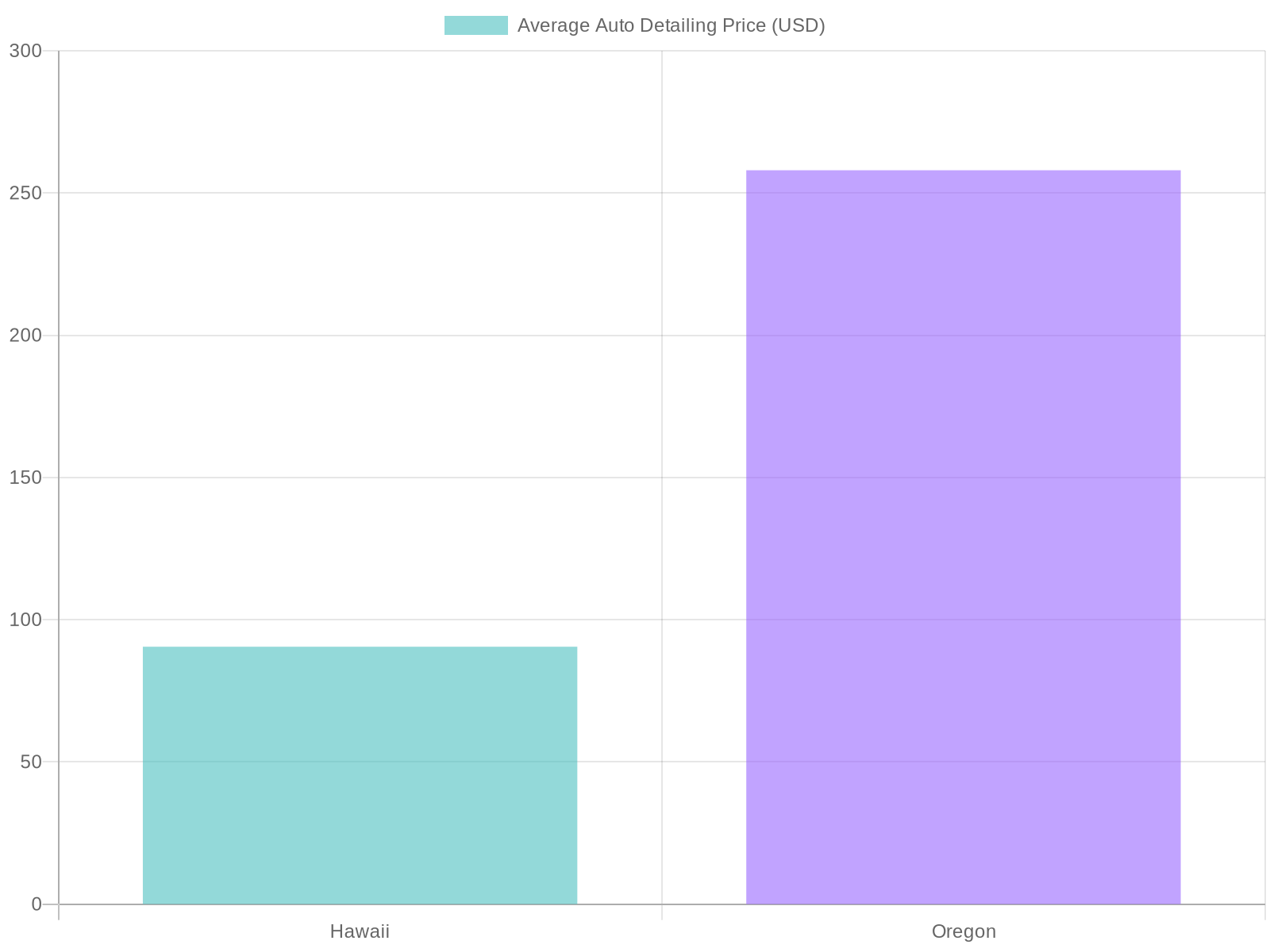
Source: Yelp – Cost of Auto Detailing, Last Updated April 2026
Increasing these insights can ensure that service providers stay competitive while also offering fair prices reflective of their local market conditions.

Common Mistakes in Pricing Auto Detailing Services
Pricing auto detailing services accurately is imperative for maintaining a profitable business and client satisfaction. However, many enterprises fall into common traps that result in miscalculations and undervaluation of their offerings. Here, we discuss these pitfalls and how to avoid them.
1. Ignoring Actual Costs
One of the most frequent mistakes businesses make is failing to account for all operational costs involved in providing detailing services. These costs include labor, materials, overhead, and equipment depreciation. Without a thorough understanding of these expenditures, businesses may set prices that do not cover their costs, leading to losses. A practical approach is the cost-plus pricing model, which calculates total costs and adds a profit margin. For instance, if detailing services cost $40 in total, pricing them at $60 ensures profitability without undervaluing the service.
2. Underpricing Services
Many businesses undervalue their services by setting prices too low in an attempt to attract customers. While lower prices may initially boost sales, they can deteriorate perceived service quality, leading to client dissatisfaction. Additionally, underpricing can create problems in customer retention as clients may equate low prices with low quality. To combat this, conducting market research to understand local pricing trends is vital. The emphasis should be on delivering high-quality services that justify premium pricing; learn more about how to price your services.
3. Overlooking Market Demand
Another critical error is neglecting to adjust prices based on market demands and customer preferences. Seasonal variations can significantly influence pricing – for example, detailing services might be more in demand during spring and summer months. Due to this, businesses should utilize demand-based pricing strategies, adjusting prices as needed according to what customers are willing to pay for specific services. Keeping an eye on competitors can also inform adjustments, helping ensure pricing remains competitive yet profitable.
By recognizing these common pricing mistakes and implementing effective strategies to avoid them, auto detailing businesses can position themselves more wisely in the market, ultimately enhancing profitability and customer satisfaction.
“Finding an auto detailing service that combines quality with fair pricing is a breath of fresh air. It’s not just about getting your car clean; it’s about knowing you received value for your money. Fair pricing builds trust and ensures you return for future services.”
- Jamie L., Satisfied Customer
Additionally, ensuring transparent and reasonable pricing fosters long-term relationships with clients who appreciate quality service without hidden fees.

| Year | Average Price ($) |
|---|---|
| 2020 | 112 |
| 2021 | 118 |
| 2022 | 131 |
| 2023 | 142 |
Source: Statista – Average prices across the US in auto detailing services.
In conclusion, effectively pricing auto detailing services is essential for attracting and retaining customers in this competitive market. The insights shared throughout this article emphasize several core strategies, such as analyzing competitor rates, understanding market demand, and employing value-added services to justify pricing differences. A strategic approach to pricing not only helps maintain competitiveness but also fosters trust and loyalty among potential clients. Moreover, as the auto detailing industry continues to show promising growth, with the market projected to reach a staggering USD 102.6 billion by 2033, establishing a well-thought-out pricing model becomes increasingly vital. On top of that, the importance of competitive pricing cannot be overstated, as it directly correlates to customer retention rates and overall business success. With various pricing structures available, businesses should consider adapting their strategies to resonate with their target audience effectively. Finally, we encourage you to explore more about optimizing your pricing and services by visiting Summit Fairings to gain insights that can enhance your detailing business. By maintaining competitive pricing and delivering high-quality services, you can set your business apart in the increasingly crowded auto detailing landscape, ensuring long-term success and customer satisfaction.