
Understanding auto service is essential for various stakeholders, including private car owners, small business fleet operators, and auto repair shops. This article delves into the concept of auto service, breaking it down into key chapters that address its general understanding, geographical variations, technical definitions, economic implications, and societal impacts. By exploring these interconnected areas, we can appreciate the critical role auto service plays in vehicle maintenance and the broader economy, laying the groundwork for informed decisions regarding vehicle care and operational strategies in the automotive sector.
The Engine of Reliability: How Modern Auto Service Keeps Cars Safe, Efficient, and On the Road
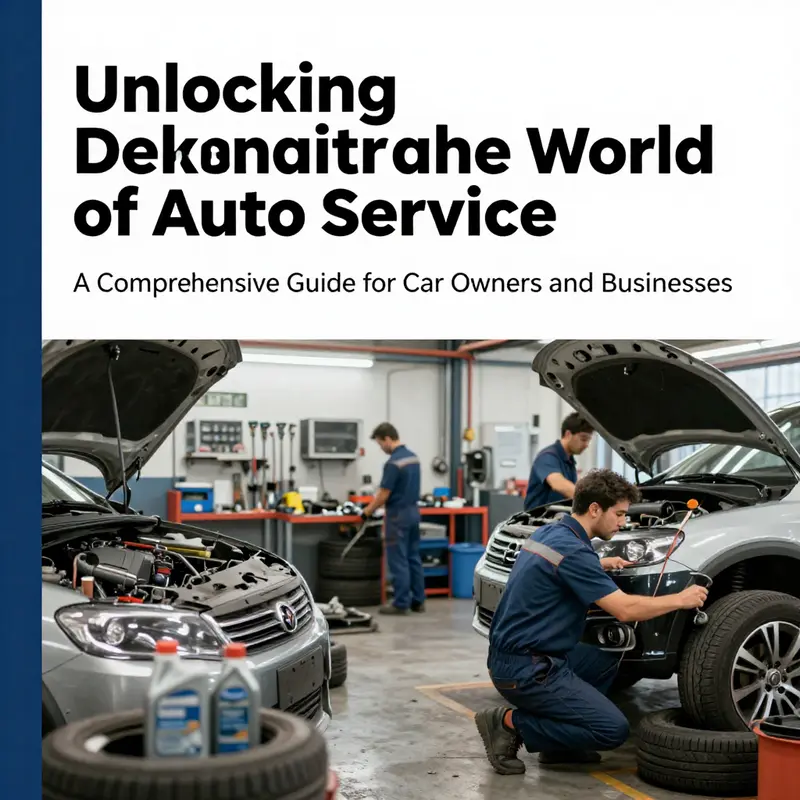
The term auto service carries weight as an ongoing conversation between driver and technician that begins when a vehicle enters a shop and continues long after it leaves. It is a discipline that blends careful hands with a patient mind, a habit of precaution that treats a car as a durable system rather than a single machine. The core aim is to keep the vehicle safe, efficient, and reliable, turning ownership into steady confidence rather than a momentary hope. In practice that means moving from routine maintenance to informed vigilance that prevents problems and addresses them with clarity when they arise. It is about understanding the car as well as fixing it, and it requires a culture of meticulous care and professional humility that acknowledges both what is known and what must be investigated when an odd sound or warning light appears.
Routine maintenance forms the backbone: oil changes, tire rotations, brake inspections, fluid checks, and filter replacements. These tasks guard against wear that would otherwise grow into serious failures, but their value goes beyond a checklist. Each visit is an opportunity to reassess condition, verify wear, and notice subtle changes in performance that may hint at developing issues. The practice hinges on quality parts, accurate torque, and adherence to manufacturer intervals, creating a predictable rhythm that protects the engine, transmission, and suspension from daily stress. Reliability grows from consistency as much as capability.
Diagnostics bridge routine care and repair. Modern vehicles are networks of sensors, controllers, and software. When something is off, technicians use diagnostic tools to read fault codes, monitor live data, and reconstruct behavior under real driving conditions. Diagnostics are not about guessing but tracing symptoms through elimination and correlation. They can reveal sensor drift, a minor leak, or a data bus issue that would be invisible otherwise. In skilled hands, diagnostics translate symptoms into targeted interventions, minimizing unnecessary work and maximizing the chance of a durable fix.
As vehicles evolve, so does auto service. Hybrid systems, advanced driver assistance features, and electric propulsion add new layers of complexity. High voltage safety, battery health, thermal management, and software updates become routine concerns, requiring specialized training and tools. Servicing today often involves software calibrations and control module reprogramming, not just mechanical adjustments. When done well, this expanded toolkit preserves efficiency and safety while extending vehicle life.
Beyond the technical, auto service is a matter of trust. The technician’s demeanor and the use of quality parts set expectations. Clear explanations let owners participate in decisions about preventive care and major repairs, reducing anxiety and improving adherence to planned service. Consumers who approach service as collaboration tend to gain more insight into their vehicle’s needs, turning maintenance into an informed habit. In this sense, auto service is a partnership built on credibility, accountability, and safety on the road.
Local familiarity matters. A dependable shop can become a steady partner that remembers the vehicle’s history, understands the owner’s concerns, and offers informed recommendations grounded in experience with the same makes and models. This continuity helps when questions arise about wear patterns, the timing for preventive work, or the impact of a repair on future reliability. A nearby provider can offer transparent pricing and reliable scheduling, which many drivers value as a practical form of reassurance.
Documentation completes the picture. Service history records, owner manuals, and inspection checklists create an auditable trail that helps drivers and technicians track wear, plan future interventions, and verify safety standards. Clear documentation supports accountability and makes it easier to distinguish needed repairs from discretionary upgrades. The car becomes a patient with a lifelong record, where each visit adds to a long-term view of health and reliability.
The chapter closes with a practical takeaway: auto service is a continuous practice, not a single act. It rests on maintenance, diagnostics, and transparent repair, interdependent pillars that keep the car on the road. When drivers approach service with curiosity and discipline, they join a partnership with trained professionals who share a commitment to safe, reliable wheels.
null

null
Precision at Hand: Core Definitions that Shape Modern Auto Service

The phrase auto service carries a quiet authority in the workshop. It signals not just a place to fix things when they break, but a disciplined, continuing relationship between vehicles and the people who care for them. In a service ecosystem that blends manual craft with digital intelligence, the vocabulary used by technicians and customers becomes more than jargon; it is the architecture of trust. This chapter maps the essential technical definitions that underpin everyday practice in auto service, showing how a shared language supports safer roads, more reliable cars, and clearer conversations about cost, time, and repair outcomes. At the heart of this language is a simple idea: every service action rests on a defined problem, a defined method to address it, and a defined standard by which success is measured. When a technician greets an engine light or a braking concern, they are not improvising; they are following a structured chain of understanding that translates sensor data, mechanical wear, and regulatory requirements into a concrete plan of care. In this sense, automotive technical service is a systematic craft, a synthesis of diagnosis, maintenance, repair, and enhancement guided by well established definitions and the tools they authorize.\n\nThe first pillar is automotive technical service as a systematic process. It encompasses diagnosis, maintenance, repair, and enhancement of motor vehicles using specialized tools and standardized procedures. This is not merely fixing what is broken. It is also the ongoing care that keeps a vehicle performing, safely and efficiently, long after it leaves the showroom. The aftermarket context matters here: the same definitions extend beyond new car warranty work to the broader world of maintenance shops, independent repair facilities, and dealer service departments. The goal is to convert scattered symptoms into a coherent service plan, one that respects manufacturer guidance, engineering practice, and the reality of varied driving conditions. In practice, technicians rely on a shared framework so that a customer receives consistent expectations, whether they are at a small town shop or a metropolitan service center. The framework links the present repair task to the vehicle’s past maintenance history and to its likely future needs, forming a lifecycle narrative rather than a single, isolated event. In this sense, the profession lives between the lines of repair manuals, diagnostic software, and empirical judgment honed by miles on the road.\n\nCentral to that diagnostic path is the Diagnostic Trouble Code, or DTC. These codes are the standardized language embedded in a vehicle’s on board computer, a concise pointer to a fault in a subsystem such as emissions, engine performance, transmission, or braking. The standardization of DTCs especially across the OBD-II framework used in light duty vehicles since the mid 1990s ensures a consistent fault-reporting language across makes and models. This isn’t merely convenience; it is a cornerstone of safety and efficiency. A technician reads a DTC and immediately narrows the possible culprits, aligning their hands-on checks with the data the ECU has already collected. The result is a triage path that minimizes unnecessary disassembly and accelerates repair while preserving the integrity of the vehicle’s systems. In this ecosystem, the DTC becomes a map: it tells you where to look, what kind of fault you’re dealing with, and how the device should behave once the fault is resolved. Yet codes are only a starting point. A skilled technician translates abstract digits into mechanical reality, reconciling the car’s digital language with the tactile world of belts, seals, sensors, and fluids. The culture of auto service thus privileges both precise coding and grounded inspection, a dual literacy that makes modern repair possible.\n\nBeyond diagnosis lies the maintenance service—the scheduled, preventive care that preserves performance, reliability, and safety. Routine tasks such as oil changes, replacement of filters, tire rotation, brake inspection, and fluid checks form the backbone of a vehicle’s health. The value of preventive maintenance is measured not only in shorter-term reliability but in long-term cost savings and operational efficiency. Manufacturers publish service intervals and maintenance manuals to guide this work, but the everyday value comes from a shop’s disciplined adherence to those guidelines while accommodating real-world use. A well-executed maintenance program reduces the likelihood of sudden failures, keeps fuel economy stable, and extends the life of critical components. It also strengthens the trust relationship between customer and technician. When customers understand that maintenance is not a one-off chore but a continuous stewardship, the service experience becomes less about price tags and more about ongoing confidence in the vehicle’s future performance.\n\nThe brake system service exemplifies how core definitions translate into safety-critical practice. Brakes sit at the fulcrum of road safety, and their care involves inspection, repair, and sometimes replacement of components such as pads, rotors, calipers, the master cylinder, and the hydraulic fluid that binds them. Standards-driven approaches to braking systems, such as testing procedures and performance criteria for friction materials, ensure durability and predictable behavior under varied driving conditions. In practice, a brake service begins with a careful inspection of wear patterns, fluid integrity, and system seals, then proceeds to targeted repairs guided by both sensation and data. This is not merely a mechanical task; it is an engineering discipline, where material science meets hydraulics and where the consequence of a misstep can be measured in meters of stopping distance. The result is a service that not only restores function but reaffirms the vehicle’s ability to protect its occupants, a reminder that the language of auto service includes safety as a first principle.\n\nEmissions testing and environmental compliance service expand the definition of auto service into the realm of public health and law. Regulated checks verify that a vehicle’s exhaust emissions align with environmental standards, a process that links vehicle maintenance directly to air quality and community well being. Emissions checks drive a closer collaboration between diagnostics and repair; technicians must interpret sensor data and performance trends to decide whether corrective action is sufficient or additional work is needed. The environmental dimension adds a compelling public accountability to the work of the shop: service is not only about personal safety and reliability but also about contributing to a cleaner, healthier environment. In this sense, auto service becomes part of a larger system of regulation and stewardship, where the outcomes of maintenance and repair ripple beyond the customer’s driveway and into the atmosphere.\n\nAs technology advances, the industry increasingly relies on aftermarket technical support systems to streamline and coordinate repair efforts. Systems such as Automated Service Request, or ASR, automate the registration, tracking, and fulfillment of service tasks, enabling dealerships and service centers to share diagnostic data, coordinate remote support, and push software updates when needed. This digital backbone helps ensure speed and accuracy, reduces miscommunication, and accelerates complex repairs that depend on cross-functional expertise. Yet the human element remains indispensable. Even with digital workflows, a service encounter hinges on clear communication, honest assessment, and professional judgment about the vehicle’s condition, the customer’s needs, and the trade-offs between cost, time, and risk. A coherent auto service experience, therefore, blends standardized definitions with adaptive, client-centered care, where data informs decisions and expertise translates those decisions into practical outcomes.\n\nIn regional practice, the way these definitions play out can vary, reflecting different markets, regulatory environments, and customer expectations. For instance, a shop in a midsize city may emphasize a transparent maintenance schedule and clear DTC explanations to demystify the repair process for customers. In more specialized markets, such as a coastal town or a large metropolitan area, the emphasis might shift toward advanced diagnostics and rapid service throughput, supported by the digital service infrastructure described above. Regardless of locale, the thread that unites all these approaches is a shared lexicon that aligns the work on the car with the needs and understanding of the owner. For readers curious about how a specific shop translates these ideas into local practice, a real-world example can be found at a-auto-service-north-charleston, where a balance of diagnostic rigor and preventive care illustrates the practical realization of these definitions. What emerges is a portrait of auto service as a disciplined, evolving craft—and a reminder that the vehicle’s health depends on the precise interplay of data, hands-on care, and ongoing dialogue.\n\nTaken together, these definitions create a seamless narrative of what auto service is and what it aspires to be: a reliable, safe, and efficient partner in everyday mobility. They justify the investment in training, tools, and process that make a shop capable of translating raw data into safe driving. They anchor the conversation with customers in a language that is accurate without being opaque. And they anchor the future in a commitment to prevent rather than merely react. As vehicles grow smarter and more connected, the vocabulary of auto service will continue to evolve, but its core purpose will remain steadfast: to safeguard movement, sustain performance, and connect people to a vehicle’s long-term potential. External reference: https://www.sae.org/standards/content/J2012_202408/
Wheels of Growth: The Economic Pulse of the Auto Service Industry in an ACES World
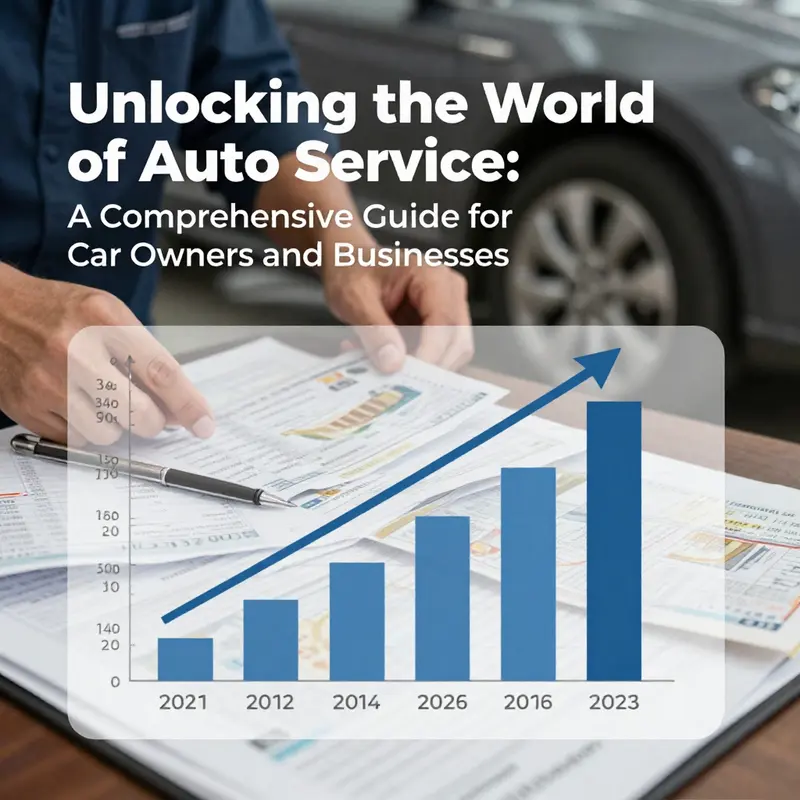
The auto service sector sits at the intersection of consumer needs, technological progress, and broader economic cycles. It is not the loudest industry in headlines, yet it powers employment, GDP, and household budgets through repair, maintenance, and data driven services. In mature markets, aging vehicle stock sustains a durable demand for skilled labor, parts, and diagnostics even as vehicle technology evolves toward ACES: autonomous, connected, electric, and shared mobility. Shops must blend hands on work with software literacy, high voltage safety, and cybersecurity awareness. This mix creates opportunities for independent shops to compete by transparency, speed, and trusted customer relationships, while large networks benefit from scale and data networks. The economic upside includes steady job creation and rises in value per visit as predictive maintenance and remote diagnostics unlock efficiency and longer vehicle lifespans.
Technological change reshapes service models: fewer routine mechanical tasks in some segments, more software updates, battery care, and charging compatibility. The skill profile shifts toward battery management, thermal systems, and software interfaces that govern propulsion. The shop of the future will rely on continuous training, access to digital tools, and partnerships with parts distributors and data platforms. Independent shops can carve out niches by specializing in high voltage safety, EV battery care, or diagnostic accelerators, while maintaining the personal touch that builds trust.
Policy and community investments matter too. Public funding for technician training, apprenticeship programs, and equipment upgrades helps sustain a broad workforce and keeps auto service accessible to diverse households. In the longer run, credible data, transparent pricing, and clear maintenance roadmaps become the value proposition that anchors customer loyalty and stabilizes household budgets during economic fluctuations. As the ecosystem deepens its data capabilities, service providers can anticipate problems, optimize schedules, and share performance metrics with customers, turning maintenance into a proactive, value driven partnership rather than a reactive expense.
For readers seeking real world illustrations, consider how regional shops integrate with local distributors and digital platforms to offer coordinated service networks. A mid sized town may host multiple independent shops that collaborate on training, equipment pools, and marketing while competing on service quality and speed. This local ecosystem helps sustain jobs, supports supply chains, and reinforces consumer confidence in moving people and goods safely. The broader economic takeaway is that auto service is a durable engine of activity that grows with vehicle complexity, expands with digital tools, and remains accessible through community oriented business models.
Societal Impact of Auto Service Availability
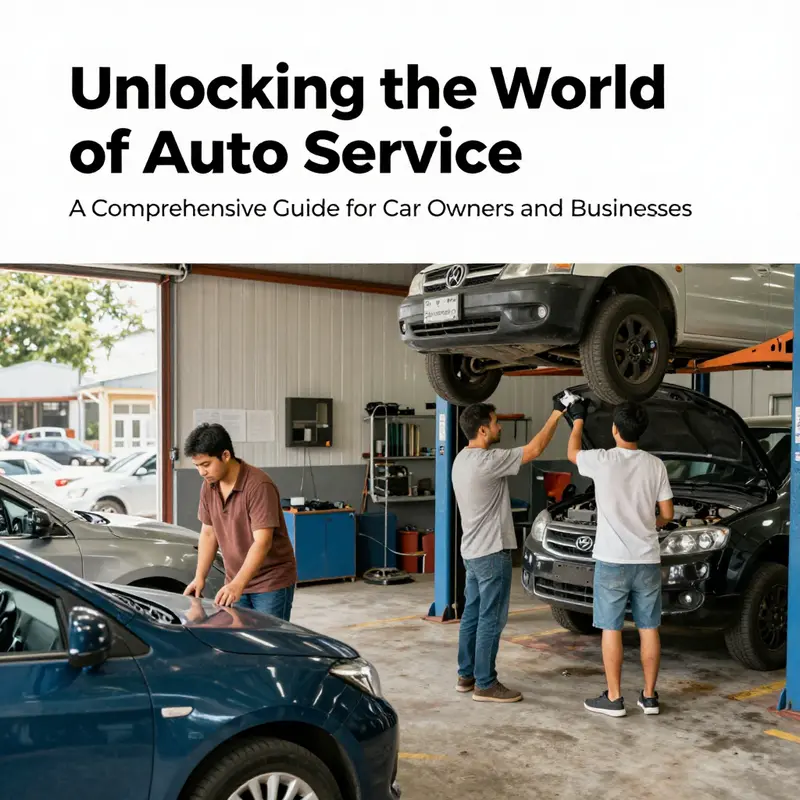
The availability of auto service sits at the intersection of mobility, opportunity, and everyday resilience. It is not merely a matter of fixing a car or performing routine maintenance; it is a form of infrastructure that quietly underpins whether people can reach work, school, clinics, and community spaces. When maintenance and repair services are reliably accessible across neighborhoods, they enlarge the set of possibilities for individuals who must navigate complex schedules, unpredictable work hours, or unreliable transit. In places where auto service is plentiful and affordable, a person’s ability to participate in the economy expands in tangible ways: a late shift can still be attended, a required appointment can be kept, and a child’s school event can be reached without anxiety about missing the last bus or train. Conversely, when such services are scarce or expensive, the consequences ripple beyond the garage. Missed opportunities, delayed healthcare, and reduced social participation accumulate, deepening existing inequalities. Mobility becomes not only a matter of distance but of reliable access to the means of keeping a car healthy or, in some cases, of substituting public or shared transportation for private ownership. In rural regions, where miles separate repair shops from households and emergency repairs may demand long drives, the true cost of car dependence becomes clearer. In urban neighborhoods with patchy coverage, even a technologically advanced city can feel fragmented if a single critical service hub is missing or overwhelmed. The social fabric—commuting rituals, school drop-offs, care responsibilities—relies on the predictability that auto service, car parts, and skilled technicians provide at predictable times and prices.
The emergence of automobility-as-a-service (AaaS) platforms marks a shift in how we think about service availability. Rather than viewing car ownership as the sole pathway to mobility, AaaS integrates maintenance, vehicle access, and ride options into a single digital ecosystem. This consolidation has the potential to lower barriers to mobility by offering flexible, on-demand access to service and vehicle use. When well designed, these platforms can reduce congestion and environmental impact by promoting shorter ownership cycles and more efficient use of vehicles. Yet the promise hinges on equity. If deployment concentrates in affluent neighborhoods or high-density corridors, the same platforms that promise convenience can inadvertently widen the gap between those who can afford reliable, rapid service and those left with delayed repairs or fewer affordable options. The challenge is not merely technological; it is governance. The architectural choices of these systems—from how maintenance networks are mapped to who bears the cost of out-of-pocket repairs—will shape whether they function as inclusive mobility enablers or exclusive luxuries.
The social implications of auto service extend into economic opportunity as well. Local repair shops often act as small but meaningful nodes of employment, apprenticeship, and skill transfer. A highly distributed service network can support workforce entry for people in communities with limited access to formal training paths. Conversely, a fragile or centralized system can limit job growth to a narrow set of hubs, leaving out rural areas and inner-city pockets that lack both demand density and investment. When auto service works well, it supports a steady flow of customers who depend on timely maintenance to keep their livelihoods intact. A simple oil change, a brake inspection, or a tire rotation becomes a touchpoint for trust and reliability between technicians and families who otherwise navigate precarious financial situations. In this sense, auto service is a social service as much as a mechanical one. It reduces the friction of daily life and strengthens the sense that one can meet obligations, keep commitments, and participate in community life.
The interplay between digital platforms and physical service networks adds another layer to how we understand societal impact. Data-driven routing, remote diagnostics, and mobile payment options can streamline access, especially for people who face mobility or time constraints. However, the digital demands of modern service ecosystems can unintentionally exclude those with limited internet access, low digital literacy, or language barriers. Ensuring inclusive interfaces, multilingual support, and affordable connectivity becomes part of expanding mobility equity. In practice, this means calibrating pricing models, ensuring transparent wait times, and sustaining a robust network of technicians who can reach diverse neighborhoods with reasonable travel costs. A robust auto-service ecosystem can thus act as both a social equalizer and a potential pressure point, depending on how it is designed, funded, and regulated.
A crucial dimension of this discussion is the physical geography of service availability. Rural and underserved urban areas often experience longer waits for diagnostic services, slower turnaround times, and higher relative costs. The consequences extend beyond inconvenience. Delayed maintenance can lead to higher long-term repair bills, unexpected breakdowns, and greater hesitancy to rely on a personal vehicle for essential trips. When people defer or skip maintenance, the risk of road incidents increases, with broader public safety and community health implications. This is not merely about convenience; it is about safety, reliability, and the right to participate fully in civic life. A well-distributed network of repair and maintenance facilities helps ensure that mobility is inclusive rather than exclusive, and it supports broader societal goals such as educational attainment, employment access, and health equity.
Within dense metropolitan areas, the distribution of auto-service access still matters in nuanced ways. Even in a city with abundant shops, service deserts can persist in peripheral neighborhoods where travel time, parking costs, or language barriers discourage maintenance visits. The presence of a nearby shop matters, but so does the ease of scheduling and the affordability of services. Here, the role of local ecosystems becomes visible: community workshops, neighborhood repair events, and mobile service units that travel to senior centers or transit hubs can bridge gaps in access. In this context, one can imagine the city as a living organism whose health depends on the vitality of its repair and maintenance pathways. A single high-capacity repair center is not enough; the network must radiate into neighborhoods with predictable, affordable access and dependable hours. An illustrative example of local access can be seen through community-facing auto-service hubs that serve as reliable points of contact in diverse neighborhoods. For readers curious about how such proximity plays out in real places, consider the example of auto service availability in Chicago, which highlights how access can vary across districts and how targeted investments can improve outcomes. auto service in Chicago.
Policy and planning perspectives are essential to translating these insights into action. If municipal and regional authorities want mobility to be truly inclusive, they must consider auto-service availability as part of broader transportation justice agendas. This includes supporting workforce development pipelines for technicians, incentivizing the deployment of maintenance facilities in underserved areas, subsidizing essential diagnostic services for low-income households, and fostering public-private partnerships that align service quality with affordability. Moreover, integrating maintenance capacity into urban transit and shared-mobility strategies can help create more resilient transportation systems. When communities design around maintenance access, they reduce the risk of breakdowns that sever connections to jobs, education, and care. In this light, auto service becomes a public good—one that requires investment, thoughtful geography, and ongoing evaluation to ensure benefits reach all segments of society, not just the most connected.
For a broader theoretical framing of these dynamics, researchers point to the societal impact literature that maps how service availability shapes mobility, economic opportunity, and social cohesion. This body of work emphasizes that the value of auto service extends beyond the car itself to the communities that rely on stable, affordable access to transportation. It invites policymakers, practitioners, and residents to view maintenance infrastructure as a component of social equity—an element that supports fairness, capability, and belonging across the urban and rural spectrum. External readers may wish to explore the broader overview of societal impact in the research literature to understand how these themes interconnect with other dimensions of transport, economy, and community life: https://www.sciencedirect.com/topics/social-science/societal-impact.
Final thoughts
The world of auto service encompasses a wide spectrum that is vital for private car owners, small fleet operators, and the automotive industry at large. By grasping the general principles, acknowledging geographical differences in terminology, understanding technical definitions, recognizing economic implications, and appreciating societal contributions, all stakeholders can better navigate the complexities of automotive maintenance and service provision. This knowledge equips individuals and businesses to make informed choices that ultimately enhance vehicle performance and operational efficiency.