
Mobile auto detailing is more than just a luxury; it’s a growing necessity for car owners and small fleets alike. In today’s busy climate, private vehicle owners, small business fleet operators, car dealerships, and auto repair shops recognize the value of having their vehicles professionally cleaned without the hassle of traveling to a physical shop. This article delves into the convenience of mobile auto detail services, detailing the wide range of offerings available, and providing guidance on how to find and compare local providers, ultimately leading to well-maintained vehicles at your convenience.
On-Demand Shine: The Craft and Convenience of Mobile Auto Detail Service
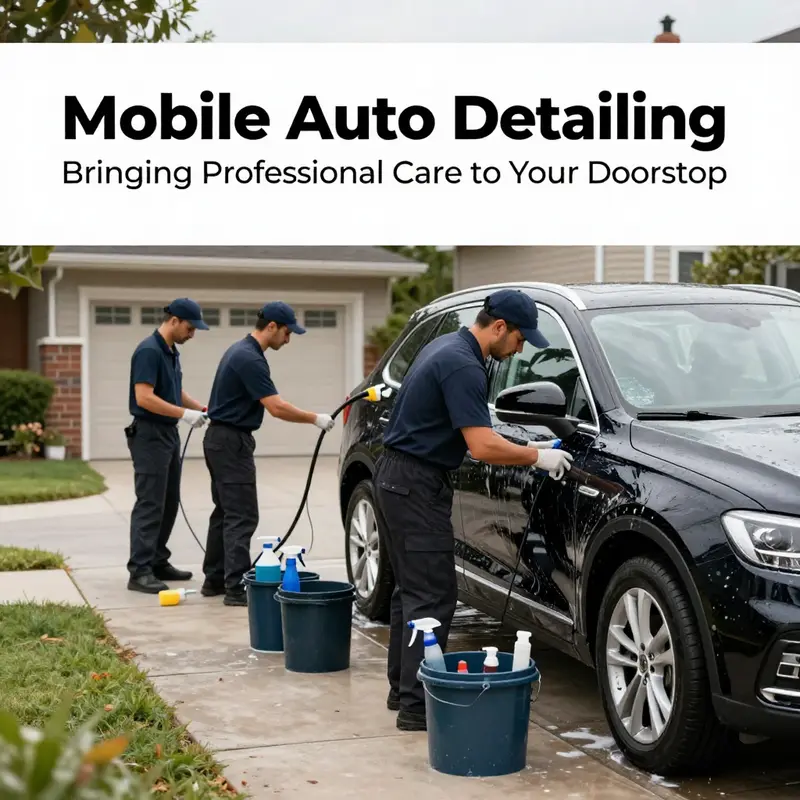
When a car becomes more than a mode of transit and a personal space on wheels, it deserves care that respects both its substance and the rhythm of its owner’s life. Mobile auto detail service answers that call by moving the detail shop out of a brick-and-mortar building and into the daily routes of modern living. It is not merely a convenience aspect of car maintenance; it reframes the relationship between the vehicle, the owner, and the surrounding ecosystem of service. The idea rests on a straightforward premise: you do not need to invest your time driving to a shop, waiting in a queue, and then returning to a car that may still be drying or unfinished. A skilled detailer arrives at your doorstep, a workplace lot, or even a public parking area, and completes a thorough cleansing and refinement while you remain where you are most comfortable. The result is not just a cleaner car but a smoother day, a more efficient use of time, and a higher likelihood that regular upkeep becomes a habit rather than a disruption.
To understand the appeal and the craft of mobile detailing, it helps to imagine the sequence of work that unfolds when a detailer arrives with a truck, a carefully organized toolkit, and a plan tailored to the vehicle and the owner’s preferences. Exterior washing is just the opening act. The process typically begins with pre-rinse and a targeted decontamination step to dislodge dirt, followed by a soap wash that considers the vehicle’s finish, a gentle but thorough contact wash, and a careful rinse that minimizes water waste. Detailers bring high-pressure washers and specialized cleaning solutions designed to lift grime without compromising delicate coatings. They move on to dry and decontaminate, then address wheels, tires, and wheel wells, restoring contrast and luster with cleaners, brushes, and tire dressing. What follows is a more intricate interior session: interior vacuuming that digs into seats and carpets, wiping down hard surfaces, conditioning leather or fabric, and often attending to details like door jambs and crevices that accumulate dust and grit over time. When the work calls for it, the crew advances to more advanced treatments such as paint correction, glaze, wax, sealant, or even ceramic coatings for extended protection. The goal is not merely a shine but a sustained, balanced improvement that stands up to time and use.
The equipment and know-how required for this on-site model are surprisingly comprehensive. Detailers arrive with their own water supply in many cases, or they use water-efficient systems and recycled rinse methods that minimize environmental impact. They bring portable generators for power and a suite of tools that once required a shop’s fixed footprint. High-quality buffers and polishes help refine paint surfaces, while interior detailing may involve steam cleaning, ozone deodorization, or specialized cleaners for leather, vinyl, and fabric that are compatible with the vehicle and safe for occupants. The emphasis on portability does not imply compromise; it signals a different scale of organization. A mobile detailer’s van or truck is a compact workshop on wheels, arranged for efficiency and adaptability. The team plans the route, inventories its supplies, and calibrates the approach to the specific car conditions—sun exposure on a parked street, a humid indoor workspace, or a busy corporate campus parking lot. In this context, service quality is inseparable from reliability, timing, and the ability to communicate clearly about what can be accomplished within a given visit and what would require a follow-up session.
The practice also embraces customization as a core strength. Consumers can select from a spectrum of packages, from a basic exterior wash with interior wipe-downs to a full detailing that stacks multiple steps—claying, polishing, waxing, and protective coatings—over the course of several hours. The digital booking layer adds another dimension of convenience. Rather than a phone call or a walk-in, customers can schedule, reschedule, or track service in real time through apps or web portals. They can choose add-ons, specify the car’s make and model, and communicate concerns such as sun-bleached dashboards, stubborn pet stains, or smoke odors. The on-demand model makes it easier to align maintenance with changing schedules, travel plans, or the realities of weather. A quick check on the calendar can reveal slots that fit around a workday, a flight, or a child’s activity, and the detailer arrives with the same punctuality you expect from a mobile technician in any field.
From a financial perspective, mobile detailing often presents a surprisingly accessible entry point. Overhead costs for a mobile operation are typically lower than for a brick-and-mortar shop, which can translate into transparent pricing and competitive options for customers. Prices commonly span a broad range—from roughly thirty dollars for a basic exterior wash to two hundred dollars or more for a comprehensive interior-exterior detailing package—depending on vehicle size, condition, and selected services. The pricing logic tends to reflect the absence of a storefront, the cost of specialized on-site equipment, and the logistics of travel to the customer. For many owners, this combination offers a compelling value proposition: legitimate professional care without the time expense of a detour to a shop and the sometimes opaque pricing of a fixed-location facility.
Yet the model is not without its caveats. The on-site nature of mobile detailing means it is at least partly dependent on weather and location. Outdoor work on a damp or windy day can limit what is practicable and can affect drying times and the overall experience. Travel constraints and the need to navigate urban traffic or crowded parking lots can introduce variability in scheduling. The quality of the outcome, too, hinges on the skill and communication accuracy of the technician. A well-run mobile operation will manage expectations precisely, describe what is achievable within a given visit, and offer a clear plan for any preferred follow-up treatments. This transparency helps build trust, an essential ingredient in a service that intersects the customer’s personal space and daily routine.
A deeper layer of significance emerges when considering the ecological dimension of mobile detailing. Portable workflows have increasingly incorporated water-saving practices, biodegradable cleaners, and shorter dwell times for products that minimize chemical exposure to the environment and occupants. The ability to control the water footprint—from staged rinses to the choice of coatings—appeals to many customers who want effective cleaning without a heavy environmental toll. This attention to sustainability complements the practical benefits of mobile service, reinforcing the idea that care for the car can align with responsible stewardship of water resources and urban ecosystems. In many cases, the on-site approach also supports easier garages and driveways, sparing customers the daily logistics of moving a vehicle to and from a shop that may require staging and storage—an additional time sink in a busy life.
A crucial element of the mobile detail experience is the emphasis on personalization. The technician treats the car as a tailored project rather than a generic service. They consider the vehicle’s age, paint condition, interior wear, and the owner’s goals. Do you want a showroom-level finish for a vintage car you’re preparing for a show, or a practical, low-maintenance protection that stands up to daily commuting with minimal upkeep? The answer dictates the sequence of steps, the products selected, and the pace of the session. The client’s preferences might also shape the choice between a protective ceramic coating or a traditional wax, a focus on stain removal and odor neutralization for the interior, or a targeted approach to problematic areas like sun-intensified dashboards or heavily used seat creases. This level of customization is hard to achieve in a fixed-location shop where standard packages are often the norm. The mobile model invites a more collaborative, consultative dynamic, turning a cleaning appointment into a short, guided care plan for a vehicle that matters on a personal and sometimes professional level.
Some providers publicly share pricing and packaging in straightforward, customer-facing formats. This transparency helps demystify the process and reduces the anxiety that can come with professional car care. For example, one widely cited overview outlines the typical scope of services, the expected timeframes, and the pricing brackets that customers can anticipate. Such public-facing outlines offer a helpful benchmark for comparing options across providers and for deciding how to allocate time and budget. In addition, many operations publish client-ready examples of before-and-after work, sometimes illustrated with photos that demonstrate the transformation possible with a few hours of focused effort. When a consumer can see visible results and understand the steps involved, the decision to book becomes easier and more confident. A point of reference that some customers find particularly useful is a public service overview that breaks down service tiers and expectations; these references, though not universal, serve as a practical compass when evaluating on-site care.
From the perspective of the customer journey, the on-demand model reshapes how people think about car maintenance. The interaction begins with discovery—finding a provider through maps or platforms, reading reviews, and comparing offerings. It proceeds to selection and booking, where the customer chooses a package and a time window; then the service unfolds in real time, with the detailer communicating progress, any deviations, and the final outcomes. The experience can be fluid, almost like having a trusted auto care partner who is available on short notice or on a cadence that fits deadlines or seasonal maintenance goals. This is not merely about convenience for the sake of convenience; it is about integrating care for a vehicle into the owner’s life in a way that reduces friction, encourages consistency, and elevates the pride of ownership. When an owner is able to keep the car in pristine condition without sacrificing other priorities, the vehicle’s value—both monetary and sentimental—stands to benefit.
Gifting a professional detailing session is one of the more thoughtful expressions of appreciation, and mobile services have found a receptive audience for such gifts. Gift certificates can be tailored to fit the recipient’s needs, whether that means a quick exterior wash as a kind gesture or a comprehensive detailing package as a special treat for a milestone. The portability of the service makes it an appealing option for those who want to give the gift of time: the recipient selects the package, the provider executes the work at an agreed location, and the result is a clean, refreshed car that arrives with the emotional resonance of a thoughtful present. In a world where experiences are increasingly valued over material items, a mobile detail can be framed as a practical, memorable experience that respects the recipient’s time as well as the care their vehicle deserves.
The practical side of choosing a mobile detail provider often comes down to location-enabled search, reliable scheduling, and a clean, recurring value proposition. For people who live in apartment buildings or who travel for work, the ability to book a service at home or at work is especially appealing. It minimizes disruption to daily routines and reduces the need to arrange for a car drop-off or a waiting room visit. To find a local service, many consumers turn to search engines, maps, and community platforms that aggregate customer feedback and confirm availability. The process is typically quick: enter your location, compare a few providers, check packages and prices, view pictures and reviews, and lock in a time that works for you. The result is a streamlined path to vehicle care, a path that respects both the car and the owner’s schedule. In this evolving landscape, mobile auto detail services have also shown a surprising adaptability, moving into corporate campuses and event venues where fleets or attendees want their cars to look polished without pulling drivers away from their responsibilities.
In a concrete example that grounds the trend, a registered mobile auto detail service operating in Ohio demonstrates the legitimacy and reach of this model. While the specifics of registration dates or addresses may not always be publicly visible, what matters is that this entity exists as an active detailing operation serving customers where they live and work. This real-world instance underscores the practical viability of mobile detailing as a standard option among car owners who demand both quality and convenience. The impression is clear: the craft is established, the demand is real, and the service is scalable beyond a single neighborhood to a broader geographical footprint. The broader takeaway is that mobile detailing is not a novelty; it is a coherent, scalable approach to automotive care that aligns with the pace and expectations of contemporary life.
The broader landscape also includes a spectrum of ancillary offerings that complement detailing. Some providers extend into more specialized treatments such as engine bay cleaning, glass polishing, and meticulous interior odor control. Others pair detailing with protective coatings that give vehicles a longer-lasting shield against the elements, making routine maintenance a longer-term investment rather than a weekly chore. The cases where customers opt for long-term protection—whether through ceramic or similar coatings—often see savings over time by reducing the frequency of more intensive, deeper cleans or color-restoration work. This paints mobile detailing not only as a service but as part of a holistic car-care strategy that can be integrated into a vehicle’s life cycle alongside maintenance schedules, seasonal care, and occasional enhancements for aesthetics and protection.
The customer experience is central to the mobile model’s appeal. When the technician arrives, there is an opportunity to calibrate expectations, perform an inspection, and tailor the plan to the car’s current condition and the owner’s priorities. The process can become almost consultative, a brief but focused dialogue that translates into a precise set of actions. The on-site nature makes it easier to address context-specific challenges. For instance, if the car is parked in a shaded driveway, the technician may take advantage of cooler conditions to apply protective coatings or to complete interior detailing without the risk of heat-related surface reactions. If the vehicle has a sentimental or collectible value, the detailer may take additional care with delicate finishes or vintage upholstery, validating the trust placed in a mobile professional who must balance speed with featherweight precision. The owner is not merely an observer; they can request a live demonstration of certain steps, ask questions about products, and gain a better understanding of care routines that influence long-term results. In this sense, mobile detailing elevates car care from a transactional task to a learning experience and a collaborative partnership.
The potential of mobile detailing is amplified when one considers the flexibility of appointment models. Some owners prefer predictable routines, such as monthly or quarterly visits that align with changing seasons and the wear patterns that accompany a vehicle’s daily life. Others rely on spontaneous services triggered by events—after a road trip, a camping weekend, or a spill that someone wants addressed promptly. The on-site, on-demand nature of the service makes these scenarios feasible without the friction that often comes with driving to a shop and waiting for a slot. This dynamic aligns with broader consumer trends toward flexibility and instant gratification while still delivering quality outcomes that are measurable and tangible—the kind of results you can see when the sun catches a fresh coat of polish or the interior surfaces reflect a renewed sheen.
Public-facing information about the service often emphasizes clarity and accessibility. For consumers, it is reassuring to see straightforward descriptions of what is included in each package, how long the process typically takes, and what the expected results look like. When done well, this transparency reduces ambiguity, fosters trust, and empowers buyers to make informed decisions. It also invites comparison across providers, which can drive higher standards in the industry as a whole. A practical touch in this regard is a link to an overview or a pricing page that distills the essence of what the service offers and how it can fit into the owner’s budget and time constraints. In some instances, this kind of public documentation is complemented by customer reviews and photos that demonstrate real-world outcomes, creating a compelling narrative that helps buyers feel confident about their investment.
Beyond the mechanics and the math, mobile auto detail service signals a shift in how households allocate attention to their cars. The vehicle becomes a living extension of the owner’s daily life, deserving of regular care that does not require significant alterations to routines. The service becomes a form of proactive maintenance, one that preserves value, comfort, and pride in ownership. It reduces the cognitive load associated with car care: owners do not have to schedule, transport, or contend with a shop’s hours of operation. They simply request service at a time that suits them, and the detailer arrives prepared to perform a comprehensive refresh. The resulting car—in terms of cleanliness, scent, and appearance—acts as a reflection of the owner’s standards, priorities, and attention to detail. In a culture that increasingly values time, convenience, and personal space, mobile detailing fits neatly into a broader matrix of on-demand services that are reshaping how people manage daily life.
For readers exploring this topic, the interplay between convenience, craftsmanship, and care represents a framework for evaluating mobile detailing not as a temporary workaround but as a durable service category with room to grow. The craft requires discipline, precision, and a thoughtful approach to materials and methods. The convenience rests not merely in the arrival of a van but in the careful orchestration of a process that respects the vehicle and the owner’s schedule. The care lies in the attention to detail that makes a car’s interior feel fresh, its paint look more vibrant, and its protective layers more resilient against the test of time. When these elements cohere, the mobile detailing experience emerges as a compelling practice for modern car owners who want to keep their vehicles in top form without sacrificing the rhythms of a busy life.
For those who want to see how the concept translates into a practical reference point within the broader auto-service ecosystem, public-facing overviews of pricing and packages can be a helpful starting point. Such resources illuminate what to expect, how long the service will take, and what kinds of add-ons might be appropriate for a given vehicle. This clarity matters because it shapes how people decide to invest in their car’s upkeep and how they communicate their needs to the technician. In a market that continues to evolve with new coatings, cleaning technologies, and environmental considerations, the basic promise remains unchanged: a skilled on-site team can deliver professional car care with less disruption to the owner’s life. The rest is a conversation about expectations, values, and the specific care plan that suits each vehicle.
If you are considering integrating mobile detailing into your routine, a practical next step is to explore the local options that exist nearby. Look for providers who bring a complete toolkit to the driveway, who show a transparent menu of services, who offer flexible scheduling, and who can provide a realistic timeframe for each level of service. It’s also worth asking about any environmental practices, such as water recycling or the use of low-emission products, because these factors can influence both the experience and the broader impact of the service on the neighborhood. The right choice is the one that balances reliability, quality, and value in a way that feels natural to your life. When the car emerges from the session with a renewed surface and a refreshed interior, the value is easy to quantify: more time in your day, a vehicle that looks cared for, and a maintenance routine that you will actually keep. That combination of outcomes—time saved, pride restored, and ongoing protection—captures the essence of the mobile auto detail service and why it has become a meaningful option in the modern automotive care landscape.
To connect the concept with a concrete example, consider how a public-facing overview can guide decision-making. A provider’s overview answers essential questions about scope, pricing, and expectations. It offers a transparent entry point that reduces guesswork and encourages informed choices. This kind of resource is especially valuable when you are in the planning phase—comparing packages for a car you may soon sell, or choosing a monthly care routine for a vehicle that serves as a family workhorse. The clarity helps you align your budget with your goals, whether that means preserving resale value, maintaining a pristine interior for daily commutes, or simply enjoying a cleaner car as part of your personal standard of living. As more households embrace flexible, on-site services, the demand for reliable, transparent, and high-quality mobile detailing is likely to grow, poised to complement traditional shops rather than replace them entirely. The best providers will understand that their success depends not only on the strength of their detailing technique but on the trust they build with customers through consistent communication, dependable scheduling, and meticulous on-site workmanship.
For readers who want to explore beyond this narrative, a broader set of industry insights can be found in current trend reports and trend-forward articles. For instance, contemporary sources discuss how mobile detailing is evolving in response to consumer expectations for speed, convenience, and eco-responsibility. These resources highlight the ongoing convergence of technology with hands-on craft, showing how apps, real-time status updates, and streamlined payment processes contribute to a more seamless service experience. They also reflect the growing emphasis on premium coatings, protective finishes, and interior enhancement as aspirational goals alongside routine cleansing. The takeaway is clear: the mobile detail space is not static; it is a dynamic interface where technology, service design, and automotive care meet the needs of a time-starved, quality-conscious audience.
In sum, the convenience of mobile auto detail service is not merely about where the work happens. It is about how care is delivered, how expectations are managed, and how the relationship between car and owner takes shape within the cadence of contemporary life. It is about transforming a routine maintenance task into a moment of value, convenience, and pride—an on-site craft that respects the automobile as an extension of the owner’s daily world. As the industry continues to mature, those who seek the best outcomes will look for providers who combine technical proficiency with clear communication, thoughtful customization, and responsible practice. The result is a service that is not simply a detour from a traditional shop but a meaningful component of modern car care—an evolving model that keeps the vehicle looking its best without complicating the owner’s itinerary.
External resource on broader industry trends: https://www.automotive.com/mobile-detailing-trends-2026
Internal link reference: For an example of a publicly accessible overview that clarifies pricing and packages, see the A Plus Auto Service Overview. A Plus Auto Service Overview
From Exterior Shine to Interior Sanctuary: The Full Range of Auto Detail Services

A car is more than a means of transport; it is a portable space where function, memory, and personal style converge. When the topic turns to auto detailing, many imagine a routine car wash. Yet the practice runs far deeper, blending chemistry, artistry, and hands-on precision to sustain a vehicle’s beauty and value over time. An auto detail service begins with a clear understanding that the goal is not merely to clean, but to restore, protect, and extend the life of every surface it touches. The service operates on a simple premise: small, meticulous actions repeated consistently yield results that make a car feel like a partner rather than a chore. This is what clients experience when a detailing team arrives on their doorstep, ready to transform a vehicle without the owner needing to leave home or office. The convenience is part of the appeal, but the real value lies in the craft—the willingness to invest time, expertise, and quality materials to achieve a result that lasts.
The outside of a car speaks first. A full exterior detailing begins with a thorough washing that respects the paint and the edges of trim. Detailing specialists approach the wash with a plan that recognizes how road grime, pollen, and mineral deposits cling to surfaces, often hiding micro-scratches and swirl marks. A careful rinse precedes the hand wash, followed by a two-step process of polishing and waxing designed to restore gloss and add a protective barrier. The wax or sealant, chosen for its hydrophobic properties and durability, creates a slick finish that repels water and resists contaminants. This layer is not cosmetic theater; it is an essential line of defense against UV rays, bird droppings, tree sap, and the daily assault of road grime. The wheels and tires, frequently neglected in casual cleaning, are treated with specialized cleaners and dressings to revive their color, remove brake dust, and extend the life of rubber components. Attention to these details matters because wheels are the frame for the vehicle’s overall look; clean wheels make even a modest car look sharp, while dirty rims can dull the strongest paint job.
Inside, the mission expands into a meticulously planned interior detail. Deep-cleaning begins with removing debris and loosening stubborn dirt from carpets and upholstery using a combination of vacuums, brushes, and targeted extraction methods. The aim is not to turn a car into a showroom model but to create a healthier, more comfortable space. Sand and dust that accumulate on dashboards and consoles are drivers of wear, so technicians wipe, scrub, and scan for any remaining grime. When materials vary—vinyl, plastic, leather, fabric—the approach shifts accordingly. Leather is conditioned to maintain suppleness and resist cracking, while fabric fibers receive treatments that lift oils and odors without compromising the fabric’s texture or color. Disinfection becomes a preferred step in modern detailing, especially in high-traffic vehicles. It is the practical counterbalance to the tactile polish; a clean surface without hygienic care leaves space for microbes to linger. A well-executed interior detail also extends to doors, headliners, and storage compartments, where pockets of dust accumulate and surfaces collect fingerprints. The result is a cabin that feels refreshed and more resilient to the daily toll of usage.
As with any skilled craft, there are specialized services that elevate the baseline to meet particular needs. Engine bay cleaning, once seen as a risky or unnecessary step, is now commonly offered because a clean engine not only looks better but can also aid in spotting leaks and protecting belts and hoses from debris. Headlight restoration is another valued service; it clears yellowed or clouded lenses, improving nighttime visibility and road safety while restoring the vehicle’s overall brightness. Ceramic coatings have become a defining option for many clients seeking long-term protection. A ceramic layer bonds with the paint, creating a hydrophobic surface that resists water spotting, makes washing easier, and maintains gloss for years with proper care. Odor removal rounds out the suite of specialized treatments, addressing common sources of complaints—from lingering tobacco smells to the musk of ancient pets or the subtle scent of gym bags that never fully leaves the carpet. In all these cases, the detail technician’s judgment plays a crucial role. Not every car needs every service, and a skilled technician will assess how best to tailor treatments to the vehicle’s age, condition, and the owner’s expectations.
The practice of detailing often evolves through customized packages. Some clients arrive with a budget in mind and a goal in front of them, such as restoring a glossy exterior for resale or preserving a beloved classic’s appearance. Others want a comprehensive, all-in-one program that covers every surface from the body to the trunk. The ability to customize is one of the defining strengths of mobile detailing, where the service can adapt to the vehicle’s schedule and the client’s daily routine. The package can range from a basic but thorough wash and interior vacuum to an advanced program that includes leather conditioning, fabric protection, wheel restoration, odor elimination, and a long-lasting ceramic coating. In practice, a well-designed package considers the car’s color, the climate in which it operates, and the owner’s maintenance habits. A white or light-colored vehicle, for instance, calls for extra attention to swirls and micro-marring that become more visible under sun and shade; a darker shade benefits from enhanced gloss and careful risk management during polishing to avoid holograms. A modern detailer also considers eco-conscious choices—water usage, biodegradable cleaning agents, and low-VOC products that protect both the car and the environment.
The mobile nature of many detailing services marks a shift in how customers approach car care. Rather than hauling a vehicle to a shop, busy households, managers at corporate campuses, or service crews at remote job sites can schedule an on-site appointment. The on-site model reduces downtime and aligns with a culture that prizes efficiency and convenience. Technicians bring their portable setups, including steam cleaners, extractor vacuums, polishes, pads, and protective cloths. They work with portable power sources and, when needed, a water supply, turning a driveway or an office lot into a temporary workshop. The familiarity and comfort of being in a familiar space often helps car owners relax during the process, and it makes the detailing experience feel less like an interruption and more like a personalized service.
An important facet of the modern detailing ecosystem is the integration of digital tools. Customers increasingly expect to browse service menus, customize packages, and book appointments with a few taps on a smartphone. A mobile-friendly catalog, transparent pricing, and clear scheduling options not only save time but also build trust. The most successful detailing providers pair craftsmanship with a user-friendly digital experience. They offer real-time availability, confirm appointment details, and provide post-service care guidance. A client might schedule a basic wash in between meetings or reserve a full-day detailing session on a weekend when the car has time to rest in a safe, indoor space. In many cases, the provider’s digital interface also supports secure payments, leaving the vehicle owner with a simple, seamless post-service experience—no cash or awkward checks, just a smooth credit or digital payment at the end of the appointment. This blend of technique and technology is reshaping expectations for car care in a way that keeps pace with other consumer services.
Gift certificates are another practical extension of auto detailing services. They translate care for a vehicle into a thoughtful act that can be shared with friends, family, or colleagues. A gift certificate offers flexibility: recipients can opt for a thorough introductory package or a premium treatment that protects the paint, rejuvenates the interior, and extends the vehicle’s value. Gift certificates also reflect a broader trend toward experiential gifts, where the value is the experience itself—a clean car and renewed pride in ownership—rather than a tangible object. In households and corporate settings, gift certificates can function as a practical token of appreciation or a strategic incentive, reinforcing how car care contributes to daily life in meaningful, visible ways. The process to purchase and redeem is typically straightforward: the recipient chooses the package that fits their needs, negotiates any special considerations, and then books at a time that works for their schedule. The result is a tailored service experience that respects both the vehicle and the owner’s time.
For those seeking local options, a typical search path begins with a familiar map-based or service-focused platform. Prospective clients often compare providers by reading reviews, evaluating how long the process takes, and weighing the clarity of pricing. An effective detailing service distinguishes itself not just by the breadth of offerings but by consistency, reliability, and communication. The best operators arrive on time, explain what they will do, and respect the client’s space, leaving behind nothing more than a gleaming vehicle and a clear plan for ongoing maintenance. The result is a customer relationship built on trust, regular communication, and a shared appreciation for the long-term health of the vehicle. This relationship matters as much as a single job well done because the car’s ongoing maintenance becomes predictable and manageable when the client feels understood and supported.
From the perspective of the business, the range of services offered by auto detailing providers reflects both the chemistry of the products used and the evolving expectations of customers. High-end finishes rely on precise surface preparation, surface-safe cleaners, and controlled polishing techniques to avoid introducing new imperfections while removing years of wear. The interior cleaning sequence, from carpet decontamination to leather conditioning, underscores a philosophy of respect for materials and the conditions under which a vehicle lives. The specialized services, when chosen, are not about maximizing profit but about addressing a specific issue that, if left unattended, could reduce value or enjoyment. Engine bays, headlights, and coatings represent a continuum where form meets function. The intended outcome is a vehicle that not only looks better but also behaves more reliably in daily life—better visibility, easier maintenance, and longer intervals between more invasive interventions.
Another dimension worth noting is the way detailing services synchronize with broader trends in car care and sustainability. A growing emphasis on reducing environmental impact has pushed many co mpanies to reformulate products, minimize water use, and implement safer waste management practices. The best programs balance performance with stewardship. The result is a detailing routine that respects both the car and the environment. The customer benefits from cleaner, more enjoyable driving experiences, while the service provider builds a lasting reputation for responsible craftsmanship. The shift toward portable, on-site detailing continues to align with increasing urbanization and the desire for time-saving options. Home and workplace visits are not just conveniences; they are practical responses to the realities of modern schedules, where every minute saved translates into more time behind the wheel rather than in a waiting room.
Technology and logistics also influence how clients engage with detailing services. The scheduling workflow often includes automated reminders, clear service descriptions, and easy rescheduling options. Some providers offer package transparency that makes it simple to understand what is included and why certain steps matter. Clients are empowered to make informed decisions about which components align with their goals—whether to preserve an aging paint job, to refresh a leather interior, or to prepare a vehicle for a sale. The result is a more deliberate approach to car care: a plan that respects the car’s history, the owner’s expectations, and the realities of everyday life.
The spoke of continuity is never far from the detailing conversation. A well-executed session leaves behind a vehicle that is easier to maintain between visits. The owner is provided with simple aftercare instructions, from recommended wash frequencies to the types of cleaners suitable for specific surfaces. A thoughtful detailer offers guidance on how to maximize longevity, such as using paint-safe drying towels, avoiding harsh brushes, and protecting leather with appropriate conditioners. In this way, detailing becomes not a one-off action but a habit—a series of small, purposeful steps that preserve the vehicle’s aesthetic while supporting its mechanical health. The most effective detailing partnerships feel less like a transaction and more like a collaboration in which the car and its owner share a long trajectory of care.
Within the larger ecosystem of auto services, detailing occupies a unique niche where aesthetics meet maintenance. It does not replace mechanical upkeep or periodic professional inspections, but it complements them. A well-detailed vehicle often shows fewer signs of wear, which makes routine maintenance tasks easier to perform and monitor. The car’s value is preserved not simply by guarding its appearance but by protecting its components from accelerated wear caused by neglect. For many owners, this dual role—keeping the car looking good while supporting its reliability—explains why detailing has become a cornerstone of responsible vehicle ownership. The on-site option further amplifies this effect by weaving care into daily life rather than interrupting it. A detailer who can arrive during a lunch break or after work is meeting the client where they are, and that alignment is where service excellence truly begins to feel personal.
To connect these threads to a broader business perspective, consider how the catalog of services, the customization options, and the digital interface together shape the customer experience. The catalog sets expectations; customization makes the offering feel relevant to each client’s exact needs; the digital interface ensures that the pathway to service is straightforward and transparent. When these elements align, a mobile detailing operation does more than clean cars. It builds trust, reinforces responsible ownership, and becomes a reliable partner in the ongoing journey of car care.
For readers seeking a concise vista of how a service catalog translates into client outcomes, the answer lies in the everyday moments that define the experience: a perfectly finished surface that resists water beading, a cabin whose odors are no longer noticeable, a headlight that makes night driving feel safer, a leather seat that still feels supple after years on the road. These outcomes are not accidental; they are the product of trained technicians, high-quality products, and a process that respects the integrity of every material the car comprises. As the chapter closes on this exploration of services, the reader can imagine not merely a car that looks good but a vehicle that is easier to maintain, more comfortable to drive, and more enjoyable to own. The value proposition of auto detailing, when viewed through this lens, is not simply cosmetic. It is practical, durable, and deeply human in its appeal—an investment in daily life expressed through the care of a machine that keeps moving forward.
For those who want to explore this topic more deeply or locate a local provider, a quick search on Google Maps or a trusted automotive service platform can reveal options near you, along with customer reviews, pricing estimates, and appointment availability. The right detailer will listen, assess the car’s needs, and propose a path that respects both the vehicle’s current condition and the owner’s future plans. In that sense, what begins as a routine cleaning can evolve into a partnership that sustains the car’s aesthetic appeal and functional performance well into its next chapter. The chapter of services offered by auto detail providers, therefore, is not a fixed menu but a living system that adapts to the car, the client, and the environment—an ongoing dialogue between craft, care, and convenience.
As a final reflection, it is worth considering how the practice of detailing mirrors the broader arc of professional service in a mobile era. The shift toward on-site care reframes what customers expect from service providers: reliability, clear communication, and respect for their time. The best detailers earn trust by delivering outcomes that endure—an exterior that gleams, an interior that feels renewed, and a package that demonstrates real value. When combined with thoughtful digital tools, flexible scheduling, and options that honor environmental considerations, detailing becomes a model for how skilled trades adapt to modern life. The result is not just a process of cleaning; it is a disciplined, thoughtful approach to maintenance that keeps a vehicle looking good and performing well long after the work is done. This is the essence of auto detailing services: a refined balance of artistry, science, and service that helps every driver feel that their car is at its best, every time they turn the key.
Internal reference: A Plus Auto Service Overview
External resource for further reading on modern car care and mobile service tools: https://apps.apple.com/us/app/ls-auto-detail/id1509487236
Choosing the Right Mobile Detailer: How to Find, Vet, and Compare Local Auto Detail Services

Finding a dependable local auto detail service can change how you maintain your vehicle. The right provider saves time, protects your car’s finish, and delivers results that last. This chapter walks through how to locate reputable mobile detailers, what to probe during evaluation, and how to weigh options so you select the service that best matches your needs and budget.
Start with clarity about what you want done. A basic exterior wash and interior vacuuming are very different from multi-stage paint correction or ceramic protection. If you can list desired outcomes—restore gloss, remove swirl marks, deep-clean upholstery, protect new paint—you create an objective baseline for comparing providers. That baseline helps you filter initial search results and frame questions for quotes.
Search with purpose and triangulate sources. Use local mapping tools, review platforms, and community recommendations together rather than relying on one source. Maps give proximity and business hours. Review platforms show customer experiences and recurring issues. Local forums or neighborhood groups often reveal smaller operators who rarely show up in national listings but deliver high-quality service. Assemble a short list of three to five contenders before you reach out.
When you contact a mobile detailer, the initial exchange reveals a lot. Note how quickly they respond, how clearly they explain services, and whether they ask for vehicle details such as make, model, current condition, and any past paint work. A professional will ask about the vehicle’s history and the owner’s expectations. They will also want to confirm the work location and whether they need access to water or power. These practical questions indicate experience and help avoid surprises on the day of service.
Look for transparency on process and materials. A solid provider outlines the steps they will take and the products they will use. Ask whether they perform a pre-service inspection and offer itemized estimates. The best mobile detailers can explain why they choose a particular polish or sealant for your car’s condition. They should be able to describe the difference between a maintenance wash, a full detail, and corrective paintwork without ambiguity. If they dodge specifics or provide only one flat price without explanation, consider that a red flag.
Certifications and training matter. While certifications are not the only sign of quality, they indicate a commitment to standards and ongoing education. Look for technicians trained in paint-correction techniques, safe interior cleaning for different materials, and proper application of protective coatings. Ask if they carry liability insurance and whether they guarantee their work. Providers who back their services with a warranty or follow-up inspection are more likely to stand behind their results.
Assess customer reviews with an eye for patterns. One glowing review or a single complaint tells little. What matters are recurring themes: consistent praise for punctuality, professionalism, and results; or repeated complaints about missed appointments, hidden fees, or damage. Pay attention to how the business responds to criticism publicly. A professional response that offers to make things right shows accountability. If you find reviews that include photos, study them—they reveal real-world outcomes more than polished marketing photos.
Compare portfolios and before-and-after examples. A mobile detailer who documents their work with clear photos demonstrates confidence and quality control. Look for consistent lighting and similar angles in before-and-after images; that consistency makes comparisons fairer. Good portfolios also show a range of conditions tackled: light maintenance, heavy soiling, pet hair removal, and paint correction. If a detailer only presents glamor shots of pristine cars, probe further to confirm they can handle real-world problems.
Pricing deserves careful scrutiny. Detail services vary widely in scope, and price alone is a poor indicator of value. Ask for itemized quotes that list labor, materials, and any fees for mobile service or travel. Confirm whether the price covers the full job or if add-ons—like stain removal, headlight restoration, or odor treatment—are extra. Remember that extremely low bids can indicate use of subpar products or rushed work. On the other hand, the highest price doesn’t guarantee the best result. Use your baseline of desired outcomes to determine whether the quoted services align with what you need.
Ask about product quality and environmental practices. Professional detailers should name the types of products they use and be willing to explain the advantages of higher-grade materials. If you prefer eco-friendly options, ask whether they offer biodegradable cleaners, water-conserving techniques, or low-VOC sealants. Mobile detailers who work in driveways or office lots should also follow local regulations for wastewater management. Responsible operators avoid contaminating storm drains and will explain their runoff containment methods when asked.
Evaluate convenience factors. The whole point of mobile detailing is convenience, so confirm scheduling flexibility, expected service duration, and how they handle delays due to weather. Ask whether they require a specific parking space, access to water and electricity, or if they bring everything needed. Some mobile detailers offer express maintenance packages for busy professionals, while others specialize in multi-day restorations. Pick a provider whose operating model matches your schedule and patience level.
Consider specialized skills for particular needs. Not all detailers offer the same advanced services. If you need paint correction, inquire about the technician’s experience with multi-step polishing and the abrasives they use. For fabric or leather restoration, ask about stain-lifting techniques and whether they use OEM-approved conditioners. For older or classic cars, find a technician who understands historic finishes and delicate trim. A provider who knows the right balance between aggressive correction and preserving paint integrity is invaluable.
Warranty and aftercare should be non-negotiable for premium services. If you invest in a protective coating or paint correction, ask how long the results are expected to last and what aftercare they recommend. Reputable providers offer follow-up inspections or touch-ups within a specified period. They should also give you a written care plan, including recommended products and maintenance intervals to maximize longevity.
Make safety and liability clear. Mobile detailers work on customers’ property and vehicles, so verify insurance coverage. Ask whether the business carries both general liability and personal property protection. Clarify who is responsible for incidental damage and how claims are handled. A transparent provider will explain their policy and make documentation available upon request.
Negotiate a trial service when in doubt. If a long list of services or a high-cost restoration leaves you uncertain, book a smaller maintenance package first. A wash-and-interior-detail gives you a sense of their attention to detail, communication, and timeliness. Use that experience to decide whether to upgrade to more intensive work later. A short trial also limits your exposure if the provider fails to meet expectations.
Factor in repeat-service incentives. Many mobile detailers offer maintenance plans or membership packages that lower the cost per visit and prioritize scheduling. If you plan to keep your car in top condition, these plans can be cost-effective. Ask about frequency discounts, bundled services, and any cancellation policies. Membership programs often include extras such as seasonal treatments or priority booking during busy periods.
When comparing final contenders, create a simple scorecard. Use categories like responsiveness, transparency, product quality, demonstrated skill, insurance, and price. Assign weights based on what matters most to you—if long-term protection matters most, give product quality and warranty higher weight. This rational approach prevents emotional choices driven by a single impressive photo or a smooth salesperson.
If your vehicle is a specialty car, seek a detailer with relevant experience. High-end, rare, or classic cars need nuance. The wrong compound, an aggressive pad, or an inexperienced technician can reduce value. Confirm the detailer understands paint codes, the history of finish technologies, and safe restoration practices. Ask for references from owners of similar vehicles if possible.
Finally, prepare your vehicle before the appointment. Remove personal items, confirm clear access to the work area, and note any existing damage so there is no confusion afterward. Good communication at pick-up and drop-off helps set expectations and protects both you and the detailer.
For a broader search among vetted providers and standardized offerings, consider online platforms that aggregate certified service centers and allow comparison by service type, ratings, and scheduling. These platforms can reveal local professionals who meet standardized quality checks. If you prefer an extra layer of assurance when comparing, start your search there.
For hands-on enthusiasts restoring older vehicles, information about sourcing and upgrading vintage cars can complement your detailing decisions. Resources that cover restoration and sourcing help identify specific care needs for classic finishes and materials, which informs your selection of a detailer with the right skill set. See this guide on sourcing and upgrading vintage cars for further context: https://veteranauto.us/revive-your-classic-the-ultimate-guide-to-sourcing-and-upgrading-vintage-cars-legally/.
If you want a single, practical next step: compile your baseline service list, pick three providers with strong local reviews, request itemized quotes, and schedule a trial service. Compare results against your expectations, and then commit to the provider that best balances skill, transparency, and convenience.
External resource: For a platform that connects car owners with certified service centers, offers filters for service type, ratings, and online booking, consult this resource: https://www.ejiayche.com
Final thoughts
In an age where time is a commodity, mobile auto detail services provide an invaluable solution for vehicle maintenance. Whether you are a private car owner wanting to reclaim your weekends or a business managing a fleet, these services ensure your vehicles receive the care they deserve without the burdens of traditional detailing. By understanding the conveniences offered, exploring the range of services, and effectively comparing local providers, you can ensure your vehicles remain in optimal condition, thus enhancing their longevity and your satisfaction.