
For car owners, small business fleet operators, and auto repair shops, choosing a quality auto body and service center is essential. A vehicle is an investment, and ensuring its longevity and performance hinges on the quality of the services it receives. This article delves into several critical factors—certifications, customer reviews, and the importance of using genuine parts—all fundamental to selecting a top-tier auto body service. By understanding these aspects, readers will be better equipped to make informed decisions that will enhance the safety, reliability, and performance of their vehicles.
Certifications as a Quality Benchmark: How IATF 16949 and Structured Systems Elevate Auto Body and Services

The quality of an auto body and service center extends far beyond the gloss of a fresh paint job or the precision of a panel alignment. It rests on a quiet, exacting discipline that customers rarely see but can feel in every step of the repair journey. Certifications function as a shared language of excellence. They codify a center’s commitment to repeatable processes, safety, transparency, and continuous improvement. For a vehicle owner, choosing a shop backed by a recognized quality system is less about promises and more about proven practices that ensure every stage of the repair is planned, executed, and reviewed with rigor. When a shop speaks in the language of certification, it signals that its culture is built on accountability, not merely on outcomes or quick fixes. The difference may feel subtle at first, but it accumulates in the form of predictable timelines, traceable decisions, and outcomes that hold up long after the vehicle leaves the stall.
At the center of this language stands IATF 16949:2016, a framework designed specifically for organizations involved in all facets of automotive products and services. Unlike generic quality standards, IATF 16949:2016 builds upon ISO 9001 by weaving in industry-specific requirements that address defect prevention, reduction of variability, and continual improvement across every touchpoint of the repair process. For auto body and service centers, this means a structured approach to collision repair, paint application, parts sourcing, and the critical, often overlooked, realm of customer communication. The standard doesn’t merely demand that a repair be performed correctly; it requires that the entire repair ecosystem be designed to prevent errors, measure performance, and learn from mistakes in a systematic way. The implication for customers is clear: the shop has formal channels to ensure the right parts are used, the right technicians perform the right tasks, and every decision is supported by documented evidence rather than good intentions alone.
The certification journey is more than a badge earned in a single audit. It is a disciplined sequence that transforms how a shop thinks about work. It begins with scoping the processes that affect repair quality—from damage assessment through to final inspection and customer handover. It continues with mapping these processes, defining key performance indicators, and establishing standard operating procedures that leave little room for guesswork. The path then moves to training, where technicians and managers alike learn the language of process control, error-proofing, and effective communication with customers and suppliers. Regular internal audits become a routine, not an afterthought, revealing gaps and triggering corrective actions before problems escalate. Management reviews, conducted at scheduled intervals, ensure that insights from data drive strategic improvements rather than mere day-to-day fixes. In practice, this creates a living system in which lessons from each repair inform the next, and the organization evolves toward tighter control and better outcomes over time.
For customers, the benefits are tangible even before a single panel is widened or a spray gun is loaded. A shop pursuing IATF 16949:2016 demonstrates credible credibility with OEMs and supplier networks that value consistent, dependable performance. The certification acts as a bridge—between the shop’s internal capabilities and the expectations of manufacturers who specify repair standards for their branded vehicles. When a shop aligns with such a framework, it signals that its processes have been designed to limit defects, reduce variability in repairs, and improve the predictability of turnaround times. The payoff is not only fewer reworks but also clearer communication about what can be achieved, when, and under what conditions. This clarity reduces back-and-forth disputes after delivery and helps customers set realistic expectations from the outset.
In addition to the direct advantages of a standardized quality system, certification nurtures a culture of accountability. Every employee understands how their role contributes to overall quality, and performance metrics become a shared reference point. When issues arise, the answer is not a search for who is to blame but a structured investigation into where the process diverged from the standard and how the system should respond to prevent recurrence. This cultural shift is perhaps the most enduring benefit of certification. It creates an environment where improvements are not sporadic, but intentional and sustained. It also fosters stronger relationships with suppliers and, crucially, with customers who value transparency. In an industry where customer confidence hinges on trust, the assurance that a shop operates under internationally recognized quality standards can be the decisive factor in choosing one facility over another.
The practical reach of IATF 16949:2016 extends into the very hands-on work of repair. For example, the standard’s emphasis on defect prevention touches the most routine, yet critical, tasks: damage assessment, scoping, planning, and inspection. A certified shop is expected to conduct thorough damage evaluations, document decisions, and maintain traceability of all actions. When a panel is heated for alignment or a paint seam is refined, the system pushes for controls that reduce the likelihood of mismatch or paint defect. Even the choice of parts is colored by formal supplier evaluation, ensuring that replacements meet quality criteria and compatibility requirements. In a well-run facility, the process yields a transparent record that can be revisited during warranty claims, should any concern arise. The result is a repair that not only looks right but also holds up under the test of time, wear, and the next life cycle of the vehicle.
A noteworthy illustration from the research landscape highlights the scale and scope of quality-driven practice in auto repair. Beijing Yongchao Automobile Repair Service Co., Ltd., noted as an authorized Beijing Auto brand dealer and the lone 4S dealership in Fangshan District, embodies how a center can integrate broad service functions with a commitment to professional standards. Its large facility supports diverse service functions and positions it to serve a wide geographic area, including neighboring cities such as Tianjin and Shijiazhuang. Its strategic location near a major expressway underscores a practical commitment to accessible, efficient service for customers traveling from the broader Beijing–Tianjin–Hebei region. While the specifics of its certification status may vary, the underlying message is consistent: a robust, well-located facility with a comprehensive range of capabilities is a natural ally of a quality management system. The alignment of capacity, access, and process discipline creates a compelling template for what certified excellence can look like in a real-world setting. This example helps illuminate why industry players pursue certification not as a marketing tool, but as a fundamental element of service quality and resilience in a demanding market.
From the customer perspective, certifications also translate into a clearer path to warranty coverage and post-service support. A shop that operates under a mature quality framework typically documents repair scopes, materials, and test results in a manner that makes the warranty straightforward to interpret and uphold. The expectation is not vague post-repair assurances but a documented commitment to the conditions, limits, and duration of coverage. This documentation becomes a bridge of trust between the consumer and the shop, enabling informed decisions if issues arise after service. It also supports smoother interactions with insurers, fleets, and rental partners who often require consistent quality control and traceability as prerequisites for collaboration. In short, certification elevates the entire customer experience—from the first damage assessment to the final inspection and beyond.
For readers seeking a pragmatic route to evaluating shops, the conversation about certifications should be anchored in concrete questions. What standard does the shop pursue? What is the scope of certification, and which processes are explicitly covered? How is compliance demonstrated—through audits, certificates, or ongoing surveillance? Is there a formal process for handling customer feedback, complaints, and warranty claims? Are technicians trained with standardized curricula that reflect current repair methods and safety practices? Answers to these questions provide a reliable compass for discerning quality in a crowded field. It is not about chasing the newest seal or the loudest badge, but about confirming that a center’s everyday operations are aligned with the expectations embedded in a robust quality system. When these elements come together, the outcome is not just a repaired car but a repair experience that reinforces trust and confidence in the vehicle’s future.
Within this broader landscape, one practical signpost for potential customers is the availability of references and demonstrable process evidence. A shop that can discuss its damage assessment protocols, its paint application controls, its calibration procedures for body alignment, and its parts sourcing criteria in precise terms is signaling a mature quality system in action. It is also meaningful when a shop can articulate how it uses data to drive improvement—how defect rates, cycle times, and customer feedback feed into management reviews and corrective actions. The integration of these elements is what separates shops that can perform at a high level repeatedly from those that perform well only sporadically. A persistent, disciplined approach to quality brings a level of predictability that is invaluable to customers who rely on these services to keep their vehicles safe, reliable, and looking right.
To illustrate the practical implications of what is often described in certification documents, consider the internal reference framework many certified shops cultivate: damage assessment, repair planning, parts management, paint and finishing, reassembly, and final inspection. Each stage is governed by documented procedures and performance criteria, from the moment a vehicle enters the bay to the moment it exits with a clean bill of health. The emphasis on defect prevention means technicians are trained to anticipate issues before they appear on a repair report, and managers monitor results against predefined quality metrics rather than relying on luck or intuition alone. This is where the theory of IATF 16949:2016 converges with the realities of everyday work in a busy workshop; the standard becomes a guide for action, not merely a seal on the wall.
For readers who want to explore further, the official body behind IATF 16949:2016 provides comprehensive resources that help demystify its application across automotive service and repair. The sustainability of these standards depends on clarity, transparency, and a continuous loop of feedback and improvement. Whether you are a consumer seeking assurance, an insurer assessing partner reliability, or a shop owner aiming to raise performance, the framework offers a common language that aligns expectations with outcomes. It is a reminder that excellence in auto body and services is not a matter of chance but of disciplined design, careful execution, and sustained stewardship of the processes that keep vehicles safe and reliable on the road.
In practice, the route to true quality is rarely a straight line. It requires a willingness to confront and learn from failures, to invest in people and tools, and to commit to a system that can endure the pressures of repeated repairs, changing vehicle technology, and evolving customer demands. Certification is not a finish line but a foundation. It signals that an organization has built a framework capable of supporting high standards over time. When customers see and feel this, their confidence grows. They understand that a quality auto body and services provider is not merely capable of fixing what is damaged but is prepared to prevent damage, minimize variability, and stand behind every repair with a measurable, auditable system of accountability.
For practitioners and customers alike, the language of certification offers a practical lens through which to view the quality landscape. It helps separate shops that merely promise good outcomes from those that routinely deliver them. It also invites ongoing conversation about what best serves vehicle owners: accurate damage diagnosis, well-planned repairs, high-quality materials, skilled workmanship, precise painting, and a transparent, data-driven approach to service. In this way, certification becomes more than a credential; it becomes a living standard that guides day-to-day decisions, informs expectations, and elevates the entire experience of auto body and service work. The road to quality is paved with such commitments, and the rewards—safety, reliability, and lasting value—are the outcomes that drivers truly notice.
AA Auto Service Chicago serves as a representative touchstone for readers wanting to connect theory to practice. While the exact certification status may vary by location, the emphasis on structured processes, trained technicians, transparent communication, and robust warranty practices mirrors the core aims described here. This alignment underscores a simple truth: the most compelling proof of quality is not a badge alone, but a consistent performance that can be trusted across scenarios, from routine maintenance to complex collision repairs. And while regional differences in certification ecosystems exist, the overarching framework of standardized quality remains a powerful guide for elevating auto body and service standards everywhere.
External resource: for a deeper dive into the global standards ecosystem behind these practices, visit the IATF Global site at https://www.iatf-global.org.
Reading the Details: How Customer Reviews Uncover True Quality in Auto Body and Services

When people look for a high-quality auto body and service center, they often start with stars and promises. Yet stars are only a rough map. The real terrain lies in the details hidden within reviews: the cadence of communication, the expertise that technicians bring to every dent and frame, the reliability of parts and measurements, and the fairness of the price quote. A chapter built on careful listening to customers has to move beyond generic praise or complaint threads. It must read like a guide to discernment, helping a reader separate surface-level confidence from steady, proven performance over the long haul. The aim is not to chase a flawless shop but to recognize one that consistently meets safety standards, preserves vehicle value, and respects the driver’s time and budget. In the best centers, reviews reflect a balance of precision, transparency, and accountability. They reveal shops that treat the vehicle as a returning customer’s trust rather than a one-off transaction. The texture of those reviews—how issues are acknowledged, how promptly updates are shared, how costs are justified—often speaks louder than the occasional five-star flourish. Consider a hypothetical but representative review that could encapsulate a quality experience: a customer notes that a technician kept them informed at every step of the repair, with updates delivered in plain language and photos when needed. That kind of feedback points to a culture that values clear communication as a core service, not as an afterthought. It’s easy to assume communication is simply about answering the phone; the deeper signal is proactive, structured, and sincere updates that do not rely on the customer’s prompting. It suggests a shop that has established a process for transparency, one that likely includes written estimates, a written repair plan, and milestone check-ins. In the world of auto body work, this level of transparency is not merely nice to have; it anchors trust during what can be an stressful moment for a car owner. The second thread to read in customer reviews is the technician’s credentials. Reviews that reference certified technicians, specific training programs, or recognized industry credentials indicate a shop with a disciplined talent pool. Certifications such as independent, widely recognized credentials or OEM-aligned training signal that the shop is anchored in established repair standards. These markers matter because repair quality directly affects safety and longevity. When a reviewer mentions a technician by name and notes their precise expertise, it’s not vanity—it’s a signal that the shop’s culture values skilled craftsmanship and accountability. A good way to assess this through reviews is to look for statements that connect credentials to outcomes: precise alignment after a frame repair, accurate air-bag deployment recalibration, or careful paint matching verified by consistent color codes. Modern equipment is the next piece of the puzzle. Reviews often mention scans, laser measurement systems, or advanced paint-matching tools. While a single mention of equipment quality is not a guarantee of excellence, repeated references across multiple reviews create a pattern. The pattern matters because equipment is the physical extension of a shop’s standards. It enables technicians to perform with repeatable accuracy and to verify outcomes before the vehicle leaves the lot. As with credentials, the value of equipment shows up in outcomes. A customer who describes a seamless repair—no rework, no misaligned panels, quick turnaround—likely benefited from a combination of capable technicians and modern tools. Equally important is how a shop handles cost. A well-regarded auto body center earns trust when customers feel they received value without sacrificing quality. Phrases like “cost-effective, fast, and on time” are meaningful only when the underlying work holds up over days and months. A credible shop will also provide transparent pricing, with a breakdown that shows parts, labor, and any ancillary services. Long-term value emerges when a customer can point to the durability of the repair and the absence of follow-up issues beyond typical wear. A prudent reviewer might note that the final bill matched the estimate or only required minimal adjustments after a final inspection. This alignment between expectation and reality is essential because it reflects not only fair pricing but also disciplined estimation practices. When reviews cross-check estimates with the actual charges and show consistency across multiple visits, the reader gains confidence that the shop has robust processes rather than ad hoc guessing. Beyond the micro-details of a single interaction, there is a macro-criterion: the shop’s credentials and affiliations. Trusted auto body shops often differentiate themselves through formal certifications and manufacturer affiliations. When reviewers discuss these associations, they are signaling alignment with industry-wide safety standards. The cross-referencing of customer experiences with public credentials helps readers paint a more complete picture. It reduces reliance on one-off anecdotes and supports a pattern-based judgment that can be replicated in future visits. The distinction between independent garages and certified centers affiliated with larger dealer networks or manufacturers can influence both cost and reliability. Independent shops may offer flexible pricing or specialized expertise, while dealership-affiliated centers can provide OEM parts and calibrated processes with manufacturer guidance. Reviews frequently reveal how this structural difference translates into the actual service experience. Some customers appreciate the lean, nimble response of smaller shops; others value the predictability of dealership-backed processes and warranties. Either way, the key is consistency. A quality auto body service center tends to show a steady stream of reviews that cite similar strengths: precise workmanship, transparent communication, fair pricing, and durable results. A few inconsistent notes are normal; the important signal is a predominance of reviews that converge on reliable outcomes. For readers who want to deepen their due diligence, cross-referencing customer experiences with the shop’s formal credentials offers a practical path. Reputable centers frequently participate in recognized networks or hold accreditation statuses that are verifiable through official channels. If a shop can point to a track record of recognized certifications alongside customer testimonials, that combination can be a powerful indicator of long-term quality. It’s also wise to understand the shop’s structure—whether it operates as an independent facility or as part of a broader network. The difference matters not only for cost but also for the reliability of warranties, the availability of technician retraining, and the accessibility of follow-up service. A consistently satisfied customer base often signals a well-managed operation with structured follow-through. The broader question a prospective vehicle owner should pose is this: Do the reviews reflect a culture of continuous improvement? A shop that revisits common issues—paint texture, panel gaps, calibration accuracy—and implements corrective procedures demonstrates a commitment to quality that extends beyond one repair. In the end, what makes a review meaningful is not merely a single positive sentiment but the cumulative narrative of how a shop handles reality: the speed of response when a problem arises, the fairness in acknowledging missteps, and the discipline of ensuring fixes stick. Reviews that emphasize not only the final result but the journey—the ongoing dialogue, the progress updates, the field-tested methods—offer the most dependable compass for ongoing service quality. It is this relentless attention to process, people, and outcome that elevates a shop above the rest. To gain more context on trusted evaluation sources, readers may consult reputable review platforms that compile consumer experiences and provide a standardized framework for assessment. These sources help translate subjective impressions into structured signals that can be compared across shops, enhancing decision-making for drivers who want to protect their investment in their vehicle. For instance, a robust review ecosystem will highlight the persistence of positive performance across a range of services—bodywork, refinishing, structural recalibration, and component replacement—paired with clear explanations of the steps taken and the rationale behind those steps. Such depth is what separates a one-off good experience from a consistently reliable partnership over years. When applying these insights to a practical search, it helps to adopt a mindset of inquiry rather than resignation. Start by compiling a short list of shops within a reasonable radius. Read through multiple reviews, focusing on the seven elements described above: communication, technician credentials, equipment quality, cost-effectiveness, cross-referenced credentials, shop structure, and consistency. Note any recurring phrases or patterns that align with your priorities—be it speed, precision, or transparency. If possible, contact the shop to verify the credentials mentioned in reviews and to request specific case examples similar to your own scenario. A good reply from the shop should mirror the expectations set by the reviews: acknowledge requirements, outline the plan, and offer a transparent price and timeline. To illustrate how a thoughtful review reading process translates into a better outcome, consider a scenario where a customer is deciding on a body repair after a minor collision. The customer wants a reliable estimate, minimal downtime, and a warranty that extends beyond the immediate fix. They read reviews that repeatedly mention a technician’s meticulous alignment work, a clear explanation of the repair steps, and a warranty that covers both parts and labor for a defined period. They also note that the shop uses high-quality, factory-aligned parts and updates the customer with photos at major milestones. This combination of factors gives them confidence that the repair will hold up under typical wear and environmental stress. It does not guarantee perfection, but it offers a reasoned expectation backed by a track record and verifiable credentials. In forming a final judgment, the reader also considers the ecosystem surrounding the shop: the ease of scheduling, the accessibility of digital estimates, and the availability of loaner vehicles or courtesy transportation during the repair period. These aspects often surface in reviews as practical indicators of a customer-centric operation. A thoughtful chapter on reviews would not neglect the emotional dimension: the stress of leaving a vehicle in the shop, the relief of timely updates, and the reassurance of a transparent billing process. People remember how a shop handles fear and anxiety as much as they remember how well the paint matches or how accurately the frame is restored. The most dependable sources of guidance, therefore, are those that capture both the technical outcomes and the human experience. Readers who appreciate this dual lens tend to trust centers that blend technical rigor with a respectful, communicative approach to customers. Importantly, no single review should be the sole basis for a decision. A robust evaluation rests on a spectrum of experiences, ideally across several months and multiple visits, where the shop demonstrates growth and consistency. If a center can show a pattern of high-quality workmanship, transparent practice, and dependable post-repair support, that pattern becomes a practical proxy for reliability. In closing, the art of evaluating customer reviews lies in listening for patterns rather than chasing isolated anecdotes. It is about distinguishing the shop that systematically treats safety and value as core commitments from those that treat repair as a one-time transaction. As you navigate this landscape, consider the internal link to a well-regarded auto service provider in a different market as a useful comparative touchpoint: A Auto Service North Charleston. This reference serves not to endorse a brand but to remind readers that the discipline of customer-centered service has universal language. For readers seeking external validation, reputable consumer review platforms can provide an additional layer of assurance. They offer a structured view of how a shop performs over time, beyond the echo chamber of a single social posting. One reliable external source you can consult is the Better Business Bureau’s compilation of auto body repair reviews, which aggregates customer experiences and highlights common themes in repair quality and service ethics: BBB reviews. This resource can help translate a subjective impression into a more objective frame for comparison, especially when you are balancing multiple candidates in a constrained schedule and budget. Ultimately, the goal is not to locate a flawless shop but to identify a partner that demonstrates consistent craftsmanship, transparent communication, and durable results. When you can align your expectations with the proven patterns found in patient, well-reasoned reviews, you place yourself in a stronger position to protect your vehicle, your time, and your peace of mind. The chapter on evaluating customer reviews thus becomes part of a larger narrative about quality auto body and services: a narrative grounded in real-world experiences, strengthened by credentialed practices, and reinforced by a willingness to stand by one’s work through clear warranties and reliable post-service support.
Guardians of the Frame: The Essential Role of Genuine Parts in Quality Auto Body and Services
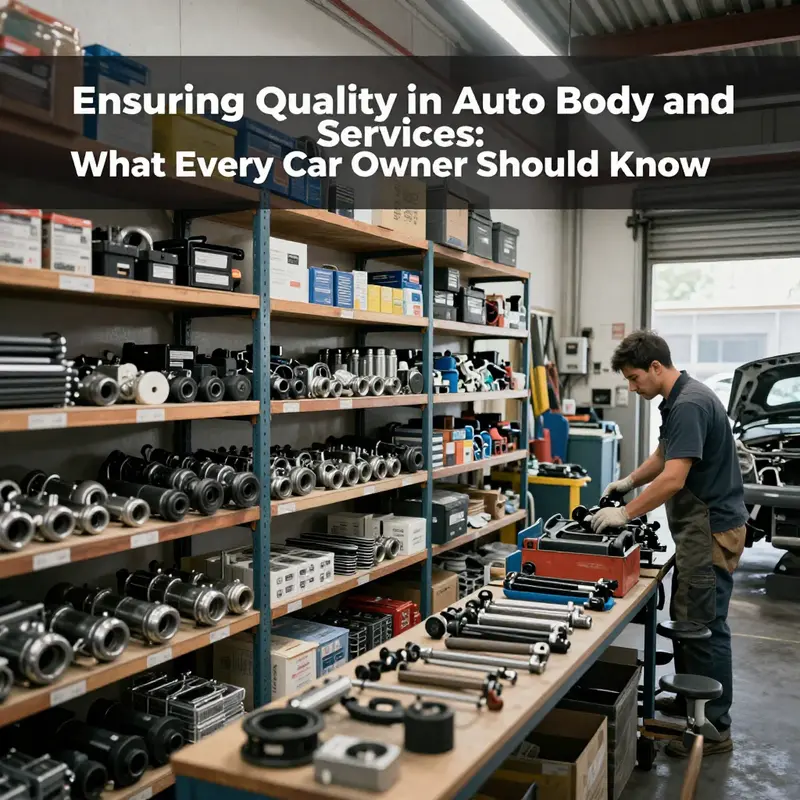
Choosing a high-quality auto body and service center is more than a matter of quick fixes or a polished lobby. It is a decision about the parts that will be pressed into service, the means by which those parts are sourced, and the guarantees that back every repair long after the vehicle leaves the shop. The chapter ahead unpacks how genuine parts function as a quiet but constant guardian of safety, performance, and value. It is not merely about a label or a brand, but about a precise alignment of design, materials, and manufacturing intent that mirrors the vehicle as it rolled off the assembly line. In a world where the line between original equipment and aftermarket parts can blur, genuine parts stand as a clear standard. They ensure that each repair does not just restore appearance but preserves the vehicle’s intended response to a driver’s input and, crucially, its behavior in emergencies. This is the broader ethic that underpins quality auto body work: every component must harmonize with the vehicle’s engineering blueprint, so the car can protect, perform, and endure as the manufacturer designed.
The distinction between genuine parts and aftermarket substitutes is more than semantic. Genuine parts are engineered to meet exact manufacturer specifications, which means their dimensions, tolerances, metallurgy, and compatibility with sensors and control modules are carried through with fidelity. Aftermarket parts, even when sold as compatible, can vary in subtle yet consequential ways. The thickness of a brake rotor, the heat-treated hardness of a pad, or the fitment of a wheel hub can influence braking torque, pedal feel, or steering precision. When a repair requires repeated motion, high heat, or rapid cycles of engagement, these differences are amplified. The consequences may not be immediately apparent, but over time they accumulate. A vehicle’s brake system, for example, is a symphony of components that must work in perfect concert. If a pad or rotor diverges by even a small margin, contact timing and heat dissipation can shift, leading to fading, uneven wear, or, in extreme situations, reduced stopping power. Genuine brake components, by contrast, are designed to operate within the manufacturer’s safety envelope, maintaining consistent friction, predictable resistance, and matched thermal characteristics that the vehicle’s braking system expects.
Airbag systems illustrate the most dramatic stakes tied to part authenticity. An airbag module is not a generic sensor or a simple explosive device; it is a meticulously calibrated piece of safety software and hardware. Imitation or counterfeit modules may deploy too forcefully, too slowly, or fail to deploy at all. The timing of deployment is not a cosmetic matter; it is a matter of life and death, where milliseconds separate injury from catastrophe. Genuine airbag modules are tested to the exact standards the vehicle was designed around, ensuring synchronized response across the sensing network, the module, and the vehicle’s restraint system. In this sense, genuine parts serve as a physical embodiment of the carmaker’s safety philosophy, preserving the integrity of the design even after a collision.
Beyond the dramatic examples of braking and airbag safety, genuine parts support the nuanced performance of the vehicle’s chassis, drivetrain, electrical architecture, and driver-assist technologies. Suspension arms, steering knuckles, and tie rods require precise geometry to maintain alignment, tire contact with the road, and predictable steering behavior. Sensors that feed lane-keeping assist, adaptive cruise control, or collision avoidance systems rely on components that reconcile with the vehicle’s existing calibration. When a non-genuine part introduces a small mismatch, the entire feedback loop can drift. The result might be subtle—slightly different steering feel or a marginal deviation in a steady-state fuel economy reading—but over time those small drifts compound into a perception of unreliability or a loss of confidence in the vehicle’s systems. Genuine parts, installed and integrated by technicians who understand the whole vehicle, help preserve the vehicle’s native feel and the integrity of its advanced safety networks.
From the customer perspective, the choice for genuine parts is also a safeguard for warranties and long-term value. Vehicle manufacturers design warranties with the understanding that repairs will use authentic components that meet their certification standards. When a shop uses genuine parts, the warranty obligations—whether they cover the replacement part, the labor, or the related systems—are more likely to hold, just as the manufacturer intended. Conversely, the use of counterfeit or questionable substitutes can complicate warranty claims and, in some cases, void coverage for related issues. This is not merely a bureaucratic concern; it touches the core of the vehicle’s safety and reliability. The customer’s peace of mind rests on knowing that the repair is not a temporary patch but a restoration that aligns with the manufacturer’s original design intent.
In practice, trusted centers blend technical rigor with transparent communication. They verify compatibility by referencing the vehicle’s VIN and the precise part number, and they maintain traceability for every component installed. This traceability is not a bureaucratic luxury; it is a practical tool that helps technicians diagnose future issues, manage recalls, and verify the provenance of parts in the event of a warranty claim. The best shops also maintain robust inventory controls and supplier relationships that prioritize genuine parts. They understand that the cost of genuine parts is not only measured by the invoice at the end of the repair but also by the value the vehicle retains over its service life. A well-managed parts ecosystem reduces the risk of mismatches, reduces the need for rework, and sustains the confidence of customers who rely on their vehicles for daily life, work, and family.
The broader ecosystem of a quality auto body and service center often reflects its approach to genuine parts through affiliations and certification. Reputable centers tend to belong to recognized networks or partnerships that emphasize standards, training, and accountability. Such affiliations are more than branding; they signal a commitment to consistent quality across repairs, installations, and inspections. A representative example from the global landscape shows a facility that stands as a beacon in its region: a large, fully equipped service center that serves a broad geographic area and emphasizes professional standards and quality service. The scale and scope of such a facility enable it to manage genuine parts with rigor, from procurement to installation to the aftercare that underpins ongoing performance and safety. While the specifics of any given center will vary, the underlying philosophy remains consistent: genuine parts are not optional; they are the foundational currency of safe, reliable, and durable auto body work.
For consumers navigating this terrain, the practical path starts with questions. Does the service center provide OEM or genuine parts for repairs? Are the part numbers tracked and documented in the repair order? Will the shop show the packaging or labeling to confirm authenticity? Is there a clear warranty on the part and the workmanship that reflects the use of genuine components? These questions are not invasive; they are the gatekeepers of quality and safety. A trustworthy shop will welcome the inquiries and provide concrete documentation, including part identifiers, supplier information, and the coverage terms of both parts and labor. The discussion can extend to the benefits of factory-approved maintenance plans, which often embed a philosophy of using genuine parts to preserve the vehicle’s performance and longevity. The more transparent the conversation, the more confident a customer can be that the repair will stand up to the demands of real-world driving, weather, and the occasional off-road excursion or highway sprint.
The importance of genuine parts extends beyond the repair bay and into the vehicle’s daily life. Consider the routine wear items that may be replaced during a body repair, such as seals, gaskets, and fasteners. These components, while seemingly mundane, contribute to the overall integrity of the repair and the vehicle’s ability to resist water intrusion, vibration, and environmental stress. When a center uses genuine seals and fasteners, it minimizes the risk of leaks, wind noise, and misalignment, all of which erode comfort and durability over time. The cumulative effect of quality components on ride quality, cabin quietness, and the vehicle’s perceived value is substantial. A car that leaves the shop with genuine parts installed and a thorough recalibration of sensors and alignment is more likely to retain its original feel, enabling the owner to experience the car as the designer intended.
The conversation about genuine parts is inseparable from the broader discourse on intelligent repair. In a modern auto body environment, technicians work with a blend of mechanical and digital systems. Scanners, calibration tools, and diagnostic software rely on consistent inputs from the vehicle’s components. Genuine parts ensure that sensor signals and control module responses remain within expected tolerances. When a single part is off-spec, the diagnostic logic can misinterpret data, leading to cascades of follow-on symptoms in steering, braking, or stability control. In other words, the fidelity of a repair depends not only on the visible fit and finish but also on the invisible digital heartbeat that runs through the vehicle’s brain. The alignment of hardware and software is why many auto body professionals insist on genuine parts as part of a holistic repair strategy, not a separate or optional add-on.
To connect these ideas to everyday practice, a repair plan often begins with a clear assessment of the vehicle’s post-accident needs. The technician identifies which components must be replaced to restore performance, safety, and reliability. If a vehicle relies on advanced safety features or driver-assistance systems, the technician will anticipate the requirement for recalibration after replacing parts that affect sensors and actuators. In such cases, genuine parts simplify the path to recalibration, because the new components were designed to harmonize with the car’s original calibration and software expectations. This is where the craft of auto body work transcends pure mechanics and enters the realm of systems engineering—almost as if the car’s value depends on a carefully choreographed sequence of replacements, tests, and validations that respect the vehicle’s design as a whole. The careful choice of parts, therefore, is a choice about trust: trust in the manufacturer’s intent, trust in the technician’s expertise, and trust in the shop’s commitment to a safe, lasting result.
In the long arc of ownership, genuine parts contribute to value retention in two practical ways. First, they simplify future maintenance and repairs by preserving compatibility with the vehicle’s original systems. When a customer resells the car, a well-documented repair history that demonstrates the use of genuine parts and professional recalibration can materially affect resale value. Second, genuine parts reduce the risk of repeat failures that would otherwise erode confidence and increase ownership costs. A single misplaced component can set off a chain of adjustments, alignments, and potential replacements. The added complexity translates into time, money, and frustration for the owner. In contrast, a repair that uses authentic components minimizes rework and uncertainty, offering a stable, predictable maintenance path that aligns with the vehicle’s life cycle. The customer’s experience becomes one of steadiness and assurance rather than intermittent concern about part compatibility or performance drift.
The regional and global landscape of auto care teaches a final, essential truth: the quality of a repair depends on the integrity of the parts supply chain and the shop’s relationship with trusted suppliers. A reputable center understands that genuine parts are not mere commodities but critical enablers of safety and reliability. It cultivates partnerships that emphasize consistent stock, traceability, and ethical sourcing. This perspective aligns with a broader professional ethos that values craftsmanship, accountability, and continuous learning. It also resonates with the customer’s desire to protect the integrity of a vehicle that represents time, memory, and personal investment. When we look at examples across regions and markets, the pattern is clear: centers that invest in genuine parts, transparent processes, and skilled technicians deliver outcomes that feel as though the car has been renewed in its most essential qualities rather than simply repaired at the surface.
For readers seeking a practical cue that supports these ideas, a quick glance at a trusted repair resource can illuminate the path. A straightforward entry point is the general repair service overview available at car-auto-repair-services. This resource reflects how repair teams present their approach to parts selection, warranty coverage, and the verification steps that accompany every repair, offering a usable template for what customers should expect during a genuine-parts repair process.
In sum, genuine parts are the quiet backbone of quality auto body and services. They ensure that safety features perform as designed, that critical systems respond predictably, and that the vehicle maintains its value through a clear chain of authenticity and accountability. They enable the technician to implement precision work with confidence, knowing that each component will behave exactly as the manufacturer intended. They also foster trust between customer and shop, because measurable criteria—part numbers, warranties, and documentation—provide a concrete record of responsible practice. The result is a repair that does not merely erase the damage but restores the car’s integrity as a precise, living machine. This is the essence of quality auto body care: a commitment to genuine parts, rigorous workmanship, and a future-proof confidence that your vehicle will continue to perform, safely and reliably, long after the last wrench turns.
External reference: For a detailed discussion of how genuine parts relate to safety standards and vehicle performance, see the National Highway Traffic Safety Administration resource at https://www.nhtsa.gov.
Final thoughts
Selecting a quality auto body and service center is critical for any vehicle owner. By understanding the significance of certifications, evaluating customer reviews, and recognizing the importance of genuine parts, one can make informed decisions that guarantee exceptional service. These elements not only impact vehicle performance but also contribute to safety and reliability on the road. In a market where choices abound, focusing on quality guarantees that your automotive investment remains protected, ensuring many safe journeys ahead.