
Understanding the salary landscape of automotive service advisors is crucial for private car owners, small business fleet operators, car dealerships, and auto repair shops. Salary figures can significantly influence hiring decisions, operational budgets, and the overall quality of service. This article provides an in-depth analysis of auto service advisor salaries, starting with the average earnings in the United States and contrasting them with Canadian figures. We also explore how regional variations impact salaries and examine the key factors affecting income, such as experience and performance. Finally, we discuss future trends that may shape earning potential in this evolving field, giving you the insights needed to make informed decisions as industry stakeholders.
Beyond the Desk: The Earning Landscape for U.S. Auto Service Advisors
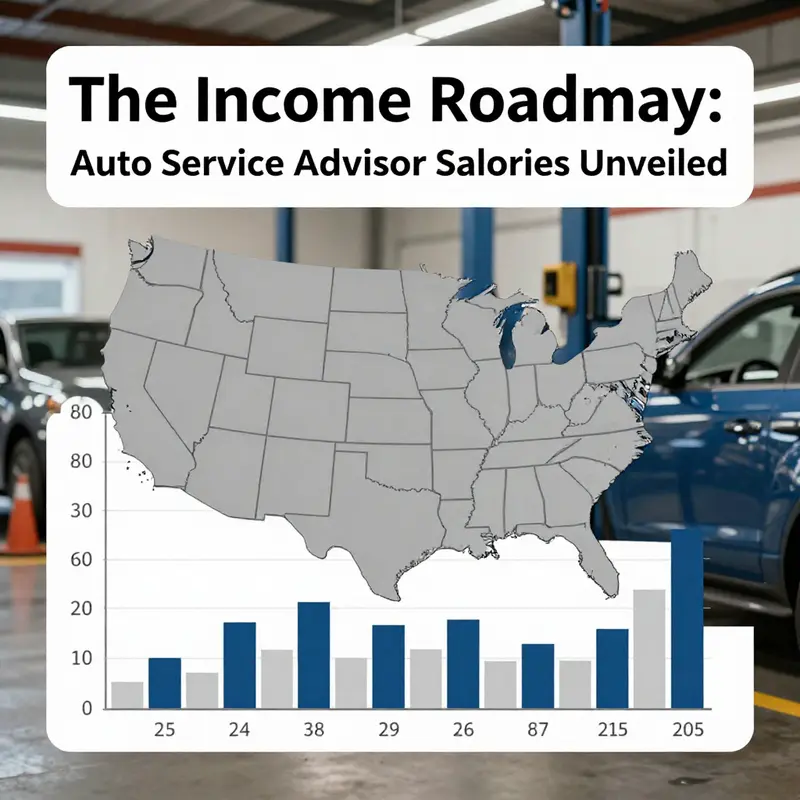
Compensation for automotive service advisors in the United States sits at the intersection of skill, demand, and market dynamics. While headlines often cite an average annual earnings figure around $78,166 based on thousands of salaries over a multi-year window, real pay is a spectrum that includes base pay, incentives, and regional cost of living. Some advisors earn a base in the upper $60,000s with commissions lifting total pay into the high $80,000s, and hourly rates around $30 per hour can translate to roughly $60,000 per year for full-time work. Pay structures vary by employer, with some shops prioritizing stable base salaries and others emphasizing incentive plans tied to upselling, warranty work, or service lane efficiency. Location matters: higher-cost metropolitan markets often offer more opportunities and stronger incentive opportunities, while smaller markets may rely more on commissions to boost earnings. Beyond cash, total compensation may include health insurance, retirement plans, paid time off, and signing or relocation bonuses. For job seekers, the key takeaway is to quantify the base pay, the commission or bonus structure, and the stability of the incentive program, and to understand how performance is measured so earnings can grow. The earning story reflects how a service advisor blends technical literacy, customer communication, and operational coordination to help customers and keep the shop productive. This chapter provides a local illustration by noting that compensation can vary by market and employer type, and it points toward external salary resources that offer benchmarks for calibration in your area.
Canada’s Service Bay Paycheck: How Auto Service Advisors Earn, Grow, and Navigate Pay Across Provinces
Canada’s auto service landscape presents a nuanced picture of how much service advisors make. The numbers aren’t a single, flat figure; they braid together base pay, hourly wages, and performance-based rewards, all shaped by where a person works, how long they’ve been in the role, and how a shop designs its incentive structure. Recent data updated in early 2026 show an average Canadian service advisor salary hovering near the mid-60s thousands—a testament to steady demand for qualified professionals in automotive service. Estimates place the annual average around $63,795, derived from more than 1,300 reported salaries. Yet those numbers hide a broader reality: where you live, the caliber of the shop, and your own track record can push earnings into a wide range, typically from the high $40,000s on the lower end to the mid-$70,000s or more for seasoned advisors in busy markets. For someone evaluating a career move, that dispersion is a useful map rather than a foregone conclusion.
In major urban centers such as Toronto, the pay picture is nudged upward by cost of living, demand for skilled staff, and the density of dealerships and independent shops. The data for Toronto place average annual salaries at about $63,652, based on roughly 50 reported salaries. That figure aligns with the national trend: urban markets tend to reward service advisors more for the convenience of high customer flow and faster service cycles. An entry-level position in such markets typically starts closer to the low-to-mid $40s on an annual basis in many cases, but the reality is more nuanced. When a shop employs a structured pay plan, new hires can cross into the $50,000 neighborhood sooner, especially if they bring a customer-service edge or a readiness to learn fast. An early-career advisor who demonstrates reliability, accurate work estimation, and a friendly but efficient communication style can quickly leverage performance into modest raises or bonuses over the first few years.
The pay structure for Canadian service advisors often includes more than a base wage or salary. The compensation mix may blend a steady base with hourly pay and performance-based rewards, such as commissions or bonuses tied to service write-ups, upsell opportunities, or customer-satisfaction metrics. This mix makes the exact take-home amount at any given shop hard to predict from a single statistic. Some Canadian employers emphasize a predictable, salaried model with a clear pay ladder, while others lean toward an hourly wage with the potential to earn more through service volume and customer retention. One illustrative example from the industry shows hourly wages in the vicinity of the $22 to $26 range, translating to roughly $46,500 to $53,600 annually at full-time hours. That spread emphasizes how a modest difference in hourly rate or the number of hours worked can tilt annual earnings by thousands of dollars over a year.
The variability extends beyond provincial averages. British Columbia, for instance, often reflects a robust demand for skilled service staff, with reported average salaries around $66,224 in recent provincial data. This higher provincial baseline mirrors Vancouver’s market dynamics, where the cost of living and the density of automotive service facilities push pay upward. In other provinces, the mix may tilt toward slightly lower base wages but compensate with opportunities to earn through bonuses, overtime, or performance incentives. The takeaway for someone weighing opportunities across Canada is that the actual paycheck is a function of three intertwined factors: location, employer design, and personal performance. If you’re considering moves or negotiations, you’ll want to align your expectations with the specific market you’re targeting, and you’ll want to research the typical pay arrangements you’ll encounter in those shops.
Pay levels are also clearly influenced by the kind of employer a service advisor works for. Franchise networks, independent shops, and dealer groups each tend to structure compensation a bit differently. Some dealerships in Canada offer more generous starting points and clearer progression ladders, often with a clear path into supervisory or management roles. A standout data point in the market is the upward drift when someone transitions into a managerial role. For example, in a Canadian context, automotive service managers can command substantially higher compensation than frontline service advisors. A representative example from a prominent dealer group places the average annual salary for an Automotive Service Manager at approximately $86,034, illustrating a tangible career ladder that rewards leadership, customer-satisfaction mastery, and operational oversight. That kind of progression isn’t universal, but it does reveal why many technicians and advisors pursue the managerial track as a strategic move for long-term earnings.
The variability by employer appears not only in base pay but also in the way performance is rewarded. Some shops lean more heavily on commissions tied to service write-ups, parts sales, or upsell opportunities, while others emphasize a steady salary with periodic bonuses based on customer feedback, service-cycle efficiency, and teamwork. For a prospective advisor, understanding a prospective employer’s incentive structure matters as much as the advertised base pay. It also means that two jobs offering similar base wages can lead to quite different annual totals once bonuses, overtime, and performance incentives are factored in. This is why career planning in this field benefits from talking directly to recruiters or current employees about how pay is actually earned day to day, not just what appears on a salary sheet.
Beyond the numbers, the Canadian market also reflects how regional demand, training, and professional credentials influence earning potential. The more specialized certifications and experience a service advisor brings to a shop, the more leverage they have in negotiations and in advancing into higher-paying roles. Training programs that improve vehicle-system knowledge, diagnostic proficiency, and customer-relations skills tend to translate into more write-ups and increased trust from both customers and managers. In practice, a service advisor who pairs excellent communication with a solid grasp of vehicle maintenance and repair options will naturally position themselves for better earning opportunities, especially in busy shops that run at a brisk service pace.
Location remains a powerful determinant of pay, but it interacts with another enduring factor: experience. Entry-level roles can set a foundation, but the real earning potential accrues as an advisor builds a track record—of accurate estimates, clear communications, and dependable customer service. In Toronto and similar markets, the combination of higher base wages and the likelihood of performance-based rewards can accelerate earnings growth for those who bring consistency and a customer-first approach. For someone mapping a career path, the evidence is clear: early-career development matters. The more you invest in your own training and the more you refine your ability to convert inquiries into satisfied customers, the more your compensation will reflect that value over time.
For the job seeker who wants practical guidance, the path toward higher earnings often starts with market research and strategic planning. Begin by looking into the typical pay ranges in your target province or city, and talk to recruiters or current advisors about how pay is structured on the ground. If a shop advertises a high hourly rate but a narrow window of hours or heavy overtime expectations, the annual total may or may not exceed a more modestly paid position with reliable full-time hours and steady bonuses. A balanced view considers base salary, hourly wages, overtime eligibility, and the opportunity for bonuses. It also considers the stability and benefits offered by the employer, such as health coverage, retirement planning, and paid time off, which all contribute to total compensation and overall job satisfaction.
To illustrate the breadth of opportunity, one may also note that some shops emphasize the value of experience over a fixed pay rate, rewarding longevity and a proven ability to deliver accurate estimates and positive customer experiences. In such environments, a service advisor who is patient, precise, and capable of explaining maintenance options in plain terms can grow into senior roles or managerial tracks that substantially lift earnings. The existence of a clear pathway—such as moving from a frontline advisory role to a management position—provides a tangible incentive to stay within the automotive service field and to continue developing the skills that drive higher pay.
For readers who want to anchor these figures to real-world practice, it helps to see how a shop’s pay philosophy translates into day-to-day work. Some players in the industry operate with a networked pay structure that emphasizes consistency across locations, encouraging advisors to build a transferable skill set and a reliable customer rapport. This approach can help an advisor move between markets with less friction and may contribute to a steadier overall income as the advisor gains experience. If you want a concrete example of how shops present their services and engage with customers—beyond the numbers—you can explore related industry perspectives such as A Auto Service North Charleston. This internal reference serves as a touchpoint for understanding how service operations are discussed within the broader automotive repair ecosystem. A Auto Service North Charleston
In sum, Canada’s service-advisor pay landscape is built on a foundation of regional demand, employer practices, and personal performance. While the country-wide average sits in the mid-60s thousand dollars, the real story is about the path you choose and the value you bring to a shop. Urban markets offer higher earning potential, often supported by more sophisticated incentive schemes and the possibility of advancement into management roles. Entry-level pay can be a stepping stone, but the combination of ongoing training, strong customer service, and a demonstrated ability to guide clients through maintenance decisions often determines how far a professional can rise. As the market evolves, the best guidance remains practical: research the local market, seek out employers with transparent pay structures and clear growth paths, invest in your own development, and monitor your performance relative to the expectations your potential employers set. For those who do so, Canada’s service bays can offer a stable career with meaningful income growth aligned with experience and results.
For readers seeking a broader view of salary trends and up-to-date figures beyond the chapter’s scope, you can consult external resources that track Canada-wide salary data for service advisor roles, which provide renewed context as markets shift and employers adjust compensation. CareerExplorer resource.
Regional Winds and Wages: How Location Shapes Auto Service Advisors’ Pay

Pay in the auto service advisory role follows a map of local economies as surely as the roads follow city grids. The question “how much do auto service advisors make?” cannot be answered with a single number, because location changes not only the base pay but the entire compensation mix that can include commissions, bonuses, and benefits. The recent data landscape shows a country-by-country mosaic where the same job title can mean very different annual incomes in neighboring regions, urban centers, or rural towns. In the United States, a nationwide snapshot from a major job platform indicates an average annual salary around the high set of the mid to upper six figures, with the understanding that this figure aggregates a wide spectrum of markets and pay structures. That national picture nonetheless sits beside a more granular reality: some markets pay proudly near the national average, while others linger well below it, reflecting job market dynamics, cost of living, and the way employers structure incentives. In Canada, the picture tilts further toward regional gradients. British Columbia, for example, shows an average in the mid‑to‑high sixties thousands of Canadian dollars, yet within the province the numbers swing noticeably from bustling urban cores to surrounding communities. The result is a practical truth for job seekers and employers alike: the same role can carry substantial differences in annual earnings when you move from one city to another, or from one side of the border to the other. The data behind these conclusions come not from a single source but from multiple salary reports and real-world postings, reflecting what service advisors actually see in their paychecks across the North American automotive landscape.
On the Canadian side, the regional story is especially instructive. In British Columbia, the provincial average sits in the mid‑sixty thousand range, signaling a market with robust automotive service demand and a cost of living that supports meaningful compensation. Within the province, city-by-city data reveal a sharper picture. Fergus and Mississauga, both in Ontario but representing distinct market scales, show a roughly equal mid‑sixty thousand level in annual pay. Oakville sits slightly below that cluster, while Toronto and nearby Scarborough hover in the upper‑fifties to low‑sixties. The contrast intensifies in smaller or differently saturated markets—Brampton, for instance, exhibits a notably lower figure. These numbers illuminate a core principle: even within the same region or province, market density, competition among shops, and customer volume drive pay outcomes in concrete ways. They also highlight that the best pay stories in Canada often come not from a single city but from patterns of employment across multiple nearby markets where experience and negotiating leverage accumulate.
Across the border in the United States, the regional pulse pulses differently, shaped by a mix of labor law structures, cost of living, and the density of automotive service ecosystems. A stark example appears in Los Angeles, where one data source reports an average near the mid‑to‑low thirty thousands, a figure that stands in marked contrast to the Canadian provincial averages. This discrepancy serves as a reminder that U.S. wage reporting can reflect local market quirks, short-term posting trends, and the heavy influence of regional compensation practices—where some markets emphasize base wages with fewer incentives and others lean on sales commissions or performance bonuses as a meaningful part of take-home pay. The Los Angeles data point is not an outlier in the sense of being erroneous; instead, it underscores how a given market’s pay structure can diverge widely from national expectations. It also invites questions about the balance of base pay versus earnings potential tied to service volume, upselling opportunities, and customer satisfaction metrics that influence bonus schemes.
The larger arc is clear: location matters. Cost of living, local demand for automotive services, and the overall health of the regional economy all shape the earnings possibilities for service advisors. In high-cost urban markets, employers may offer higher base wages to attract and retain talent, yet these markets can also have intense competition and cost pressures that compress net take-home pay if commissions do not scale accordingly. In suburban or rural markets, base wages may appear more modest, but the lower cost of living and steadier customer flow can yield competitive total compensation when bonuses and incentive pay are factored in. The result is not a simple arithmetic gap but a nuanced landscape where the best opportunities depend on a prospective advisor’s willingness to explore both wages and the structure of compensation packages.
A deeper look into the Canadian data reveals another layer of insight. Within a single province, urban centers often offer higher pay due to density of shops and elevated service demand, even as nearby communities trail behind. This pattern suggests that proximity to large networks of dealerships, independent shops, and multi-brand service centers translates into higher earning ceilings for capable advisors who can handle high volume and a broader mix of tasks—from detailed customer communication to efficient workflow management and precise documentation. Conversely, in markets with less density or slower turnover, earnings potential may be more restrained, but opportunities to grow with tenure, build a loyal customer base, and develop a strong reputation remain viable routes to higher compensation over time. The data also hints at the variability introduced by the employer’s scale and negotiation latitude. Large groups with regional footprints may offer structured pay bands, incremental raises, and uniform incentive schemes across multiple locations, while smaller shops can tailor compensation packages more flexibly to individual performance and longer‑term retention goals.
For readers charting a personal path, these regional dynamics translate into practical guidance. First, when evaluating potential roles, it is essential to look beyond the headline salary. Ask about the total compensation mix, including any commission, bonuses, or profit-sharing plans tied to service volumes, customer retention, warranty processing, or upsell opportunities. In markets with robust volume, performance incentives can significantly boost annual earnings. In others, a higher base pay with modest incentives might deliver more predictable income. Second, consider the cost of living and tax implications in the region. A seemingly higher salary in a city with steep living costs may yield similar or even lower real income after expenses when compared with a slightly lower wage in a cheaper area. Third, use available data tools to compare markets with the same care you’d give to evaluating a shop’s technical environment. Real-time salary platforms and local labor reports can illuminate how pay scales shift with market conditions, seasonality, and macroeconomic changes. And finally, when possible, locate opportunities in networks that offer both job postings and transparent compensation details—career pages and industry newsletters can provide a clearer signal about what a location truly pays for a given mix of responsibilities and performance expectations.
The practical takeaway for anyone weighing offers, or considering relocation to maximize earnings, is straightforward: recognize that regional economics, job mix, and incentive structures create a spectrum of possible annual pay. A candidate who negotiates with awareness of these regional realities can position themselves to capitalize on higher-volume markets or more favorable compensation structures. For decision-makers within shops and networks, the same regional lens suggests that building attractive total packages requires aligning base pay with expected service throughput, customer satisfaction outcomes, and the fairest possible incentive design that reflects market norms and the shop’s business model. The goal is not simply to chase the highest number in the short term but to harmonize earnings with the local market and personal career trajectory.
For those who want a concrete sense of how a particular market translates into hands-on earnings, consider how regional factors translate into a typical year. In warmer coastal markets with bustling service facilities, a service advisor might enjoy stronger upsell opportunities and higher monthly bonuses, while in more dispersed regions, the base pay could be steadier, with a conservative incentive plan that rewards consistent, high‑quality customer interactions. Across borders, the central thread remains: location shapes the range and reliability of earnings, and understanding the local pay architecture is essential to forecasting a career path with clear financial benefits. The data points—the Canadian city averages, the British Columbia provincial figure, and the Los Angeles example—are not just numbers. They map out the practical realities of how service advisors earn, and they remind us that regional choice can be as decisive as skill, experience, or ambition when planning a long‑term career.
External resource: Indeed – Automotive Service Advisor Salary in Los Angeles, CA.
Experience at the Helm: How Skill and Performance Drive Auto Service Advisor Pay

Salary discussions about auto service advisors reveal a landscape that shifts with geography, market demand, and the way a dealership structures compensation. Yet two enduring forces cut across borders and company lines: the depth of hands-on experience and the measurable impact of performance. In practice, this means a conveyor belt of learning—gaining vehicle knowledge, refining the art of listening to customers, and navigating a busy service bay with confidence—translates into pay that climbs as those elements mature. It also means that two people with the same title can find themselves on markedly different earning trajectories depending on where they work and how their employer rewards results. When you step back from the day-to-day duties and look at the bigger picture, compensation for service advisors is less about a fixed wage and more about a performance-driven ecosystem that rewards credibility, efficiency, and client satisfaction just as surely as it rewards technical know-how.
In the United States, the current snapshot places the average annual salary for service advisors around $78,166. This figure comes from Indeed and reflects roughly 13,000 salaries reported up to January 2026. It’s a broad indicator, not a guarantee, and it masks a range that can stretch well above or below the mean depending on location, dealership group, and whether the role leans more toward sales targets or administrative coordination. In major metro areas with high service volumes and robust warranty and parts business, base pay is often complemented by commissions or performance bonuses tied to upsell opportunities, efficiency metrics, or customer satisfaction scores. In quieter markets, base salaries may be closer to a predictable floor, with smaller performance bonuses that reflect the reduced service flow and the slower pace of upsell opportunities. Overall, the US picture emphasizes two trends: more opportunities to earn beyond a fixed salary, and meaningful differences from one market to the next.
Across the Atlantic, Canada presents a more provincial mosaic. British Columbia, a hub for automotive retail, reports an average salary of about $66,224 CAD based on a few hundred salary submissions. That figure sits alongside a spectrum where some employers in Canada publicly advertise higher ceiling possibilities. For example, certain dealership groups are known to place successful advisors in the range of $70,000 to $100,000 CAD annually, depending on experience, proven sales performance, and the ability to secure additional revenue streams such as service upsells or extended maintenance plans. The Canadian landscape also includes hourly wage structures in some shops, especially where the role skews toward service writing or front-end coordination rather than full performance-based compensation. In those environments, hourly pay can fall in the mid-to-upper $20s per hour, translating to roughly $46,500 to $53,600 CAD per year for full-time workers. These Canadian figures illustrate the same core principle found in the United States: compensation is layered, with a base that reflects role risk and market norms, plus variable components tied to outcomes and volume.
What makes the story of earnings compelling is not only the numbers, but how those numbers are earned. Experience serves as a reliable predictor of earnings because seasoned advisors bring depth to a service department in several tangible ways. First, they possess a more thorough mental map of vehicle systems, allowing them to diagnose concerns more quickly and communicate potential fixes with confidence. This reduces cycle time for service bays, meaning more customers can be served and more opportunities arise to present and close service recommendations. Second, experienced advisors generally carry stronger relationships with customers. They know how to balance the need to protect the customer’s trust with the dealership’s business objectives, a magnetic combination that tends to translate into repeat visits and higher average ticket sizes. Finally, seasoned advisors often assume a broader scope of responsibilities—mentoring junior staff, coordinating with technicians, and contributing to shop throughput and scheduling discipline—each of which reinforces the case for higher pay.
Performance, in turn, acts as a lever that can multiply the effect of experience. In a performance-driven compensation model, a service advisor’s income tightens or loosens with the ability to meet or exceed sales targets, maintain high customer satisfaction ratings, and demonstrate consistent technical knowledge. When those marks are achieved, bonuses and commissions flow in, sometimes in sizable increments. In short, performance metrics convert soft skills—communication, empathy, and trust-building—into hard gains. A shop that tracks customer surveys, service upsell rates, and on-time completion can create a transparent ladder for earning, where top performers see a tangible reward for their skill and effort. The same nurture that shaves minutes off a repair cycle can also boost a customer’s willingness to authorize additional work, driving both the customer experience and the advisor’s earnings in tandem.
The size and location of the dealership further shape earning potential. A large, multi-brand dealer with a busy service drive and a sophisticated parts operation offers more opportunities for commissions and bonuses than a smaller, independent shop with slower throughput. Metropolitan markets tend to magnify the earning potential because higher service volumes generate more upsell possibilities and larger total dollars in play. Conversely, more rural markets may offer stronger base pay in some cases but fewer opportunities to accrue performance-based bonuses simply due to lower service flow. In this sense, the same role can feel like a completely different job in two cities—one where the earnable ceiling is high and another where it is more modest—despite identical job titles.
For someone weighing a career path, the critical questions are practical ones: Where is the market strongest for service advisors? Which shops offer a compensation structure that aligns with one’s experience and ambition? The data points from the United States and Canada show a pattern: the more you can demonstrate proficiency across vehicle systems, diagnostic thinking, and customer-facing communication, the better your odds of climbing toward the higher end of the pay spectrum. However, the path to higher earnings is not locked to one route. A service advisor might grow into a lead or service manager role, where pay scales align with broader operational responsibilities, or they might specialize in high-demand service areas—such as luxury brands or heavy maintenance schedules—where the ticket sizes and upsell potential justify larger bonuses. The common thread is that experience and performance are the currency by which earnings are measured, with employer strategy and market dynamics acting as the exchange rate.
For job seekers evaluating opportunities, it pays to look beyond the base wage. A realistic forecast should account for the likely mix of base pay, commissions, and bonuses, plus the typical hours in a full-time schedule and the potential for overtime in peak seasons. Also consider the stability and benefits a shop offers, since strong health, retirement, and training benefits can materially affect total compensation and long-term earning power. Prospective advisors should research local market conditions using reliable salary sources and labor reports, and they should seek firsthand insights from current or former employees to understand how compensation policy is applied in practice. In some markets, the reputation of a shop for fair pay and clear performance targets can be as influential as the advertised salary itself because it signals a sustainable path to increasing earnings over time.
For readers who want a concrete frame of reference, one way to visualize the market is to look at a representative Canadian example alongside a U.S. snapshot. In Canada, a shop in a high-service area might offer a base that sits near the provincial average with meaningful upside through bonuses tied to service sales and retention metrics. A shop that values mentorship and leadership may also present a pathway to management roles with commensurate raises. In the United States, the density of dealerships, the presence of franchise networks, and the mix of warranty and parts programs can tilt compensation toward more generous incentives, particularly in markets with lively repair volumes. Across both countries, the central truth remains the same: the strongest earning potential is tethered to the combination of experience, reliable performance, and the ability to translate expertise into customer trust and service value.
To gain a practical sense of how compensation can scale in real-world settings, consider the experience of a service facility in North America that demonstrates how pay can reflect both scale and performance. In discussions about shop teams and service operations, a well-run dealership environment often shows how a strong service advisor can leverage knowledge of systems and customer communication to drive higher ticket averages and repeat visits. See how compensation scales in that environment at AA Auto Service Chicago, where the compensation conversation combines base pay with performance-based incentives tied to service volume and customer satisfaction. AA Auto Service Chicago
As a closing note, anyone entering or advancing in this field should stay current with the evolving landscape of service-advisor compensation. Markets shift with consumer demand, vehicle complexity, and the economics of service departments. Reliable sources that distill the latest trends, like the Indeed overview of what service advisors do, provide a useful external reference for benchmarking and expectation setting. For deeper context on how the role is understood and valued in the industry, see the external resource at the end of this chapter.
External resource: Indeed – What Does a Service Advisor Do? https://www.indeed.com/career-advice/what-does-a-service-advisor-do
Pay in the Fast Lane: Navigating Auto Service Advisor Salaries in a High-Tech Era

Across borders and shop floors, the pay for auto service advisors is a moving target. Geography—country, region, even city—shapes the base pay. The way a shop tracks performance—base salary, commissions, bonuses, and incentives—also shifts what you can expect year to year. In the United States, the latest data from Indeed place the average annual salary at about $78,243. This figure comes from roughly 13,100 salaries reported in the past three years and serves as a practical benchmark for many markets. In Canada, the landscape mirrors that regional diversity. British Columbia shows an average around $66,224, with considerable spread tied to experience and the negotiating leverage of the candidate. On the ground, some Canadian dealers and independent shops can offer $70,000 to $100,000 annually for seasoned advisors. Others rely on hourly pay, which translates into different annual figures; for example, hourly earnings ranging from $22.36 to $25.77 can equate to roughly $46,500 to $53,600 for full-time schedules. These contrasts illustrate why a prospective advisor must research the local market rather than rely on a single national figure.
The mechanics behind those numbers are straightforward and often overlooked. Base pay matters, but it is only part of the story. A shop’s pay plan may include commissions tied to service sales, quarterly bonuses for achieving service-retention goals, and incentives for customer satisfaction scores. Experience remains a critical predictor; a junior advisor fresh from training typically earns less than a veteran who commands trust with customers and technicians alike. Workplace culture also matters. Small independent shops frequently offer more flexible schedules and faster pathways to earning than busy franchise locations, where pay structures can be more rigid but the volume of work is higher. In practice, that means two equally capable advisors in different shop environments can end up with markedly different annual take‑homes.
Against this backdrop the industry’s rapid transformation adds a layer of complexity—and opportunity. The automotive universe is shifting quickly toward electric propulsion, hybrid configurations, and software-driven diagnostics. A service advisor who can translate a complex electrical fault into plain language for a customer often saves time and reduces tension. The same advisor uses diagnostic software to pull data from the car’s systems and explains what the readings imply, what a repair entails, and why it matters for safety and reliability. This is where the role is expanding beyond the traditional reception and scheduling duties. The modern advisor must blend mechanical curiosity with data literacy and customer empathy. A shop that invests in ongoing training tends to reach higher levels of service quality and, in turn, higher compensation.
Within the United States and Canada, many shops already prize this balance of soft skills and technical fluency. The most valuable advisors are comfortable guiding customers through the nuances of EV service, confirming compatibility with existing maintenance plans, and explaining the financial logic of recommended work. They can discuss battery health, software updates, hybrid system diagnostics, and the tradeoffs between proactive maintenance and urgent repairs. Those capabilities translate into market value. They also interact with a growing cadre of digital tools. Appointment scheduling apps, customer relationship platforms, and online price estimates all require sharp communication and reliability. An advisor who can orchestrate a multi-step service plan—while managing customer expectations and coordinating with technicians—often earns recognition that appears in their pay through higher wages, bonuses, or faster career progression.
The interplay of region, skill, and digital fluency creates a dynamic path for earnings. In some markets, the intersection of experience and specialized knowledge acts as a multiplier. An advisor who understands EV charging systems, high-voltage safety, or software updates may qualify for premium roles within larger dealerships or specialized service centers. The salary impact of such specialization is not uniform; it depends on demand in a given locale, the shop’s client mix, and the stage of the EV transition in the area. In areas with growing EV adoption, for example, shops seek advisors who can demystify new technologies for customers who are weighing the cost and benefits of newer vehicles. The result is a potential lift in earning potential, even if the nominal base remains consistent with local norms.
For job seekers, the implications are practical and clear. First, conduct a market scan in your region. Compare base pay, but also ask about the structure of commissions and bonuses. Second, consider pursuing formal credentials that align with the evolving vehicle landscape. Certification in EV and hybrid systems, software diagnostic tools, and customer-service excellence can unlock higher pay bands and faster advancement. Third, view the job not merely as a front-desk assignment but as a bridge between customers and technical teams. A trusted advisor who reduces vehicle downtime, increases repair clarity, and enhances the customer experience often commands a stronger compensation package over time. This perspective reframes the role as a strategic position within dealership operations, rather than a transient entry point.
It is also worth recognizing regional labor dynamics and the way they shape salary narratives. In countries with higher living costs or stronger labor unions, base pay often anchors compensation more firmly, with room for performance-based incentives that reflect market demand. In regions with tight labor markets for skilled service staff, employers may offer higher entry pay to secure capable advisors, paired with generous performance bonuses. For candidates weighing relocation or negotiating terms, these regional patterns are essential. They remind us that the national averages are helpful, but the real story unfolds in the neighborhood where a candidate intends to work. A single data point rarely captures the day-to-day realities of a shop’s compensation mix, which shifts with seasonal demand, new service lines, and evolving customer expectations.
Cumulatively, those factors point to a future where earning potential for auto service advisors is inseparable from the ability to adapt to new technologies and to communicate value to customers. The sector’s pace means that education and upskilling become central to career growth. Advisors who pursue ongoing training, earn recognized certifications, and demonstrate a track record of improving service outcomes will likely see improved earning potential. Conversely, those who rely solely on the baseline pay and accept a static role may face slower wage growth. The job market rewards professionals who treat advisory work as both a technical vocation and a customer-centric service. In short, the trajectory of pay is not fixed; it bends with the industry’s technology curve and with the strategic importance of the advisor’s communicative craft.
To illustrate the practical dimensions of this trend, consider the case study of a seasoned advisor who balances a solid base salary with performance incentives. Over a calendar year, a veteran in a busy shop might achieve above-average service growth, maintain high customer satisfaction, and navigate complex diagnostic conversations with ease. The result is a compensation package that reflects not only the volume of work but also the quality of the customer experience. The moral extends beyond one shop or one region: as vehicles become more sophisticated and as service ecosystems digitalize, the pay narrative becomes a story of earned expertise. An advisor who speaks the language of technology and people alike is more likely to occupy positions of influence—roles that bring greater responsibility and, with it, higher compensation. For job seekers, that means targeting roles that offer clear paths to specialization and leadership within service departments, rather than lingering in roles with limited upward mobility.
Those who map their careers with intentionality will find that the right mix of soft and hard skills matters as much as any regional pay delta. A practical approach combines local market research with a commitment to lifelong learning. Attend manufacturer-backed or independent certifications in hybrid and EV technologies, engage with diagnostic software training, and cultivate a reputation for transparent communication with customers. Build a portfolio of successful service outcomes—times saved, customer loyalty metrics, and reductions in repeated visits. Each of these elements reinforces the narrative of value that raises a service advisor’s market worth. And as the industry continues to coevolve with electric propulsion, autonomous features, and digital service platforms, the emphasis on value-based pay will likely strengthen.
Within this evolving context, a shop gains more than a clearer economic picture; it gains a closer alignment between performance and pay. A service advisor who can translate technical diagnostics into understandable guidance, who can forecast likely service needs, and who can align customer expectations with technician capabilities becomes a strategic asset. The revenue implications are real: efficient planning reduces downtime, improves throughput, and preserves the trust customers place in the service department. In that sense, salary trends are less about a fixed number and more about the leverage that a skilled advisor can generate within a high-performing service operation. For those watching the market, this is a sign that compensation will continue to rise for those who invest in the right skill set and who demonstrate consistent value to customers and to the shop alike.
For ongoing context, the most current benchmarks are published by major job boards and labor market analysts. While regional differences will always exist, the overarching theme is clear: as vehicles become more complex and as digital channels shape the customer journey, the value of a capable auto service advisor grows. The bottom line remains: if you plan a career here, treat it as a blend of craft and communication. Seek opportunities to learn, seek out roles that reward improvement, and track your impact on both service outcomes and customer satisfaction. In a world where a customer’s faith in the shop hinges on clarity and trust, the advisor’s ability to connect mechanics with expectations is not merely a nice-to-have skill; it is the currency by which earning potential is measured.
If readers want a quick reference to the income landscape, they can explore real-world examples and market data through one representative shop profile linked here for orientation. AA Auto Service Chicago. And for those who want to verify current salary benchmarks across regions, a reliable external resource provides up-to-date figures: Indeed’s salary data for automotive service advisors. Indeed Automotive Service Advisor Salary
Final thoughts
The salary landscape for automotive service advisors is shaped by various factors including regional differences, experience levels, and evolving industry trends. As private car owners, fleet operators, dealerships, and auto repair shops navigate this environment, understanding salary dynamics becomes imperative for making informed hiring and budget decisions. Ultimately, staying abreast of changes in the industry will help all stakeholders maximize their potential in this vital sector.