
Understanding auto service is crucial for anyone who owns a vehicle or manages a fleet; it’s not just about repairs, but ensuring safety and functionality over a car’s lifespan. Auto service encompasses a range of maintenance practices that address both routine care and serious repairs, impacting vehicle longevity and performance. In this exploration, we’ll delve into the best automotive maintenance and repair practices, understand the technical aspects involved in vehicle care, and examine the economic implications of auto service on consumers and the broader automotive industry. By the end, readers will appreciate the multifaceted nature of auto service and its relevance in their daily lives.
Under the Hood of Modern Auto Service: Maintenance, Diagnostics, and the Lifespan of Your Vehicle
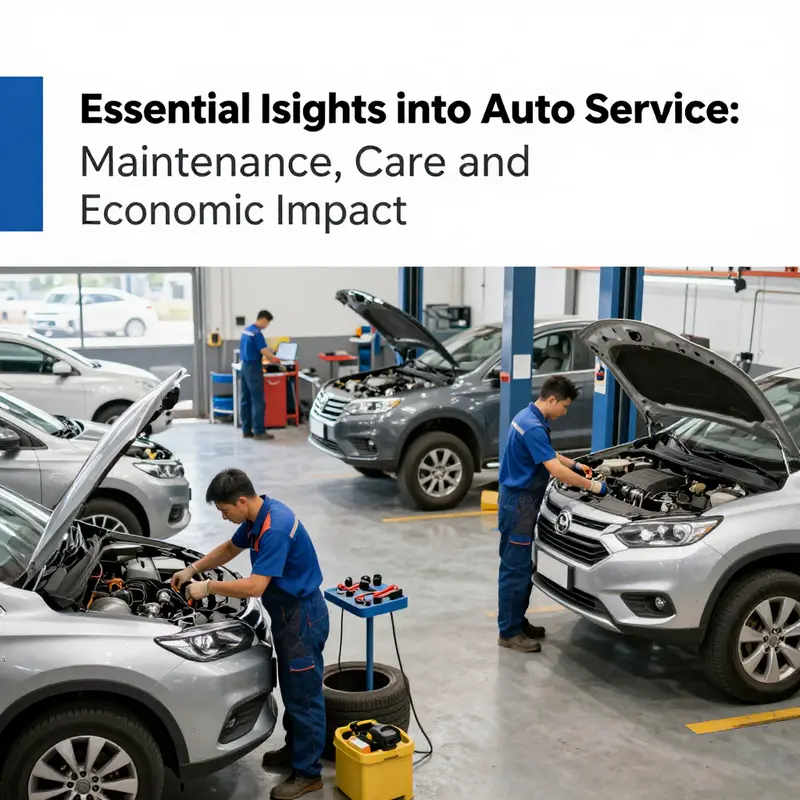
In the modern world of driving, auto service is not a single deed but a durable conversation between human judgment and machine behavior. Vehicles have evolved from simple mechanical assemblies into intricate networks of mechanical, electronic, and software-controlled systems. Auto service, therefore, stands at the crossroads where safety, reliability, and efficiency meet practical decision-making. It begins long before a warning light glows on the dashboard and continues long after a repair is completed, because true maintenance is a preventive discipline grounded in observation, data, and prudence. When a driver takes a car in for service, the technician is not merely fixing what is broken; they are interpreting signs, managing risk, and preserving the integrity of a complex system that touches every aspect of daily life, from commutes to emergencies, from quiet reliability to unexpected breakdowns on a remote highway.
At the heart of this practice lies preventive maintenance. For decades, car owners or fleet operators followed fixed schedules, chasing a calendar of changes and replacements. Today, the best practice is more nuanced. Preventive maintenance is complemented by condition-based repair, a discipline that reads the vehicle’s current state rather than following a rigid timetable. This shift mirrors a broader move in technology: data-driven decision-making replaces intuition alone. Vehicles today are equipped with On-Board Diagnostics, commonly known as OBD systems, which continuously monitor engine performance, emissions, and fault codes. The information from these systems is not a novelty but a practical tool. It informs technicians about wear, fluid quality, thermal conditions, and evolving risk to components. It is the bridge from observation to action, allowing a service visit to be purposeful rather than ceremonial, efficient rather than guesswork.
In daily practice, maintenance unfolds as a sequence of routine checks that are familiar yet essential. Oil is not merely a lubricant; it is a life signal of engine health. Regular oil changes, with the right grade and viscosity for the engine and climate, keep internal components in harmony and help prevent excess wear. Tire rotation and careful inflation are not only about grip and ride quality; they influence safety, fuel economy, and tire longevity. Brake inspections are a frontline defense against accidents, not a cosmetic concern. Fluid levels—coolant, brake fluid, transmission fluid—tell stories about the system’s cooling, pressure, and lubrication needs. Battery health, increasingly integrated with the vehicle’s electrical architecture, speaks to reliability in starting and the health of ancillary systems that rely on steady power. Each of these checks is a small, measurable covenant with the user: a promise that the car will respond as expected when called upon, in the places that matter most.
But maintenance is more than repetition. It is an ongoing dialogue with the vehicle’s design intentions. Manufacturer-recommended intervals still provide guardrails for major interventions such as timing belt replacement, fuel filter changes, and spark plug service. Yet these intervals are interpreted through the lens of real-world conditions: climate, driving patterns, maintenance history, and observed wear. A healthy service narrative blends those factors with diagnostic testing, so that the decision to replace a part is driven by evidence rather than fear or convenience. Modern diagnostic procedures rely on electronic scan tools that can read trouble codes, interpret live data streams, and verify repairs. This capability is indispensable for conventional internal combustion engines, but it becomes even more critical as electrified powertrains proliferate. Electric vehicles add layers of complexity—high-voltage safety protocols, battery management, regenerative braking considerations, and software-driven updates—that demand specialized knowledge and a careful, safety-first mindset.
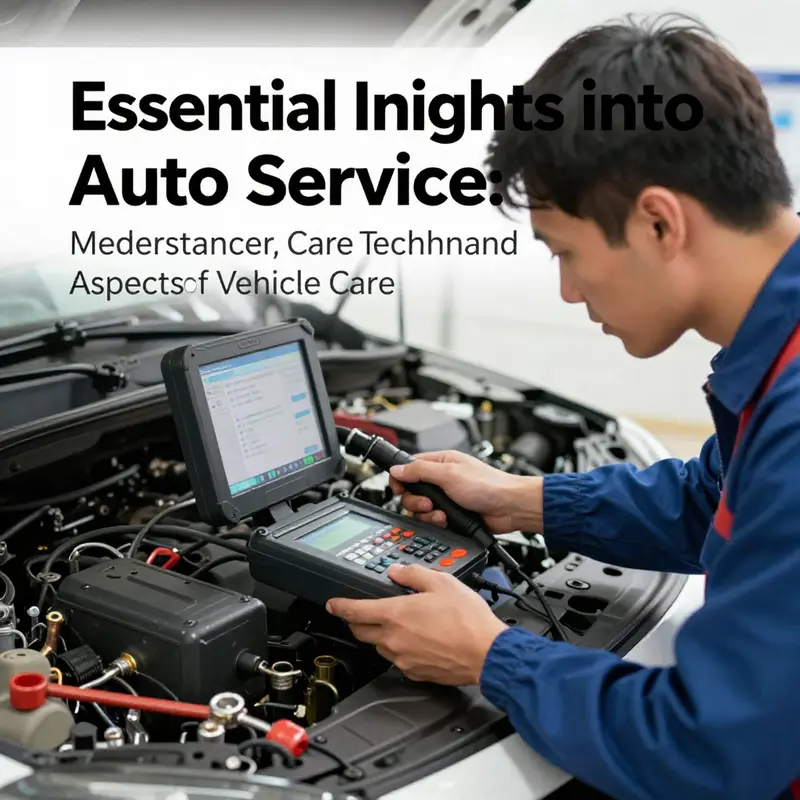
The technician’s toolkit has grown alongside the vehicle. Diagnostic testing, once a specialized manual craft, now relies on software-enabled tools that can access a wide array of systems. Live data streaming reveals how the engine is performing in real time, how sensors are reacting to conditions, and whether thermal management is keeping components within safe ranges. In some cases, a vehicle can be diagnosed without invasive procedures, simply by interpreting patterns in data that reveal wear trends, sensor drift, or degraded performance. In other cases, correcting a fault means more than replacing a worn part; it requires reprogramming software, updating control logic, or performing systems recalibration to restore proper function. For this reason, technicians must master both mechanical prowess and digital literacy, translating code, dashboards, and fault codes into tangible, safe outcomes.
A key element of effective auto service is the rise of certification and structured training. The industry recognizes the need for standardized knowledge and consistent workmanship. Programs that offer certifications, such as those provided by recognized institutions, establish a baseline of competence in electrical safety, diagnostics, and service procedures. This training helps ensure that technicians understand how to handle high-voltage systems in EVs, how to manage battery safety during maintenance, and how to perform software updates without compromising reliability. When a shop commits to ongoing education and certification, it signals to customers that maintenance decisions are grounded in proven practices rather than ad hoc improvisation. It also supports workforce reliability as the automotive landscape shifts toward electrification and increasingly sophisticated powertrains. The impact of such training is tangible: fewer misdiagnoses, better fault isolation, and repairs that address root causes rather than symptoms, which translates into safer operation and longer vehicle lifespans.
On a broader scale, the auto service sector stands at a dynamic intersection of safety, technology, and economics. The market has grown in response to the expanding complexity of vehicles and the rising demand for skilled labor. Estimates indicate a multi-trillion-dollar global market, with electric vehicle maintenance growing at a robust pace as more drivers adopt electrified propulsion. This growth is not a sign of a fragile ecosystem but of a resilient one that can adapt to new technologies, new service models, and new consumer expectations. The demand for technicians who can navigate both traditional mechanical systems and modern electronic architectures continues to rise, underscoring the importance of continuous learning and adaptation within the profession.
The service visit has also become an experience of trust. Customers are increasingly aware that preventive maintenance and timely diagnostics protect not only the vehicle but also people who rely on it. Proper service reduces the likelihood of roadside failures, maintains performance and emissions standards, and supports fuel efficiency. It also fosters a sense of partnership between driver and technician, where the car becomes a shared responsibility rather than a private burden. In this relationship, communication matters as much as tools and parts. A good technician explains what the data means, what actions are needed, and why those actions will affect safety and longevity. This transparency helps customers understand the rationale behind schedules and interventions, encouraging adherence to preventive care and enabling better budgeting for future services.
An important thread in contemporary auto service is the emphasis on safety, especially as vehicles carry more sensitive systems and more diverse powertrains. High-voltage safety protocols are not merely a precaution; they are a foundation for any work on electrified vehicles. Battery management and thermal management systems require careful handling, with attention to isolation, proper discharge procedures, and secure locking of high-energy circuits. Beyond the battery, software updates must be conducted in controlled environments to prevent inadvertent changes that could affect performance, efficiency, or safety. The modern shop rarely relies on a single skill set; it relies on a disciplined, layered approach that integrates mechanical, electrical, and software competencies. This holistic approach is what makes auto service a durable craft in an era of rapid technological change.
In many ways, the future of auto service is a blend of tradition and innovation. The fundamentals—inspection, diagnostic testing, and evidence-based repair—remain constant. Yet the means of achieving these goals continue to evolve, guided by data, sensors, and connectivity. Predictive maintenance, informed by telemetry gathered from the vehicle and its environment, holds promise for preempting failures before they occur. The vehicle’s own computer systems can become partners in maintenance, signaling when components approach their wear limits or when fluid properties fall outside expected ranges. For the technician, that means a shift from reactive troubleshooting to proactive planning, from diagnosing a symptom to forecasting a potential problem and scheduling intervention at a moment that minimizes risk and downtime.
For readers seeking practical pathways into this evolving field, the conversation begins with the fundamentals and progresses toward higher-level competencies. It is not enough to know how to replace a part; one must understand why that part failed, how to verify the repair, and how to verify that the vehicle’s systems are functioning as intended after the service. This approach requires thoughtful inspection routines, disciplined documentation, and a readiness to revisit and revise procedures as vehicles change. It also invites a collaborative mindset—between technicians, service advisers, and drivers—so every decision in the service cycle is aligned with safety, reliability, and value.
To ground these ideas in real-world practice, consider the sequence a capable shop might follow on a maintenance visit. The process begins with a proactive intake: listening for symptoms, reviewing driving patterns, and querying the vehicle’s fault codes. A structured inspection covers exterior and under-hood components, fluid health, tire condition, and brake integrity, with particular attention paid to wear indicators and sensor diagnostics. The next step is diagnostic assessment, where data streams are examined for irregularities, live readings are correlated with symptoms, and any fault codes are interpreted in the context of vehicle history. If a repair is warranted, the technician documents the root cause, estimates the necessary parts and labor, and explains the plan and expected outcomes to the customer. Finally, after the repair, verification tests are performed, including road testing and re-reading diagnostic data to confirm that the issue has not resurfaced. This cycle—intake, inspection, diagnosis, repair, verification—embodies the essence of modern auto service: a disciplined, methodical, and transparent approach that protects the vehicle’s life and the people who depend on it.
For readers who want a quick entry point into the practical world of vehicle care, a close look at available maintenance options can be illuminating. A representative resource that outlines common repair and maintenance services can provide useful context about what to expect during a typical visit and how to think about timing and priorities. Explore practical service options at car-auto-repair-services, where you can see how routine maintenance, diagnostics, and minor repairs are framed to support safety and reliability in everyday driving. This kind of information helps demystify the service process and empowers drivers to engage more confidently with technicians.
As this chapter has traced, auto service is a stewardship of a sophisticated, dynamic machine. It is equally an exercise in communication, discernment, and continuous learning. By embracing preventive care, leveraging data from diagnostic tools, and prioritizing safety above all, the service profession sustains the vehicle as a trusted partner on the road. It is a field that honors tradition while welcoming change, ensuring that every mile traveled is supported by knowledge, skill, and a shared commitment to safety and longevity. The result is not just a better car but a safer journey and a more resilient relationship between driver and machine. For the curious reader, the journey into auto service reveals how maintenance, diagnosis, and repair come together to keep mobility reliable in a world that moves faster than ever.
External resource: https://www.ase.com
null
null
Wrenching Growth: The Economic Ripple of Auto Service on Industry, Jobs, and Consumer Life
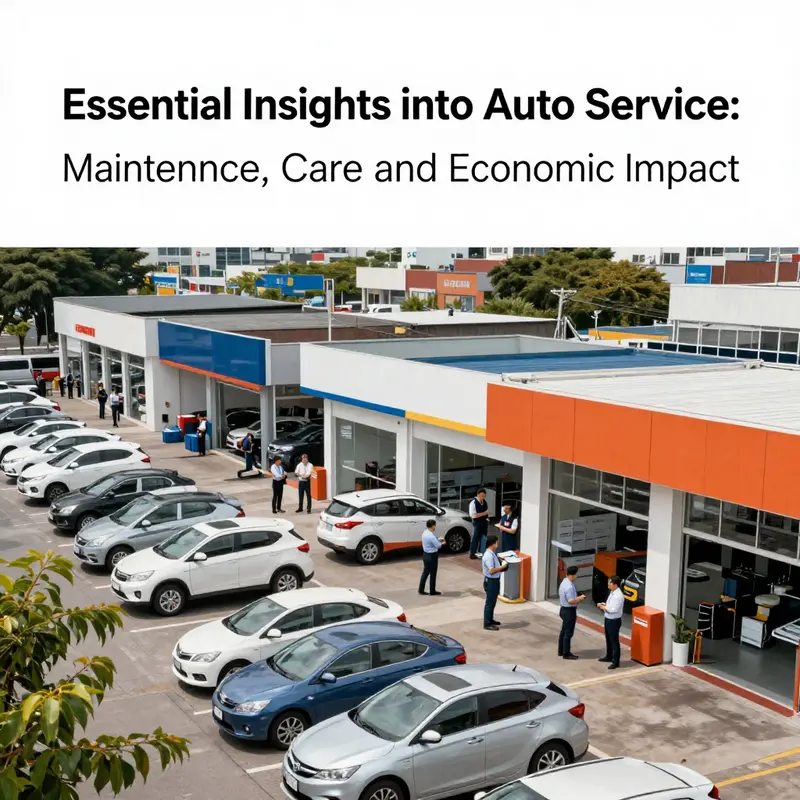
Auto service is more than the sum of its quick oil changes and tire rotations. It is a broad, dynamic ecosystem that binds safety, mobility, technology, and economy into a single thread of everyday life. When we ask what auto service is, we begin with maintenance and repair, but the real answer stretches far beyond the garage. Auto service today operates at the intersection of skilled craft, digital tooling, consumer expectations, and macroeconomic forces. It is the after-sales engine that sustains vehicle reliability, extends lifecycles, and underpins a cascade of economic activity that touches households, businesses, and communities. In this chapter, we explore how auto service has become a staple of growth, how it reshapes consumer behavior, and why policymakers and industry players alike see it as a strategic lever for broad-based prosperity, not merely a set of transactional tasks.
The market signals are unmistakable. The automotive repair and maintenance service market is undergoing robust expansion, with a value around USD 0.86 trillion in 2026 and a projected ascent to roughly USD 1.15 trillion by the end of the forecast period. A near six percent annual growth rate, quantified as a compound annual growth rate (CAGR) of 5.95%, reflects more than rising prices or volume. It signals a fundamental change in how people think about owning and caring for vehicles. Vehicles are not disposable assets in a mere handful of years; they represent long-term commitments that require ongoing stewardship. Each routine service, each diagnostic check, each repair integrates into a broader economic narrative—one in which maintenance is a catalyst for productivity, innovation, and employment, rather than a cost to be minimized.
Central to this narrative is the reality of an expanding vehicle stock in major markets. China, for example, now harbors a vehicle stock of 366 million units, a figure that keeps its position as the largest in the world for 17 consecutive years. This scale creates a steady, structural demand for maintenance and repairs. It is not simply the addition of new cars that matters but the care of aging fleets, where the costs and risks of neglect escalate rapidly. As ownership ages, owners become more aware of the value of preventive care—oil health, brake wear, coolant integrity, and transmission health—each a potential gateway to longer life for a vehicle and safer roads for everyone. Yet the implications extend beyond the mechanic bay. A growing stock of vehicles sustains demand for genuine parts, diagnostic services, alignment and tire services, battery care, and a spectrum of non-core but value-added offerings such as detailing, cosmetic restoration, and interior upgrades. The market thus evolves from a maintenance menu into a diversified servicescape where wellness for the vehicle aligns with wellness for the household budget.
Consumer demand is shifting in pace with changing lifestyles. Households are not just purchasing cars for point-to-point mobility; they are embracing mobility as an experiential platform. With rising incomes and broader access to services, people now seek personalization, convenience, and a sense of confidence that their vehicles reflect their identities and their journeys. This translates into demand for high-value, non-essential services: automotive customization that goes beyond aesthetics to performance tuning and comfort enhancements; rental networks that enable flexible access to mobility without ownership baggage; motorsports participation as a social and aspirational activity; and experiential travel that makes road trips a curated, shareable experience. The auto service sector mirrors this shift by expanding its own service offer to include design-forward upgrades, customization respects, and lifestyle-oriented packages that package safety with pleasure. As a result, the service mix becomes a bridge between automotive care and consumer culture, turning routine maintenance into opportunities for self-expression, reliability, and social connection.
Policy and regulation play a pivotal role in shaping this evolution. The Ministry of Commerce’s “1+N” policy framework targets service consumption growth while recognizing the automotive after-market as a critical engine of demand. Specific measures include reform pilot programs designed to reduce friction in the supply chain, standardized guidelines for vehicle modification to ensure safety and quality, development of high-quality rental networks to support flexible mobility, and the creation of new experiential platforms such as auto culture zones at international exhibitions. Taken together, these steps are designed to dismantle barriers that previously slowed innovation and investment in the after-market. They also set standards that elevate service quality across the board, encouraging better training for technicians, more transparent pricing, and greater consumer trust. When policy fosters standardization and experimentation in parallel, service providers can expand into new niches—classic car preservation, adventure mobility, and even the integration of connected-car diagnostics into routine maintenance—without sacrificing safety or consumer protection.
This regulatory direction matters because auto service lives on a delicate balance of skilled labor, parts supply, digital tooling, and consumer confidence. It requires a workforce adept at traditional crafts—engine diagnostics, brake systems, suspension tuning—paired with the ability to navigate data from onboard diagnostics, telematics, and cloud-based scheduling platforms. The skill mix is evolving, and so are the tools. Modern service centers deploy diagnostic testing using specialized tools, software updates, and remote check-ins that reduce downtime for customers. Predictive maintenance, driven by data from vehicle sensors and usage patterns, allows service providers to anticipate failures before they occur. That anticipatory approach not only protects safety but also helps households avoid expensive, unplanned repairs. The synergy between human expertise and digital intelligence amplifies the value of auto service: it makes maintenance more efficient, more precise, and more customer-friendly while preserving high safety standards.
The economic repercussions extend well beyond the shop floor. When auto service thrives, it stimulates a cascade of related sectors. Automotive components manufacturing benefits from steady demand for parts and systems; digital platform providers gain from new services that connect drivers with technicians, schedule appointments, and manage warranties. The tourism and recreational sectors can also benefit as road trips and car-based experiences gain traction; for many families, the confidence to explore is in part built on the assurance that their vehicle will perform reliably throughout the journey. In this sense, auto service is a catalyst for a more vibrant, interconnected economy where mobility enables work, education, leisure, and social life to intersect more smoothly.
The ecosystem also favors employment and skills development. The growth of the after-market stimulates job creation in regions where intense vehicle use is common and where fleets require regular upkeep. Technical training programs become more valuable as the spectrum of services widens—from standard tune-ups to advanced engine diagnostics and hybrid system servicing. A more sophisticated service landscape raises the bar for quality assurance and consumer protection, pushing providers to distinguish themselves through transparency, warranty clarity, and consistent service outcomes. In communities that cultivate strong apprenticeship systems, auto service becomes not just a business line but a career pathway—one that offers stable wages, opportunities for advancement, and a sense of professional craftsmanship that aligns with modern manufacturing and engineering ecosystems.
The interplay of consumer expectations and service design also invites consideration of sustainability. Vehicle longevity is a core lever in reducing lifecycle emissions and resource use. When cars stay roadworthy longer, fewer vehicles require replacement, and the environmental footprint associated with manufacturing, shipping, and disposal is spread over a longer horizon. Auto service, therefore, participates in a broader sustainability agenda by prioritizing preventive care, efficient diagnostics, and parts reuse and remanufacturing where appropriate. This alignment with environmental stewardship enhances the social license for continued investment in the sector and reinforces the idea that maintenance is not merely a cost center but a strategic contributor to a more responsible economy.
From a business model perspective, auto service is increasingly defined by value rather than price alone. Consumers are ready to pay for convenience, reliability, and personalized experiences. This shifts competition toward outcomes—minimized downtime, transparent pricing, accurate diagnostics, and confidence-boosting warranties—rather than toward the cheapest part or the fastest fix. Service providers respond by bundling maintenance with experiences: flexible scheduling, mobile servicing options, and loyalty programs that reward preventive care. They also experiment with monetization models that de-link ownership from immediacy, such as subscription concepts for routine care or on-demand maintenance packages that align with a household budget cycle. Each of these shifts contributes to a broader, more resilient demand base that can weather economic cycles while supporting a stable employment footprint.
In communicating what auto service means in today’s economy, it helps to think of one practical anchor: the intersection of care and capability. Care refers to the ongoing attention given to a vehicle’s health, safety-critical systems, and cosmetic condition. Capability reflects a service ecosystem that can rapidly diagnose, fix, upgrade, and tailor a vehicle to a driver’s needs and aspirations. The alignment of care and capability is at the heart of why auto service is a growth industry. It is why, even as new mobility paradigms emerge or markets undergo regulatory shifts, the demand for competent maintenance and high-quality care remains steady and even expands. The market’s resilience comes from the fact that vehicles are not static objects; they represent evolving platforms that travelers and families depend on. As long as people drive, they will seek assurance that their wheels will perform when it matters most.
One notable element of this evolution is the increasing presence of vehicles as data-enabled assets. Diagnostic testing, once a specialized service, is now a routine touchpoint that can happen on-site, at a shop, or remotely. Data flows from sensors inform maintenance schedules, part replacement intervals, and safety checks. This digital dimension amplifies the value proposition of auto service: it reduces uncertainty, accelerates throughput for busy households, and enables providers to offer proactive care rather than reactive fixes. The result is a service experience that feels seamless and trustworthy, a shift that reinforces consumer loyalty and expands the potential for cross-selling complementary services in a way that is transparent and respectful of the customer’s budget and time.
Within this broader context, a single linked reference point can illuminate how some practitioners view auto service’s evolution. See the concise overview of auto service practice and principles here: a-plus-auto-service-overview.
The macroeconomic backdrop is equally important. In national accounts and industry analyses, auto service is recognized as a demand-driven sector that feeds domestic consumption, sustains employment, and stimulates investment in related industries. Its growth trajectory mirrors, but also helps shape, the tempo of consumer spending. When households feel confident about their vehicle’s likelihood of reliability, they are more willing to allocate discretionary income toward experiences—road trips, camping, and recreational travel—that in turn stimulate local hospitality, retail, and tourism sectors. In this way, auto service contributes to a more robust local economy by keeping mobility affordable and dependable while expanding the optional activities that families pursue as part of a balanced, value-rich lifestyle.
The regulatory and policy environment also influences how smoothly this growth unfolds. By fostering standards and experimentation in tandem, governments can reduce the friction that once constrained after-market development. When pilots demonstrate that standardized safety, quality, and consumer protection can coexist with flexible business models, investment increases. Private providers respond with improved training, better tooling, and more transparent pricing. The result is a virtuous cycle where policy clarity and market opportunity reinforce each other, enabling the auto service ecosystem to scale in a way that benefits both workers and drivers alike. This is particularly important in regions where rapid urbanization and rising disposable incomes are creating new layers of demand and expectation for a service experience that is as reliable as the vehicle itself.
Of course, any large-scale growth comes with challenges. Counterfeit or low-quality parts, gaps in technician training, and data privacy concerns require ongoing attention. The strongest growth occurs where there is clear commitment to quality assurance, ongoing skill development, and robust consumer protections. In that sense, auto service is not simply a mechanical craft but a framework for governance and trust in a world where vehicles are central to daily life. The chapters that follow will examine how these elements intersect with shopper expectations, regional differences, and the ongoing digital transformation that continues to redefine what it means to service a vehicle.
In sum, auto service is an essential economic segment because it binds safety, accessibility, and reliability to growth, innovation, and opportunity. It turns maintenance into a platform for experiences and a driver of employment, while shaping the ways families travel, work, and explore their world. It is a field where craft and code meet, where hands-on expertise is augmented by data analytics, and where policy and private sector resolve come together to build a resilient mobility economy. In this sense, auto service is not merely a back-end function of car ownership; it is a forward-looking engine that sustains the vitality of the broader economy and the quality of daily life for drivers everywhere.
For those readers who want a broader, external perspective on the market dynamics described here, the Grand View Research automotive repair and maintenance service market report offers a comprehensive view of global trends, drivers, and projections. This external resource provides context on how market participants interpret growth, risk, and opportunity across regions and segments. The link is provided below for readers seeking a deeper dive into the macroeconomic contours that frame the chapter’s discussion.
External resource for further reading: https://www.grandviewresearch.com/industry-analysis/automotive-repair-and-maintenance-service-market
Final thoughts
In conclusion, the realm of auto service extends far beyond simple repairs; it encompasses fundamental practices that enhance vehicle safety and performance while also significantly impacting the economy. Understanding the maintenance routines and the technical nuances of vehicle care is invaluable not only for individual car owners but also for small businesses managing fleets. Recognizing the economic implications allows stakeholders to appreciate the broader significance of the automotive service industry. Ultimately, informed consumers and operators play a pivotal role in maintaining the health of their vehicles and, by extension, contribute to the economic well-being of the automotive sector.