
The automotive industry continually evolves, reflecting consumer demands for enhanced safety, performance, and comfort. Central to this evolution is the field of auto glass services, which encompasses a range of solutions focused on maintaining and replacing critical glass components in vehicles. From windshields to side windows, the integrity of automotive glass is essential for driver and passenger safety. This article explores the latest innovations in auto glass, emphasizing high-performance materials and cutting-edge technologies that transform service offerings. Furthermore, it assesses the significant impact that these services have on vehicle safety and structural integrity. Finally, it delves into the market dynamics and rising consumer expectations that shape the industry’s future. Each chapter offers valuable insights that are fundamental to car owners, fleet operators, dealerships, and auto repair shops in their quest for quality auto glass solutions.
Beyond the Pane: How Advanced Materials and Smart Glass Technologies Are Transforming Auto Glass Services
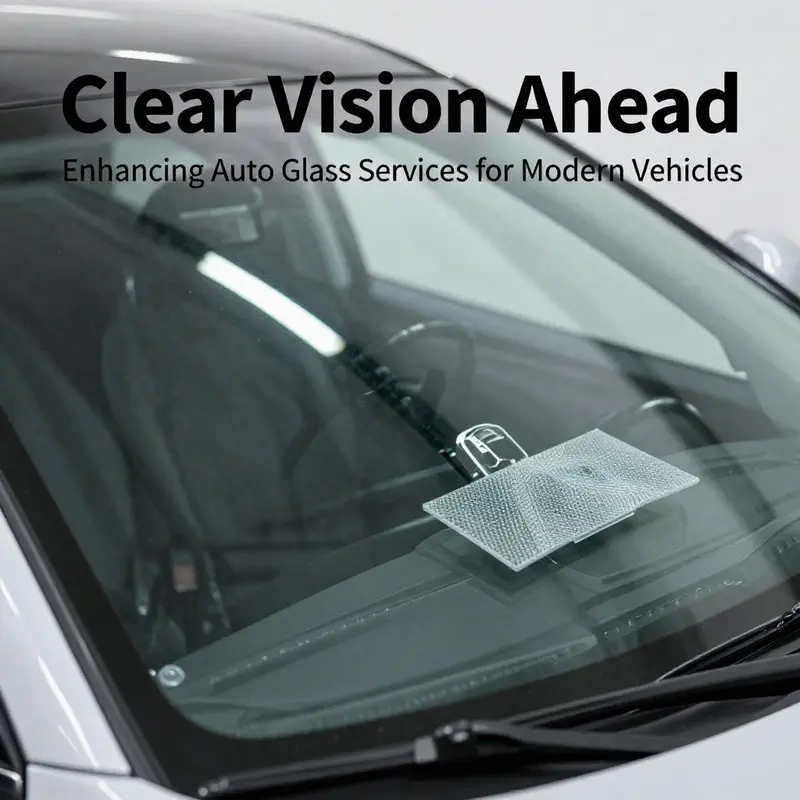
A single piece of glass now does far more than shield occupants from wind and debris. Modern automotive glass is a structural element, a platform for sensors, a noise barrier, and a display surface. As vehicle design pushes boundaries, auto glass services must evolve from simple replacements to sophisticated system repairs and integrations. This chapter traces the material and technological advances reshaping the field and describes what shops and technicians must master to deliver safe, reliable results.
The most significant shift is material innovation. Laminated glass—two sheets of glass bonded with a resilient interlayer—has long been used for windshields. Today, interlayer chemistry and glass strengthening have advanced markedly. New interlayers offer superior bonding, enhanced acoustic damping, and improved post-impact performance. They also expand the windshield’s functional role, enabling clear optical pathways for cameras and lidar, while preventing fragments from detaching during a collision. Chemically strengthened glass processes add surface compression, increasing resistance to chips and cracks without excessively thickening glass. The combined effect is windshields that are lighter, tougher, and more dimensionally stable.
Manufacturers develop engineered compositions that balance transparency, strength, and weight. Low-iron glass reduces tinting and improves clarity. Special interlayers reduce visible distortion, essential for cameras and heads-up displays. Acoustic interlayers absorb road and wind noise, improving cabin comfort and the fidelity of in-cabin microphones. Thermal and solar control coatings limit infrared transmission, reducing heat load in electric vehicles and reducing reliance on HVAC systems. When glass contributes to aerodynamic efficiency with thinner profiles and smoother surfaces, the vehicle benefits from improved range and lower energy consumption. For service providers, these improvements mean more glass types to identify, stock, and handle correctly.
Integration with vehicle electronics is another major development. Modern windshields and rear windows often serve as mounting and optical platforms for cameras, rain sensors, light sensors, and projection systems. Some front glass assemblies incorporate conductive heating elements, antenna patterns, or embedded display layers for augmented reality overlays. That functional integration raises the stakes for installation quality. A misaligned or improperly bonded windshield can shift camera focal points, impairing driver assistance systems. When sensor calibration is required after replacement, it can no longer be an optional step. Accurate calibration restores the relationship between sensor and vehicle coordinates, ensuring lane-keeping, collision warning, and adaptive cruise systems operate as intended.
This convergence of glass and electronics has transformed a routine glass replacement into a multidisciplinary task. Technicians now manage glass geometry, adhesive chemistry, sensor alignment, and software recalibration. Shops need temperature-controlled environments for precise adhesive cures. Mobile services must carry calibration equipment or arrange vehicle delivery to calibration centers. Service providers that integrate these capabilities reduce turnaround time and improve safety outcomes. Training and documentation become critical; clear procedures ensure consistent results across teams.
Advances in adhesive and bonding technology underpin reliable installations. Modern urethane adhesives now cure faster and provide higher bond strengths with improved elongation properties. UV-curing adhesives are used for certain bonded assemblies and provide controlled cure cycles. Edge-bonding techniques prevent water intrusion and reduce stress concentrations that can lead to cracks. Adhesive formulations are tailored to match thermal expansion properties between glass, interlayers, and car body substrates, minimizing stress from daily temperature cycles. For technicians, proper adhesive selection, surface preparation, and cure management are as vital as correct glass fitment.
Repair technology has also progressed. Resin injection systems have improved resin chemistry and application methods, enabling reliable repairs for small chips and star breaks. New resins match glass refractive indices more closely, making repairs less visible and restoring much of the glass’s original strength. Some repairs can be completed on-site quickly, avoiding full replacements for minor damage. Yet there remains an important safety threshold: when damage compromises sensor-mounted areas, structural bonding zones, or extends to the edge of laminated assemblies, replacement is typically required. Judgment is essential—repair when safe, replace when necessary.
The service ecosystem is responding with specialized equipment and workflows. Vacuum lifters and stabilizing frames enable single-technician lifts for increasingly large panoramic assemblies. Climate-controlled mobile vans facilitate on-site adhesive curing in temperature-sensitive conditions. Digital tools catalog VIN-specific glass specifications, guiding technicians to correct OEM-equivalent parts and adhesives. These workflows preserve warranty terms, ensure regulatory compliance, and maintain safety performance.
Sustainability and lifecycle considerations are rising in importance. Recycling of tempered glass differs from laminated assemblies, where interlayers complicate material recovery. Some newer interlayer chemistries are designed for disassembly, enabling greater recycling rates. Lighter glass helps reduce vehicle mass and, consequently, fuel or battery energy use over the vehicle’s life. For service providers, offering eco-conscious options can be a competitive differentiator. It also requires new partnerships with recyclers and installers trained in disassembly and material separation.
A distinct trend is the growth of specialty glass types. High-performance glass for premium vehicles often demands unique optical properties, advanced coatings, and ultra-precise fit. Heated and defogging layers, infrared-reflective coatings, and variable-transparency systems appear in luxury and electric models. Smart glass capable of shifting opacity or integrating display elements is emerging, and service workflows must adapt. These components are sensitive to surface treatment and bonding methods. Repairs using incorrect adhesives or improper handling can permanently degrade functionality.
Regulation and standardization follow technology. Safety standards increasingly account for the interaction between glass and driver assistance systems. Certification and testing protocols emphasize optical distortion limits, bond strength, and sensor compatibility. Documented installation procedures and calibration records become part of a vehicle’s maintenance history, relevant for ownership transfers and insurance claims. Service organizations that document work thoroughly reduce liability and help maintain vehicle safety performance.
Training and human capital are central to success. The new auto glass technician is part glass specialist, part electronics technician, and part materials scientist. Formal training programs cover adhesive chemistry, sensor recalibration, optical testing, and quality inspection protocols. Hands-on modules teach precise bonding and glass handling. Ongoing education keeps technicians current with evolving OEM specifications and new material introductions. Shops that invest in staff development capture higher-value work and build customer trust.
Customer experience also transforms. Where once windshield replacement was a quickly completed task, it now may involve pre-inspection of sensors, quoting for recalibration, and coordinating temporary transportation. Technicians must communicate clearly about why a replacement includes additional steps and costs. Explaining the relationship between glass fit, sensor performance, and safety helps customers appreciate the value of thorough service. Transparent warranties that cover bonded and electronic aspects of the replacement further build confidence.
The economics of repair versus replacement shift with these innovations. High-value laminated or sensor-integrated glass commands a premium. Insurers and fleet managers weigh repair thresholds carefully, considering the cost of full replacement plus calibration. Some insurers now require certified installers for sensor-bearing glass. Volume-driven shops can lower cost through efficient workflows and integrated calibration capabilities. Conversely, shops that lack re-calibration tools may see a business opportunity in partnering with calibration centers.
Looking ahead, several frontier technologies will continue to reshape service needs. Transparent display layers will require installation environments that control dust and surface imperfections tightly. Embedded antennas and conductive traces will mandate new diagnostic routines. Lidar and other active sensing elements may require bespoke mounting or optical filtering. Energy-harvesting coatings could generate small amounts of power for embedded sensors, changing wiring complexity. Each innovation brings new test requirements and new failure modes for technicians to recognize.
Material science will remain active. Research into thinner, stronger glass and novel interlayer polymers aims to preserve optical clarity while enhancing safety. Innovations in surface coatings promise scratch resistance and hydrophobic performance that reduce the need for wiper use. Advances in chemical strengthening and fracture mechanics will reduce the frequency of chips and improve service life. These improvements could reduce long-term maintenance costs but raise up-front replacement expenses when failures do occur.
For shops, adaptability is essential. A modern auto glass service operation must: maintain accurate vehicle-specific parts data; stock the correct glass types and adhesives; train staff on calibration and optical testing; equip mobile units or bays for controlled installations; and document every step for warranty and safety records. Integrating digital workflows that guide technicians through VIN-specific procedures can reduce errors. Partnerships with parts suppliers, calibration service providers, and recyclers expand capabilities without requiring every shop to master every discipline.
The broader outcome is a safer, more capable fleet. When installations meet engineered specifications and sensors are accurately aligned, active safety systems perform as intended. Well-bonded windshields preserve vehicle structure in collisions. Acoustic and thermal advances improve occupant comfort and reduce energy demands. Customers who understand these benefits appreciate the investment.
The evolving technical landscape also creates new business models. Mobile calibration services, subscription-based inspection plans for fleets, and premium upgrade packages for older vehicles are emerging. Some shops specialize in high-end, tech-integrated glass. Others focus on fast-turn collision replacements. Both approaches can thrive if they align services to customer expectations and regulatory requirements.
In short, auto glass services are no longer about swapping panes. They sit at the intersection of materials science, sensor technology, vehicle dynamics, and customer service. Shops that master the science and procedures of modern glass assemblies will deliver safer, higher-value outcomes. Those that treat glass as an afterthought risk undermining vehicle safety and incurring costly callbacks. The path forward is clear: invest in skills, tools, and processes that respect glass as a critical vehicle system, not simply a transparent barrier.
For anyone restoring classic vehicles, modern glass options expand possibilities. Contemporary laminated and strengthened glass can be fitted without sacrificing aesthetic authenticity. For practical guidance on sourcing and upgrading vintage cars, see revive your classic: sourcing and upgrading vintage cars.
Further details on advanced engineered glass technologies and recent industry recognition are available from a leading automotive glass solutions developer: https://www.corning.com/en/automotive/products/glass-solutions.html
Shaping Safety from the Windscreen Up: How Auto Glass Services Fortify Vehicle Structure and Protect Occupants
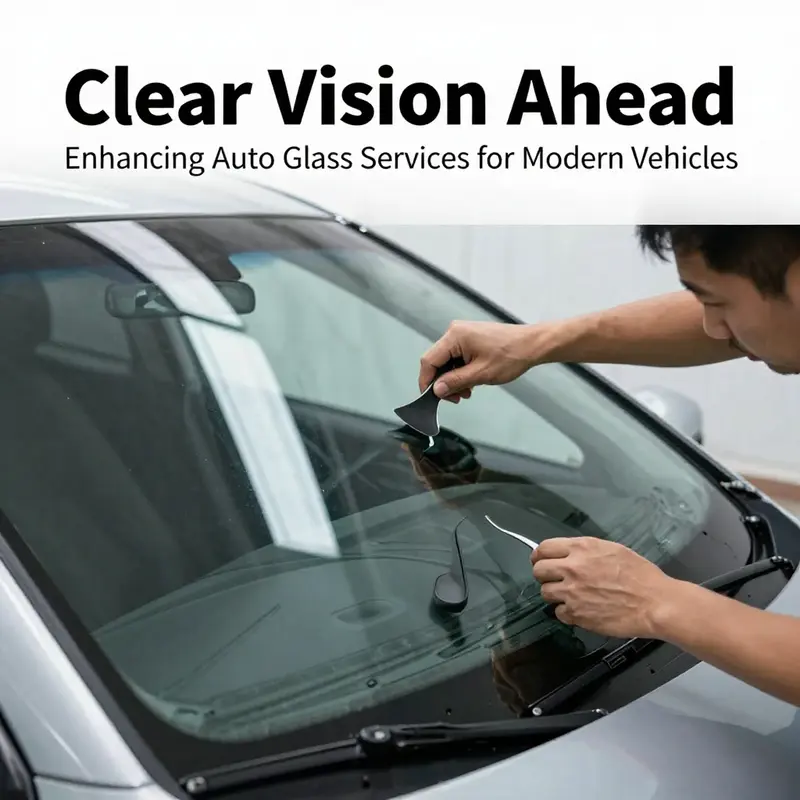
The glass that guards us as we drive is more than a barrier against wind and rain. In modern vehicles, the windshield is a carefully engineered component that participates in the vehicle’s safety system, its structural integrity, and even its sensing architectures. When a vehicle meets the road, the glass becomes part of a load path that helps carry forces during a collision, supports the roof in a rollover, and anchors a suite of safety technologies that guard occupants long after the crash has ended. The role of auto glass services, therefore, extends far beyond glass replacement. It encompasses the preservation of a crucial safety-driven interface between a vehicle and its occupants, one that aligns with evolving standards, new materials, and increasingly integrated restraint and driver-assistance systems. To understand why expert glass service matters so profoundly, it helps to look at the laminated structure of modern windshields, the way they contribute to roof strength, and how precise installation and calibration influence air bag deployment, sensor accuracy, and the overall performance of safety systems when it matters most.
Laminated glass has become the cornerstone of windshields because it blends transparency with toughness. Composed of two sheets of glass bonded by a resilient interlayer—commonly polyvinyl butyral—the laminated construction resists shattering, even when struck by debris or subjected to intense impact. This is not merely a feature of comfort; it is a foundational safety attribute. In the event of a collision, the interlayer helps hold the glass together, maintaining a barrier that pushes back on occupants and minimizes the risk of penetrating shards. Crucially, this barrier also contributes to a vehicle’s structural rigidity. A windshield is not just a panel; it is an element that helps distribute load across the roof, A-pillar, and frame when forces travel through the cabin. In rollover scenarios, windshields can provide as much as a significant portion—some estimates point to around 60 percent of the roof’s strength—helping to preserve cabin integrity and reduce the chance of a collapse that would endanger occupants.
This interdependence between glass and structure means that the integrity of the windshield is not a cosmetic concern or a simple replacement decision. It is a matter of maintaining design tolerances, adhesive bonds, and alignment with adjacent components. The adhesives and bonding technologies used to attach a windshield to the body are formulated to perform within precise temperature and humidity ranges, with curing times that must be respected to achieve full strength. When service technicians install, reseal, or repair windshields, they are not just swapping a pane of glass; they are reconstituting a load path that was engineered to work in concert with the roof, pillars, airbags, and sensors.
Over the years, the industry has advanced toward more sophisticated safety ecosystems. The modern vehicle often integrates a suite of driver-assistance systems, cameras, radar, and ultrasonic sensors that rely on the windshield and surrounding glass surfaces for accurate positioning and field of view. The windshield can host camera housings, moisture sensors, and head-up display components that rely on clear, correctly positioned glass to function. As a result, auto glass technicians face a more complex landscape than in the past, where a repair was primarily about restoring visibility. Today, technicians must consider sensor calibration and the precise mounting geometry necessary for ADAS—advanced driver-assistance systems—to operate as designed after any service.
The safety implications of improper installation are not theoretical. When a windshield is misaligned, or when the adhesive bond is compromised, the vehicle’s ability to channel load during impact can be reduced, diminishing roof strength and altering how energy is distributed through the cabin. Misalignment can also affect air bag deployment. Modern airbags are designed in concert with the windshield and dashboard surfaces, with the windshield acting as a rigid anchor for certain air bag trajectories or as a boundary that shapes their inflation path. If the windshield shifts or the bond degrades, the timing and effectiveness of air bag deployment can be disrupted, potentially increasing injury risk rather than reducing it. This is why the service environment places a premium on proper warnings and controlled handling when airbags are present. Warnings like “Caution: Air bags present” are not mere labels; they signal technicians to adopt specialized procedures, tools, and precautions to prevent accidental deployment during service.
Behind these procedural imperatives lies a material economy built around quality and compatibility. For auto glass shops, selecting the right glass is a safety-critical decision. Windshield materials must meet stringent standards and align with the vehicle’s design and safety commitments. The choice between OEM-quality replacements and aftermarket equivalents is more than a price consideration; it is a question of durability, consistency, and guaranteed fitment. OEM-quality glass is engineered to exact specifications for a given vehicle’s frame and bonding system, helping ensure that the glass remains a trusted part of the structure under a spectrum of environmental conditions and load cases. While aftermarket options can be appropriate in some contexts, they demand robust testing and verification, as non-compliant glass can compromise safety, complicate insurance settlements, and expose installers to legal liabilities.
The modern auto glass landscape also emphasizes the importance of materials science in safety. Laminated glass, with its PVB interlayer, is designed to absorb and dampen energy, reducing the likelihood of fragmentation and directing force along predetermined paths. Engineers continue to refine interlayer chemistry, edge sealing, and bonding agents to improve clarity, reduce distortion, and withstand temperature swings that vehicles encounter across climates. As vehicles push toward lighter, more efficient designs, glass technology evolves to meet the performance demands of new architectures, including lighter frames, stronger pillars, and more integrated safety networks. In this context, the role of the technician becomes a bridge between high-level engineering and on-the-ground practical service. Precision in measurement, cleanliness of the bonding surface, and adherence to manufacturer service guidance are all essential to preserve the glass’s safety role and to ensure that the vehicle’s overall performance remains intact after maintenance.
Another layer of complexity comes from the way glass interacts with the vehicle’s safety systems. The windshield often serves as a key anchor for airbags and is integral to certain sensor systems that support lane-keeping, automatic braking, and collision avoidance. These systems rely on calibrated fields of view and accurate reflections to interpret the world correctly. Even seemingly minor misalignments—caused by a hurried replacement or uneven bonding—can degrade the visual cues that these systems rely upon. In practice, this means technicians must be mindful of calibration cycles after windshield work. ADAS cameras and sensors may require recalibration to re-establish proper reference points, and some vehicles cannot complete this calibration without precise installation that meets the manufacturer’s exacting tolerances. In a world where devices like forward-looking cameras and park-assist sensors are standard, the glass service professional becomes a steward of the vehicle’s digital perception as well as its mechanical integrity.
The safety continuum described here also traces back to the training and ethos of the auto glass workforce. The days when a windshield was simply swapped out for a pane of the same size have passed. Modern technicians are expected to blend mechanical skill with an understanding of safety systems, adhesives science, environmental controls, and calibration protocols. Their workrooms must maintain clean, temperature-controlled environments to ensure adhesives cure properly. They must verify the glass’s edge‑to‑edge fit, confirm fiber-optic and sensor pathways are unobstructed, and follow precise torque and curing times as dictated by the materials and the vehicle. This professional competence translates into reliability for the driver and peace of mind for the passenger. A misstep in any of these areas can ripple through the vehicle’s safety performance, complicate insurance coverage, and erode consumer trust in the repair network.
From the perspective of the shop, safety is also a matter of sourcing and specification. The supply chain for auto glass includes not only the glass itself but also the bonding agents, primers, primers, spacers, and primers again—each component chosen for compatibility with the vehicle and for long‑term durability. When a shop sources materials that fail to meet manufacturer specifications, the risk is not just a warranty claim; it is the potential compromise of the structural path that supports roof strength and helps contain occupants during collapse. In this environment, a commitment to quality is a pledge to safety. It means prioritizing meticulous inspection regimes, robust testing for fit and bond integrity, and transparent communication with customers about the critical nature of the service they are receiving. It also means staying current with evolving standards, which may reflect new regulations, updated safety expectations, or enhanced performance criteria for windshields and associated glass components.
The practical implications for customers are meaningful but sometimes subtle. When a windshield is properly installed, with correct adhesion, clean edges, and precise alignment, the vehicle behaves as a single, cohesive unit in a crash. The roof remains stiff, the occupant protection systems deploy as intended, and the driver enjoys continued visibility that is free of optical distortions. The long‑term integrity of the vehicle’s glass system also matters for everyday driving. Reduced distortion improves driver comfort and reduces eye strain, while a correctly bonded windshield minimizes wind noise and water intrusion that could otherwise erode the cabin environment over time. In this sense, auto glass service touches both the immediate and the enduring quality of a vehicle’s safety profile.
For shops, the responsibility extends into the realm of compliance and risk management. Adhering to safety regulations and testing standards protects both the technician and the customer and positions the shop as a reliable partner in safeguarding lives on the road. It also frames a broader narrative about why professional glass service is an investment in safety rather than a mere maintenance expense. When customers recognize that a repair or replacement touches the vehicle’s safety architecture, they tend to place greater trust in the service, better understand the value of OEM-quality materials, and appreciate the careful calibration that ensures modern features operate as designed. The resulting customer satisfaction is not simply about visibility or fuel economy; it is about confidence—confidence that their car’s protective envelope remains intact, that airbags will function, and that intelligent systems will guide the vehicle responsibly in complex traffic environments.
In this evolving safety landscape, the conversation around auto glass service also intersects with broader questions of standards, accessibility, and responsibility. As vehicles grow more technologically sophisticated, the demand for skilled technicians who can manage both traditional glass work and the nuances of sensor calibration rises. Consumers benefit when the market emphasizes training, certification, and ongoing education, because those investments translate into safer roads and fewer post-repair complications. The industry’s trajectory toward integrated safety performance reflects a recognition that glass is not a standalone element but a critical part of the vehicle’s safety architecture. The consequence is a service sector that must stay aligned with engineering advances, supply chain reliability, and rigorous regulatory expectations.
To illustrate how this alignment translates into everyday practice, consider the path a customer might take when facing a glass-related service decision. The process begins with a transparent assessment: is the glass intact, or does it require replacement? If repair is possible, technicians will appraise the bond integrity, edge condition, and visibility quality, ensuring that any crack or chip does not compromise the laminate or distortion levels that could affect sensors. If replacement is necessary, the shop should confirm that the selected glass matches the vehicle’s specification and that the bonding and curing processes are conducted under controlled conditions. The installation should be followed by a calibration step for any ADAS components and a road test to verify that wind noise, rain sensing, and visibility meet the vehicle’s performance benchmarks. Throughout, the customer should receive clear explanations about why certain steps are required, what the expected cure times are, and how these steps contribute to the vehicle’s safety profile. In this way, the service becomes a collaborative act—one that preserves structural integrity, respects engineering intent, and supports the ongoing safety performance drivers expect from modern automobiles.
From a broader perspective, the chapter’s exploration of safety and structural integrity in auto glass services highlights a fundamental truth: the windshield is a safety component that bridges the mechanical and the electronic. Its proper care is essential to the vehicle’s ability to protect occupants, maintain chassis rigidity, and enable advanced safety features to operate as intended. The ongoing evolution of materials, bonding technologies, and sensor calibrations promises even greater resilience and smarter integration in the years ahead. As manufacturers design lighter, stronger frames and more capable safety systems, the glass and the service professionals who sustain it will continue to play a pivotal role in ensuring that safety remains a continuous, real-world outcome rather than a theoretical standard.
For readers seeking practical guidance on how to engage with auto glass services, a useful takeaway is the importance of choosing providers who emphasize quality, compliance, and transparency. Look for shops that can demonstrate proper handling of air bag warnings, provide evidence of calibrated ADAS procedures when needed, and source glass that aligns with original specifications. Ask about curing times, adhesion materials, and the steps taken to protect the vehicle’s interior and electronics during service. While price matters, it should not trump the safety rationale that anchors every decision in this field. A customer who understands the safety implications behind a windshield replacement is better positioned to advocate for the care their vehicle deserves, and better equipped to recognize a service partner that treats safety as non-negotiable rather than optional.
In sum, auto glass services occupy a central place at the intersection of safety, engineering, and everyday reliability. When performed by skilled technicians who respect the structural role of the windshield and the integrated safety systems that modern vehicles rely upon, these services sustain the very conditions that reduce risk on the road. They ensure that the roof remains capable of supporting occupants, that airbags deploy when needed, and that sensors interpret the world with fidelity. They also affirm a broader commitment to quality in automotive maintenance, reinforcing trust between drivers and the networks that keep their journeys safer and more predictable. The science behind laminated glass, the craft of precise installation, and the discipline of careful calibration all come together in service to occupants who rarely think about the glass that protects them—until that glass is in need of attention. When that moment arrives, the right auto glass service makes the difference between a minor inconvenience and a life-saving measure.
For a broader view of auto services that underpin these safety outcomes, see the following resource on general car maintenance and repair services: car-auto-repair-services.
External resource: For additional insights into air bag safety innovations and how they shape auto glass service practices, see https://www.safetysupply.com/air-bag-safety-innovations-change-auto-glass-service.
When Glass Meets Demand: How Market Forces and Consumer Expectations Are Redefining Auto Glass Services
The auto glass sector is no longer a back-of-shop specialty. It sits at the intersection of vehicle safety, advanced electronics, and customer experience. The market’s steady expansion reflects that shift. Growing vehicle fleets around the globe and increasingly complex windshields have raised both the dollar value and strategic importance of auto glass services. That reality is reshaping business models, skill requirements, and the typical customer journey.
Advanced safety features built into glazing are a primary reason for change. Modern windshields often host cameras, sensor arrays, and heads-up projection layers. These elements transform glass from a passive barrier into an active part of driving systems. The result: replacement and repair are more technical than before. Technicians must not only restore a clear view, they must also ensure electronic systems are aligned and functional. This raises the cost of work. It also changes what customers expect when they call for service.
Consumers now treat windshield work like any other high-stakes repair. They want parts that meet original-equipment standards and workmanship that preserves vehicle safety. They demand fast, predictable service with transparent pricing. Many expect digital-first touchpoints: online estimates, instant scheduling, status updates, and simple claims handling through insurer portals. Shops that deliver that experience earn higher satisfaction and repeat business. Those that don’t risk losing customers to competitors offering convenience and confidence.
Technology drives both opportunity and complexity. Smart glass innovations enable automatic dimming, augmented display layers, and integrated sensing. These enhancements improve safety and comfort, but they complicate replacements. A windshield that supports heads-up projections must be installed and calibrated precisely. A misaligned sensor can degrade lane-assist or emergency braking functions. That reality forces shops to invest in calibration rigs, diagnostic software, and training. The upfront expense is substantial, but it is necessary to stay relevant.
Artificial intelligence is also influencing the field. AI-powered inspection tools can assess chip damage faster and more consistently than the human eye. Machine learning models help predict whether a crack can be repaired or requires full replacement. These tools speed decision-making and reduce the risk of improper repairs. They also enable remote diagnostics, allowing technicians to triage jobs before arriving on site. For mobile service fleets, better triage means fewer wasted trips and higher productivity.
Consumer expectations extend beyond technical competency. Many customers prefer a one-stop, frictionless experience. They expect online reviews, clear guarantees, and visible evidence of technician qualifications. They compare service providers like they do other digital services—on quality, speed, and responsiveness. This shift favors service providers that combine traditional craftsmanship with digital operations.
Insurance remains a major influence on market behavior. Insurers seek cost-effective outcomes and often steer customers toward preferred providers. That creates opportunities for shops that can demonstrate efficient workflows without sacrificing quality. It also raises tension when insurer cost pressures conflict with the need for specialized parts or precise calibrations. Navigating those relationships requires clear documentation and open communication about safety implications.
The economic calculus of repair versus replacement is changing too. Small chips were once routinely repaired to avoid costly replacements. Today, when a windshield houses a camera module or a projection film, the threshold for replacement rises. A seemingly minor nick might misalign a sensor once repaired. That risk makes consumers more accepting of replacement when safety-critical elements are involved. Shops must be ready to explain those tradeoffs in simple terms and to justify recommendations with demonstrable evidence.
Supply chain dynamics are another market factor. Auto makers, parts manufacturers, and aftermarket suppliers each play roles in how quickly and affordably parts reach a shop. Delays in high-quality glass supply increase lead times and shrink margins. At the same time, the market has seen a proliferation of glass types and fitments. Windshields vary by curvature, sensor cutouts, and film layers. Managing inventory across a diverse model mix is expensive. Larger service networks can spread that cost, while independents must be nimble. Some shops mitigate exposure by leveraging just-in-time parts sourcing and by cultivating reliable supplier relationships.
Geography and vehicle demographics create local market variations. Urban markets with high vehicle density and busy lifestyles have greater demand for mobile, fast-turnaround services. Rural markets often prioritize durability and price. Regions with higher adoption of advanced driver assistance systems see more calibration work and higher average job values. Electric vehicles contribute another variable. Their large, panoramic glass areas and unique structural designs require different adhesives and handling. As electric vehicle adoption grows, the average job complexity will likely increase.
Regulatory frameworks shape how work gets done. Safety standards govern the structural role of windshields during collisions. Compliance demands that installers use proper adhesives and follow curing protocols. Certification schemes for technicians also add a compliance layer. Consumers often equate certification with safety. Shops that publicize their credentials can turn compliance into a marketing advantage. Conversely, a lack of verifiable standards in some markets allows low-quality work to persist, undermining consumer trust.
Sustainability has begun to influence decision-making as well. Windshields and tempered glass components are recyclable, but separation of films and interlayers complicates recycling streams. Service providers and suppliers are exploring more recyclable interlayers and take-back programs. As corporate sustainability commitments deepen, consumers will increasingly prefer providers that offer greener choices. This shift will place new demands on logistics and on supplier selection.
Pricing strategies in the sector reflect these complexities. Simple jobs still compete on price, while advanced replacements compete on capabilities. Many shops are adopting tiered service models. A base offering covers quick repairs and standard glass fitting. A premium tier includes OEM-equivalent glass, calibration verification, extended warranties, and concierge services. These tiers help communicate value and let customers choose based on need and budget.
Digital platforms amplify customer expectations around scheduling and transparency. Mobile apps let customers book appointments, upload photos, and track technician arrival times. Automated messaging reduces phone tag and clarifies service windows. Real-time status updates build trust, especially when a mobile crew operates far from the shop. Providers that invest in user-friendly apps tend to capture higher conversion rates and higher satisfaction scores.
Training and workforce development are urgent priorities. The changing skill set blends mechanical aptitude with electronic diagnostics. Technicians must understand adhesion chemistry, glass stress mechanics, camera alignment, and software calibration. Remote training modules and simulation technologies are becoming common. Some firms use augmented reality to guide apprentices through installations, reducing error rates and speeding proficiency. Investing in people is not optional; it’s the primary way shops protect their reputations.
Brand trust and transparency are essential for consumer choice. Given the safety stakes, many buyers seek evidence of quality before committing. Clear warranties, documented calibration checks, and gallery-style before-and-after photos help reduce anxiety. Transparent conversations about parts sourcing and the reasoning behind repair versus replacement decisions strengthen trust. When shops provide this clarity, customers feel empowered rather than sold to.
Mobile service has expanded the market. On-site windshield replacement and repair reduce friction for busy customers. Mobile technicians can often complete repairs faster due to reduced logistical overhead and improved scheduling. However, mobile work requires robust processes to match the quality of shop-based work. Mobile crews must control environmental factors and follow curing timelines. They also need portable calibration tools for ADAS-equipped vehicles. The best operators standardize mobile workflows so quality remains consistent across job types.
Competition is shifting as well. Traditional independent shops compete with networked service providers, dealer service departments, and emerging app-based platforms. Each has strengths. Dealerships bring direct access to parts and OEM training. Networked providers scale purchasing and software investments. Independents excel at personalized service and local reputation. The competitive landscape rewards specialization, consistent quality, and operational efficiency.
Consumer education plays a larger role than ever. Many vehicle owners do not understand how a windshield contributes to airbag deployment or roof support. Shops that explain the structural and safety aspects of glazing create more informed buyers. Educational materials, short videos, and simple diagrams help demystify the work. Better-informed customers make decisions aligned with safety, not short-term savings.
Data and analytics are emerging as differentiators. Service providers are mining repair data to identify common failure modes. They analyze cycles of chip growth, part lead times, and customer preferences. These insights guide inventory decisions and marketing strategies. AI-driven pricing tools can propose quotes that balance competitiveness with profitability. In aggregated form, this data helps shape broader industry standards and best practices.
Looking ahead, market forecasts project steady growth. The sector’s long-term expansion will be fueled by increasing vehicle stock and the growing complexity of glass assemblies. Those trends support continued investment in high-precision tools, certification programs, and digital customer experiences. For service providers, the choice is clear: adapt to deliver both technical excellence and modern convenience, or risk being commoditized.
Practical strategies for service providers emerge from these dynamics. First, invest in diagnostic and calibration equipment. Second, develop transparent digital experiences for customers. Third, create clear pricing tiers that align with risk and complexity. Fourth, build strong supplier partnerships to secure quality parts and predictable lead times. Fifth, prioritize training programs that bridge mechanical and electronic skills. Finally, communicate safety benefits plainly to customers.
Consumer expectations and market dynamics are moving in lockstep. As vehicles integrate more functionality into their glass, the service ecosystem must become more capable. That evolution will shape shop economics, workforce development, and customer experience design. It also raises a broader point: auto glass services now play a direct role in modern vehicle safety and convenience. Maintaining that role requires both technical proficiency and an acute focus on customer expectations.
For providers and consumers alike, the takeaway is practical. Quality, transparency, and the ability to handle advanced systems will determine who wins in this market. The business of auto glass services is no longer just glasswork. It is a technical, operational, and customer-centric discipline poised for steady growth.
Source: https://www.marketresearchfuture.com/reports/automotive-glass-market-1796
For a practical comparison of local service options, see this resource on car auto repair services: https://veteranauto.us/car-auto-repair-services/
Final thoughts
The landscape of auto glass services is ever-changing, with technological innovations creating safer and more reliable options for vehicle owners. As high-performance materials and cutting-edge techniques become standard, both private owners and businesses can expect improved safety and driving experience. Understanding these advancements is crucial for all stakeholders—from individual car owners to fleet managers and automotive service providers. As we look to the future, the integration of superior auto glass solutions into automotive frameworks will not only enhance structural integrity but also align with the rising expectations of safety-conscious consumers. Engaging with trusted auto glass services ensures you are equipped with the best solutions for your vehicle’s needs.