
Navigating the realm of auto truck services is critical for private car owners, small business fleet operators, car dealerships, and auto repair shops. Understanding the intricate aspects of maintenance, leveraging technological advancements, and recognizing market dynamics can enhance vehicle performance and sustainability. This article explores five key chapters to provide a holistic view of the auto truck service landscape—from essential maintenance and repair practices to the latest technological innovations, business models, and regulatory considerations affecting the industry today.
Beyond the Wrench: Maintenance and Repair as the Cornerstone of Auto Truck Service
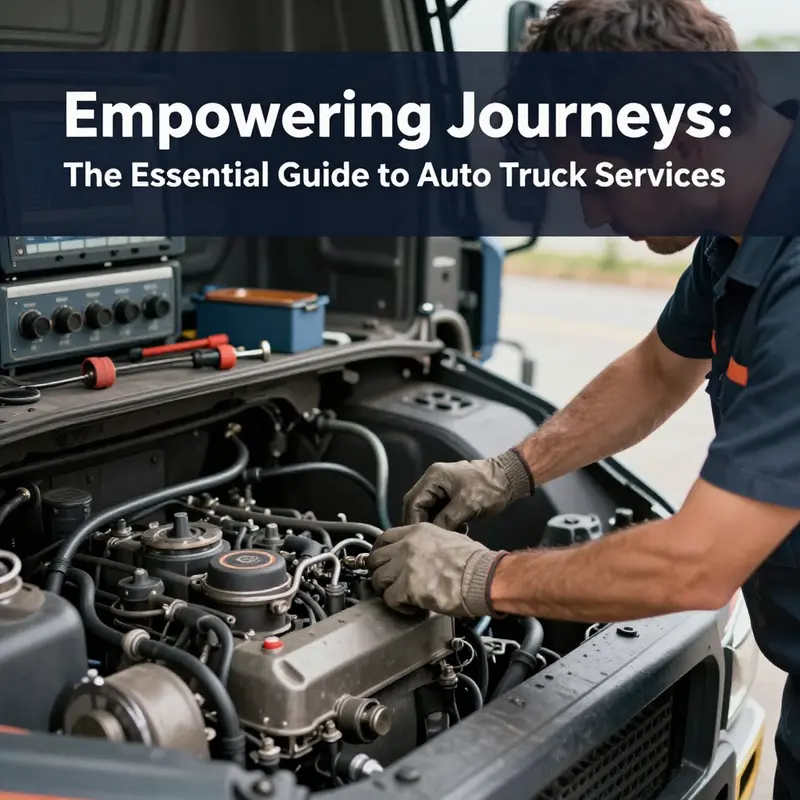
Within a fleet, maintenance is not a ritual but a strategic discipline that governs safety, reliability, and the total cost of operation. Auto truck service sits at the intersection of daily operations and long-term asset management. A vehicle is only as trustworthy as the routine care it receives, and the maintenance corridor is where preventive discipline meets real-world constraints like parts availability, scheduling, and technician training. In this sense, maintenance and repair are not separate activities but two facets of a single, ongoing promise to customers, drivers, and stakeholders that a truck will safely perform its duty when it is needed most.
Preventive maintenance forms the core of this promise. It is a forward-looking practice designed to catch issues before they turn into failures. Regular oil changes, tire rotations, and brake inspections are not cosmetic chores; they are decisive checkpoints that reveal hidden wear, contamination, or misalignment. Fluid checks—coolant, transmission fluid, brake fluid, and refrigerant—serve as early warning signals about leaks, overheating, and the integrity of the vehicle’s cooling and lubrication systems. When these tasks are scheduled with discipline, they create a predictable rhythm for the shop, drivers, and dispatchers. This rhythm reduces emergency repairs, short-notice road calls, and the cascading downtime that disrupts delivery windows and service guarantees.
The logic of maintenance extends beyond the maintenance bay and into the realm of operational efficiency. A truck that rolls out of the shop with fresh seals, balanced tires, and clean systems consumes fuel more effectively and emits fewer pollutants. Proper tire inflation and tread depth management, for instance, influence rolling resistance, grip, and brake performance, all of which affect fuel economy and road safety. Brake system health, when monitored regularly, prevents small wear patterns from evolving into overheating or failure, safeguarding not only the asset but the crew as well. In this sense, maintenance becomes a lever for both environmental stewardship and business performance, aligning cost control with a cleaner, safer operating profile.
Industry data reinforce the importance of a systematic maintenance plan. The American Trucking Associations emphasize routine maintenance as a driver of longevity and uptime. When managed well, maintenance can extend a truck’s useful life and dramatically reduce downtime, translating into lower lifecycle costs and higher reliability on the road. The value proposition is clear: spending time and resources on prevention yields dividends in smoother operations, steadier schedules, and greater driver confidence. The truth is practical and measurable—downtime is costly, and preventive maintenance is one of the most reliable ways to minimize it. This is not theoretical; it is the lived experience of fleets that treat maintenance as a strategic asset rather than a reactive expense.
In the evolving landscape of modern propulsion, auto truck service must also keep pace with technology. Traditional diesel and gasoline engines coexist with emerging hybrid and electric powertrains, each with its own maintenance grammar. Electronic control units govern everything from fuel injection timing to brake-by-wire systems, while battery management and charging infrastructure demand specialized knowledge. A service center that can diagnose, calibrate, and repair sophisticated electronic networks will outlast a shop that relies on mechanical intuition alone. This broader skill set requires ongoing training, access to current diagnostic tools, and a framework for updating repair procedures as vehicles evolve. The result is a service ecosystem capable of addressing both legacy platforms and next-generation propulsion with equal rigor.
The pursuit of reliability also hinges on robust record-keeping and data-driven decision making. A well-maintained maintenance history becomes the roadmap for future interventions. It helps technicians avoid redundant work, identifies recurring issues, and supports strategic planning for parts stocking and labor scheduling. In practice, this means standardized checklists, clear documentation of what was inspected and replaced, and a system that flags upcoming maintenance cycles well in advance. When drivers know what to expect at every service appointment, confidence grows, and the likelihood of preventative actions increases. The discipline is not cosmetic; it anchors safety standards and sustains performance across the fleet.
Within the shop, best practices bridge the gap between theory and execution. A strong maintenance program rests on three pillars: planned inspections aligned with manufacturer guidance, calibrated diagnostics backed by data, and disciplined workflows that maximize technician time without compromising quality. For the best results, shops adopt a standardized approach to torque specs, fluid specifications, and parts compatibility. They train technicians not only to fix a problem but to understand why that fix matters in the broader system. This holistic view matters. A repair that preserves efficiency and safety today also preserves the vehicle’s integrity for many thousands of miles forward.
The practical implications of these principles extend to the shop floor and beyond. A conscientious maintenance program reduces the risk of roadside breakdowns, which are not just inconvenient but potentially dangerous in high-traffic environments. It supports safer driver behavior by keeping critical systems—steering, braking, lighting, and visibility—within specified tolerances. It also reinforces compliance with regulatory requirements and industry standards, which frame how fleets operate, how they collect data, and how they report maintenance activities when audits occur. In short, maintenance and repair are the governance framework for a vehicle’s life, providing predictability in an industry defined by schedules, margins, and risk management.
For teams seeking a concise overview of the range of services that fall under this umbrella, a reputable source offers a clear summary of what comprehensive auto service entails. See the overview from A-plus Auto Service overview for a snapshot of typical offerings, technical breadth, and the way service providers frame their capabilities. The page captures how a shop aligns mechanical repair with electronic diagnostics, parts logistics, and customer communication—elements that together enable a durable, reliable operation for fleets and individual operators alike. While every facility will tailor its approach to its market, the underlying philosophy remains constant: prevention and precision are cheaper and safer than repair after failure.
As fleets navigate increasingly diverse powertrains—from traditional engines to hybrids and pure electric propulsion—maintenance strategies must adapt without sacrificing the core discipline that keeps trucks on the road. The best shops blend mechanical expertise with software literacy, embrace predictive maintenance where possible, and maintain an open line of communication with customers about risks, tradeoffs, and return on investment. They recognize that preventive maintenance is not a one-off event but an ongoing practice that evolves with data, technology, and the shifting demands of logistics networks. In this environment, the chapter on maintenance and repair becomes not only a technical guide but a blueprint for sustaining trust between service providers, drivers, and the businesses that rely on dependable transportation.
External reference for deeper guidelines remains the authoritative maintenance framework published by the trucking industry. For deeper guidelines, see the ATA Truck Maintenance Best Practices at https://www.trucking.org/resources/truck-maintenance-best-practices. In practice, the most effective programs translate those guidelines into concrete shop routines: scheduled intervals that match manufacturer recommendations, diagnostics that aggressively seek out precursors to failure, and a culture that views every service record as a commitment to safety and reliability rather than a cost center. With this mindset, maintenance and repair become a steady, proactive engine of value rather than a reactive expense line, ensuring that auto truck service fulfills its essential role in keeping goods moving and people protected on the road.
How Smart Tech Is Remaking Auto Truck Service: Sensors, Diagnostics, and the Infrastructure Challenge
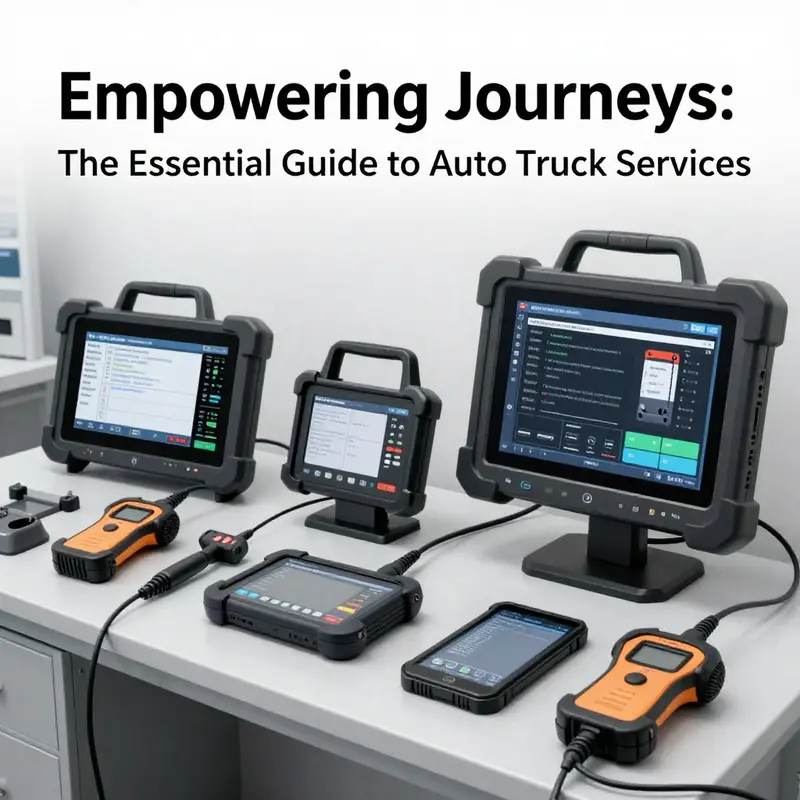
The service bay is becoming a data center on wheels. Modern commercial vehicles arrive with dense networks of sensors, processors, and communications hardware. These systems report engine vitals, brake status, tire pressure, battery state, and even cabin conditions. They also log driver inputs and environmental variables. For an auto truck service operation, that evolution changes everything. It shifts the focus from reactive repair to continuous monitoring, from guessing to evidence-driven intervention, and from isolated fixes to system-level maintenance plans that optimize uptime and cost.
Sensor integration is the technical foundation. Pressure, temperature, vibration, and position sensors are now standard across engines, transmissions, suspensions, and braking systems. More advanced fleets use sensors embedded in tires, seats, and windshields. These devices feed high-frequency telemetry into local controllers and fleet management platforms. The immediate benefit inside the service shop is faster diagnostics. A fault code used to point technicians in the right direction. Now a stream of contextual data—trends, event histories, and correlated anomalies—lets a trained technician pinpoint root causes quickly. That saves labor hours, reduces parts replacement errors, and limits vehicle downtime.
Those same data streams enable predictive maintenance. Instead of fixed-interval servicing, predictive models analyze sensor patterns to forecast failures days or weeks in advance. Predictive maintenance reduces unexpected breakdowns and extends component life. It also changes scheduling and inventory. Service managers can plan lane time for trucks when it’s least disruptive. They can stock the parts likeliest to be needed and avoid emergency overnight orders. For fleets, this means more consistent utilization and lower per-mile maintenance cost. For independent shops, it opens new revenue in consultative services: interpreting fleet data, tuning maintenance windows, and designing reliability programs.
Predictive systems demand new skills and tools in the shop. Technicians must translate data trends into mechanical actions. That involves reading time-series graphs, understanding battery state-of-health metrics, and using updated diagnostic software. Shops invest in handheld devices and cloud-based diagnostic suites that aggregate vehicle histories. Equally important is training. A successful service operation balances traditional mechanical know-how with data literacy and software troubleshooting. Recruiting and development programs that teach both will produce the technicians who thrive in the next decade.
The push for greater efficiency and lower emissions adds another layer of complexity. Fuel-efficient engines, hybrid systems, and electric drivetrains reduce operating cost and pollution. But their advantages depend on the right infrastructure. A fuel-efficient vehicle without routes and fueling options aligned to its capabilities delivers only incremental gains. Similarly, electrified trucks require charging networks that match fleet patterns. Without strategically placed fast chargers and predictable charging windows, fleets risk idle time and lost capacity. That interdependence between vehicle capability and external infrastructure is central when service providers advise clients about fleet transitions.
Battery systems introduce distinctive service needs. Battery health is affected by charging patterns, ambient temperature, and duty cycle. Battery management systems report state-of-charge, state-of-health, and cell imbalances. Service professionals must interpret those reports and determine whether a battery needs reconditioning, cell replacement, or software recalibration. Thermal management faults can accelerate degradation and create safety risks. As more heavy vehicles adopt electrified powertrains, shops will need safe workspaces for high-voltage systems, specialized lifting and insulating equipment, and certification in high-voltage handling.
Charging infrastructure also brings operational opportunities for service centers. Many shops will become local charging hubs or offer on-site fleet charging services. Doing so requires coordination with utility providers, knowledge of electrical codes, and sometimes investments in power upgrades. Shops that facilitate charging help fleets optimize scheduling and reduce range anxiety. This positions those shops as strategic partners, not just repair vendors.
Telematics is the connective tissue that ties sensors, predictive analytics, and fleet operations together. Telematics platforms ingest vehicle data, translate it into actionable alerts, and deliver those alerts to managers and service providers. This visibility improves decision-making. For instance, a telematics alert about abnormal vibration paired with temperature rise in a bearing can trigger an immediate inspection. Telematics also captures driver behavior metrics. Coaching drivers on braking, idling, and speed affects fuel consumption and component wear. Service providers can integrate driver coaching with maintenance programs to boost reliability.
With connectivity comes vulnerability. Cybersecurity must be a routine part of any technology strategy. Modern trucks are distributed computing environments with multiple entry points. A compromised diagnostic port or a poorly secured telematics interface can lead to data leaks or worse. Service operations must update firmware securely, authenticate tools before they access vehicle networks, and protect their own back-office systems. Cyber hygiene, secure update processes, and vendor validation are soon to be standard practice in professional shops.
Business models in auto truck service are shifting as well. Value is moving from one-off repairs to subscription-style reliability programs. Predictive contracts, uptime guarantees, and data-driven advisory services create recurring revenue. For smaller shops, partnering with fleet management platforms or offering niche services—battery diagnostics, electrified drivetrain repairs, or telematics integration—can differentiate them from commodity repair shops. Strategic partnerships with parts suppliers and training organizations reduce the capital burden of new tools and certifications.
Adapting to these changes does not come without barriers. Upfront investment in diagnostics, tooling, and training can be substantial. The evolving regulatory landscape around emissions and battery recycling adds compliance costs. And the transition path differs by region, depending on the local infrastructure for fuel and charging. Effective responses blend phased investment with strong vendor relationships and an emphasis on technician development.
For shop operators, practical steps are clear. Prioritize modular investments: start with diagnostics hardware and software that scale. Create a roadmap for high-voltage capabilities only after assessing local fleet demand. Invest in staff training that combines mechanical repair with data interpretation and secure software practices. Work with local utility providers to understand charging feasibility and available incentives. Finally, reframe customer conversations around outcomes rather than tasks. Present maintenance as a reliability service with measurable KPIs instead of a list of discrete repairs.
Auto truck service is moving from the reactive era into a predictive, connected future. The shops that thrive will be those that pair mechanical craftsmanship with data fluency and infrastructure awareness. They will manage sensors, interpret telemetry, secure systems, and help fleets navigate charging and fueling networks. That blended expertise makes them indispensable partners for operators seeking lower cost, higher uptime, and a credible path toward lower emissions.
For a closer look at the industry trends driving these changes, see this industry analysis: https://www.partstech.com/industry-trends-auto-repair-2026
For an overview of practical repair and service offerings that align with these technological shifts, explore more on comprehensive auto and truck repair services: car auto repair services.
null

null
How Market Shifts and Driver Choices Are Reshaping Auto Truck Service
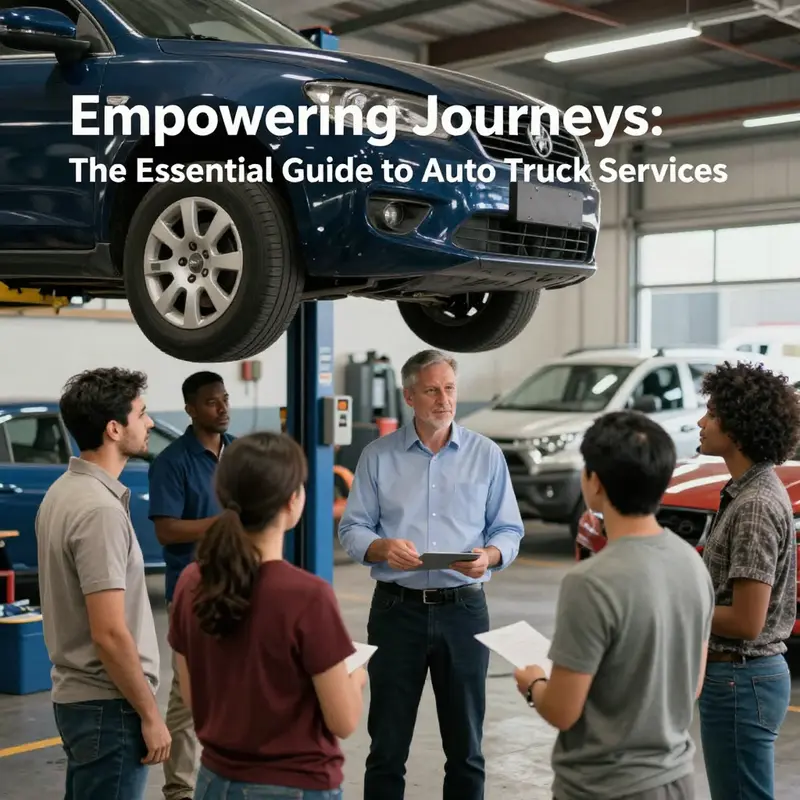
The auto truck service sector is being reshaped by two intertwined forces: expanding commercial vehicle fleets and shifting customer behavior. Growth in truck registrations signals stronger demand for maintenance and repair. At the same time, owners and fleet managers are making more strategic choices about when and where to service vehicles. These dynamics are remapping opportunity and risk across workshops, mobile technicians, and fleet maintenance programs.
A surge in commercial registrations offers the clearest signal. In the example period measured, truck registrations rose sharply year-over-year, with nearly a 30% jump for a key month and a double-digit increase across total commercial vehicles. Those numbers reflect real changes beyond raw counts: they point to more vehicles on the road, tighter operational schedules, and greater reliance on predictable uptime. For service providers, that translates into steadier demand for scheduled maintenance, but also higher expectations for rapid diagnostics and efficient turnarounds.
At the same time, customer behaviors complicate the picture. A notable portion of drivers and small operators have historically delayed maintenance. Economic pressure and short-term cash flow management are common causes. Delayed service can momentarily reduce operating expenses, but it increases long-term costs and risks. For fleets that prioritize uptime, the calculus is different: preventive care is treated as an investment in reliability. The result is a bifurcated market. On one side are risk-averse fleet operators who schedule timely service and demand comprehensive reporting. On the other are independent owners who may defer work until a problem becomes urgent.
This split shapes service models. Providers who work with fleets must offer predictable workflows, transparent costing, and real-time status updates. They often invent service-level agreements that minimize downtime and define turnaround expectations. Conversely, shops that cater to independent drivers need flexible payment options, clear education about the cost of deferred repairs, and fast, visible wins that build trust. Building repeat business requires tailoring communications and offerings to each group.
Technology and data now play a central role in meeting those needs. Instead of relying solely on technician experience, forward-looking shops use integrated market and inventory data to make smarter decisions about parts procurement and pricing. Real-time visibility into inventory levels, parts lead times, and local demand helps technicians avoid delays and keep costs under control. Efficient scheduling systems reduce idle bays and ensure that high-priority fleet repairs jump the queue without derailing daily operations. Diagnostic tools that combine telematics feeds with repair-tracking history let service teams triage issues before a vehicle arrives.
Training and equipment investment are equally important. Modern commercial vehicles increasingly depend on electronics, sensor arrays, and sophisticated emission controls. Hybrid and battery-electric drivetrains add layers of complexity. That means technicians need both mechanical skills and expertise in electrical systems and battery management. Investing in up-to-date diagnostic tools and training programs is no longer optional for shops that want to capture fleet business. For smaller operators, offering certifiable training and demonstrable competence becomes a compelling differentiator.
Pricing strategy must reflect these technical realities. Flat-rate labor models can work for predictable maintenance tasks, but complex diagnostics call for time-based or tiered pricing structures. Transparent estimates, clear documentation of work performed, and visible parts warranties help customers trust that they are getting value. Relationship-based benefits—priority scheduling for loyal customers, bundled maintenance plans, and fleet discounts—encourage repeat business and reduce the temptation to delay needed services.
Customer loyalty in the auto truck service market hinges on three reinforcing elements: consistent service quality, tangible relationship value, and a meaningful perceived experience. Service quality is the baseline: accurate diagnostics, reliable repairs, and vehicles that return to the road in good condition. Relationship value goes beyond the repair itself. It includes things like preferential scheduling, clear communication during emergencies, and billing arrangements that align with a customer’s cash flow. Perceived experience covers the softer aspects: professional reception, timely updates, and the confidence that a technician or manager truly understands the customer’s operational pressures. A shop that combines these elements converts one-time customers into steady accounts.
Marketing and client communications must adapt to reflect these drivers. Fleet managers respond best to data-driven evidence: uptime statistics, cost-per-mile analyses, and histories showing reduced failures after preventive programs. Independent drivers often react to trust signals: reviews, clear recommendations, and social proof from local businesses. Effective messaging bridges both worlds by emphasizing reliability, measurable outcomes, and transparent pricing.
Operational resilience is another competitive advantage. Service centers that build redundancy into parts supply chains and cross-train technicians reduce the risk of bottlenecks when demand spikes. Mobile service capabilities complement fixed-bay capacity by resolving minor repairs on site, shortening downtime, and providing convenience. Many successful providers blend a core shop with a mobile fleet that handles roadside work, scheduled onsite maintenance, and emergency calls. This hybrid approach increases capacity without the fixed cost of more physical bays.
Regulatory and safety trends also influence behavior. Stricter inspection standards and evolving emissions rules push operators toward more frequent, targeted maintenance. For service providers, staying current with regulatory requirements and inspection procedures makes them more valuable partners to customers who must keep vehicles compliant. Documenting compliance and offering inspection-ready maintenance packages can be a clear revenue stream.
Finally, reputation and local presence still matter. Despite advances in digital booking and remote diagnostics, many customers prefer a nearby, trusted shop. Community ties and reliable word-of-mouth endorsements remain powerful. A shop that demonstrates consistent, measurable results will attract both local independent drivers and regional fleets. For inspiration on presenting trustworthy, local service, see AG Auto Service Repair for an example of focused auto service positioning: AG Auto Service Repair.
Taken together, these forces outline where opportunity lies. The growing commercial vehicle base creates demand. Customer behavior fragments the market. Shops that combine technical competence, data-driven operations, relationship-based offerings, and operational flexibility will capture a disproportionate share of this demand. Aligning pricing, training, and communication strategies with the needs of both fleets and independent operators turns market shifts into sustainable business growth.
For service providers, the practical takeaway is straightforward: invest in diagnostic capability, build predictable maintenance programs, and craft customer experiences that solve for uptime and cash flow. For fleet managers and vehicle owners, the advice is to treat service as an asset. Prioritize preventive work, demand clear metrics from your provider, and choose partners who can deliver fast, transparent, and verifiable results.
For deeper, national-level data on registrations, maintenance patterns, and safety trends that inform these market dynamics, consult the official agency reports available through the National Highway Traffic Safety Administration: https://www.nhtsa.gov
Regulation, Sustainability, and Practical Compliance in Auto Truck Service
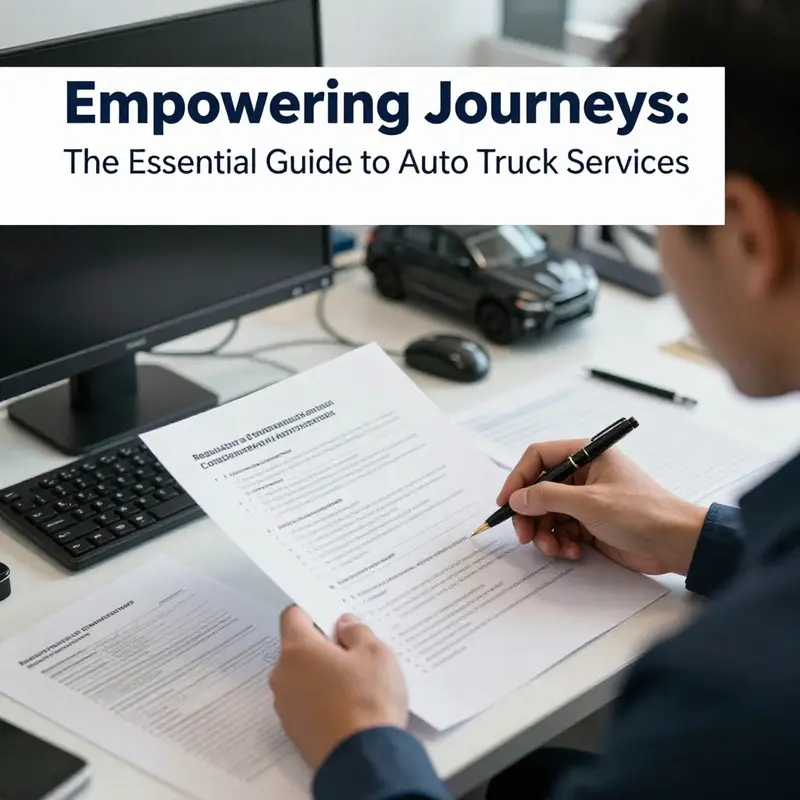
Operational and Compliance Integration
Auto truck service businesses are judged not only by mechanical skill, but also by their ability to meet regulatory and environmental obligations. Modern commercial vehicles are subject to layered rules covering emissions, waste handling, safety inspections, and electrical safety for new drivetrains. For service operators, compliance affects daily workflow, hiring, capital investment, and customer assurance. Treating regulation and sustainability as operational pillars keeps shops lawful, reduces long-term costs, and strengthens their market position.
Emissions requirements are a primary driver of shop practices. Heavy-duty trucks and commercial vans fall under standards that dictate permissible tailpipe pollutants and often require periodic testing or onboard diagnostics verification. Technicians must understand test procedures, emission control components, and tamper indicators. Compliance means detecting faulty diesel particulate filters, catalytic converters, selective catalytic reduction systems, and EGR components quickly. It also means maintaining records that demonstrate repairs and part replacements aligned with regulatory timelines.
Hazardous materials handling is an everyday responsibility that shapes workshop design. Used engine oil, antifreeze, transmission fluid, brake fluid, and aerosol cans are common, and each stream has disposal rules. Proper storage reduces spill risk and simplifies audits. Labeling, secondary containment, and clear transfer protocols protect employees and the environment. Choosing low-toxicity substitutes and remanufactured parts reduces hazardous volumes and may lower disposal fees. Proper manifests and recycling receipts form the documentary backbone for compliance inspections.
The electrification of trucks adds a new layer of environmental and safety obligations. High-voltage batteries require specialized diagnostics, safe isolation procedures, and approved disposal paths. Battery repair and recycling laws vary by jurisdiction, and some require transport manifests or certified recyclers. Charging infrastructure also brings electrical code requirements, permitting, and load management considerations. Shops must coordinate with utilities to manage demand charges and ensure safe installation of chargers and protective equipment.
Telematics and remote diagnostics are transforming how fleets and repair shops approach compliance. Continuous monitoring of engine performance, fuel consumption, and emission control status enables proactive maintenance. Telematics data can demonstrate that a vehicle met operational thresholds before an incident. Remote fault codes help prioritize interventions, reduce idle time, and ensure emission-related faults are addressed promptly. Integrating telematics into repair workflows improves documentation and builds a defensible paper trail for regulators.
Operating across borders or multiple states elevates complexity. Different territories adopt distinct technical regulations and standards. A component or retrofit acceptable in one region may fail certification elsewhere. Service providers that work with fleets serving different markets must map each vehicle to the applicable requirements and adapt their repairs, parts sourcing, and documentation accordingly. Tools such as regulatory assessments for industrial systems reduce uncertainty by listing mandatory requirements for critical components and clarifying testing and marking expectations.
Lifecycle compliance extends responsibilities beyond repair. From vehicle procurement to decommissioning, each phase carries regulatory tasks. Before adding a truck to a fleet, operators should confirm type approvals, emissions certificates, and any retrofit obligations. During operation, scheduled maintenance must include emission control inspections and records that support compliance audits. At retirement, vehicles and batteries need disposal or recycling methods that meet hazardous waste rules. A lifecycle plan helps shops advise fleet customers, creating value through foresight and legal certainty.
Training and certification are essential for reliable compliance. Technicians need qualifications for emission systems, refrigerant handling, and high-voltage safety. Regular training schedules keep staff current with regulatory updates and new technologies. Certification also signals competence to regulators and customers. Investing in training reduces repair errors, minimizes repeat work, and lowers liability exposure.
Workplace systems must align with compliance goals. Standard operating procedures for repairs, waste handling, and emergency response translate rules into practice. Digital recordkeeping improves retrieval and supports audits. A single source of truth for parts data, repair histories, and waste manifests makes compliance defensible. Effective management also uses scheduled reviews to ensure procedures remain current as laws and technologies evolve.
Cost and benefit pressures shape how shops prioritize compliance investments. Some measures require capital outlays—ventilation upgrades, containment systems, certified battery equipment, or new diagnostic tools. Grants, rebates, and fleet incentives can offset these costs. Conversely, poor compliance invites fines, reputational damage, and lost contracts. Long-term, a compliant, sustainable operation often outperforms less disciplined competitors through lower regulatory risk and stronger customer trust.
Sustainability choices can align with regulatory goals and business benefits. Using recycled parts, eco-friendly lubricants, and remanufactured components reduces waste and can extend component life. Retrofit programs that improve fuel efficiency or reduce emissions may qualify for incentives in some regions. Documenting these changes creates marketing advantages and supports fleet owners who must report emissions or sustainability metrics.
Communication plays a vital role in compliance. Clear interactions with fleet managers, parts suppliers, and regulators prevent misunderstandings. When a repair affects emissions systems, advising the customer about long-term maintenance needs helps them stay compliant. Similarly, transparent discussions about disposal receipts or recycling pathways build confidence.
Risk management requires timely monitoring of regulatory developments. Legislative changes, new testing methodologies, or revisions to hazardous waste definitions can alter compliance obligations. Establishing contacts with regulatory bodies or subscribing to industry bulletins helps shops anticipate changes. Building relationships with certified recyclers and accredited testing labs smooths transitions when new requirements arrive.
Finally, integrating an environmental management mindset provides structure for continuous improvement. Adopting formal frameworks helps shops prioritize tasks and measure progress. Environmental systems also help manage supplier relationships, ensuring parts and lubricants meet accepted standards. By treating regulation and environmental care as ongoing responsibilities, service providers can future-proof operations against tightening rules and evolving vehicle technologies.
One practical resource for aligning shop practices with international guidance and environmental management goals is an overview of car and auto repair services available on the site linked here: car and auto repair services overview. For formal standards and comprehensive guidelines that impact environmental management and vehicle emissions, consult the International Organization for Standardization at https://www.iso.org
Final thoughts
In summary, a thorough understanding of auto truck services is essential for various stakeholders in the automotive field. From routine maintenance practices and embracing technological advancements to recognizing market dynamics and adhering to regulations, each chapter sheds light on critical elements that contribute to the efficient management and service of vehicles. Enhanced knowledge not only empowers vehicle owners and businesses but also ensures a sustainable future for the automotive industry.