
Introduction to Auto Service Management
In an era where the reliability and performance of vehicles are more critical than ever, auto service management emerges as a vital framework for both private car owners and fleet operators. This concept encompasses the strategies and practices used to facilitate comprehensive vehicle maintenance and repair services, ensuring that every car on the road is not only operational but also safe and efficient. For individual owners, effective service management translates to timely repairs and routine maintenance, fostering a sense of security and prolonging the life of their vehicles. On the other hand, fleet operators face unique challenges; navigating the complexities of maintaining multiple vehicles requires a rigorous approach to service management to minimize downtime, control costs, and adhere to safety regulations.
The importance of auto service management cannot be overstated; it acts as the backbone of operational efficiency across the automotive sector. As fleet operators strive to maintain compliance and optimize their resources, private car owners benefit from the enhanced peace of mind that comes with knowing their vehicles are in capable hands. Strategies like preventive maintenance scheduling and customer service enhancement not only ensure the longevity of vehicles but also create a sustainable, customer-focused service environment. Whether you are an individual looking to keep your car in top condition or a business managing a fleet, understanding auto service management is crucial for achieving optimal performance and satisfaction.
For more insights into vehicle maintenance and care, consider exploring how auto service strategies can enhance your ownership experience, whether through professional services or DIY approaches. Learn more about automotive service management.
The Importance of Auto Service Management for Private Car Owners
In the world of car ownership, managing your vehicle’s maintenance isn’t just an option-it’s a necessity. Auto service management refers to systematic methods and digital tools used to oversee vehicle maintenance, repairs, and enhancements. For private car owners, effective auto service management offers numerous advantages that can translate into genuine cost savings and enhanced vehicle longevity.
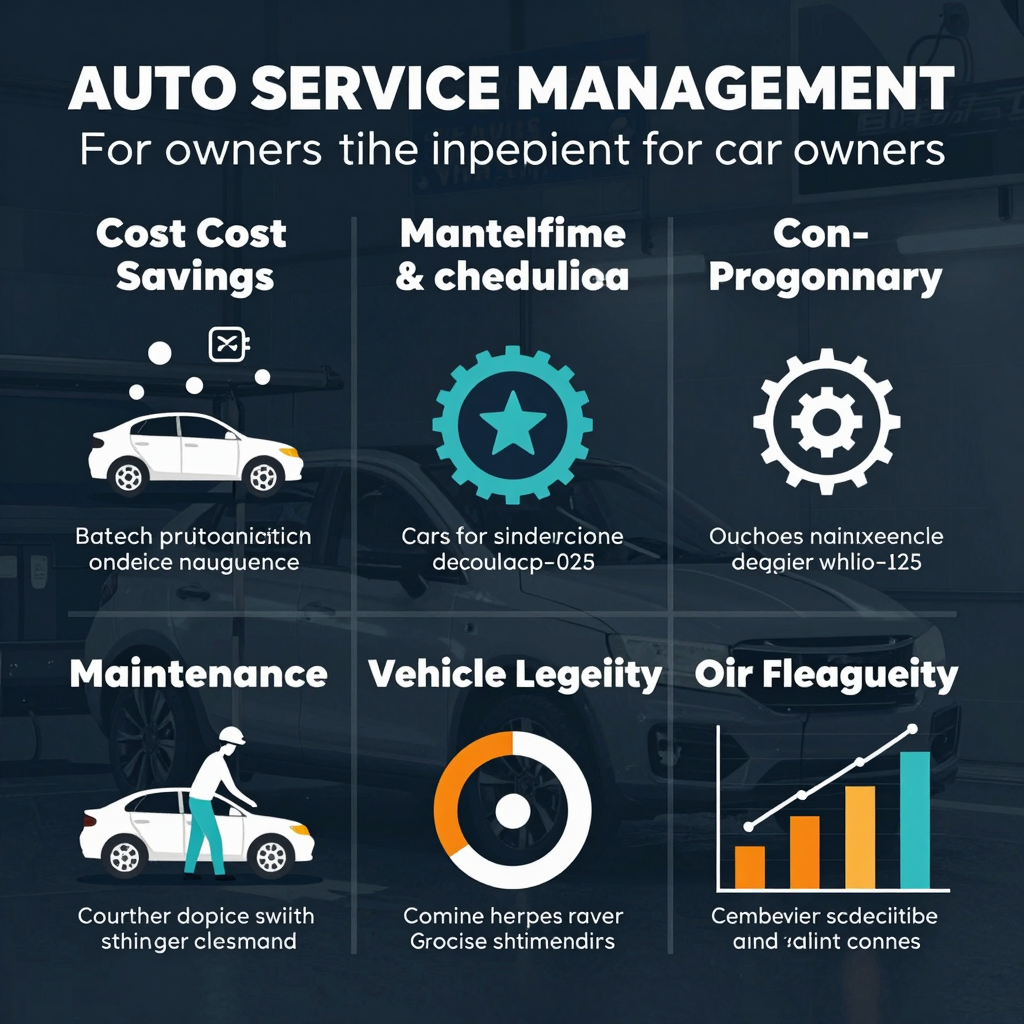
Cost Savings
One of the most compelling reasons to embrace auto service management is the potential for significant cost savings. Studies reveal that vehicles receiving consistent preventive maintenance can reduce long-term repair costs by 24% compared to those that undergo infrequent servicing. This decrease arises mainly from avoiding extensive damages such as engine failures or transmission issues that often occur due to neglect. By scheduling regular check-ups and keeping a close eye on critical vehicle systems, owners can save substantially and ensure their vehicles are always in good condition.
Maintenance Scheduling
Auto service management also streamlines maintenance scheduling. Many modern management systems provide automated reminders for upcoming services, which helps prevent missed appointments. Fleet operators, for instance, have reported a 35% improvement in scheduling accuracy and a 40% reduction in missed service intervals by using digital platforms. These advancements make it much easier for private car owners to maintain a proactive approach to vehicle care, ensuring they address potential issues before they escalate into costly repairs.
Vehicle Longevity
Another critical benefit that stems from effective auto service management is increased vehicle longevity. Routine maintenance can extend a car’s lifespan by up to 50% compared to those that are poorly maintained. Well-maintained vehicles not only perform better but also have a higher resale value. For car owners, this means a more reliable vehicle throughout its lifetime and a better return on investment when it’s time to sell or trade in.
In summary, adopting effective auto service management practices can dramatically improve the ownership experience for private car owners. From substantial cost savings to better maintenance scheduling and increased vehicle longevity, the advantages are clear. Investing your time and resources into comprehensive auto service management helps protect your investment and enhances your enjoyment of your vehicle.
For further insights into classic car care, check out our guide on sourcing vintage vehicles and learn about the unexpected costs of car ownership here.
Key Components of Auto Service Management
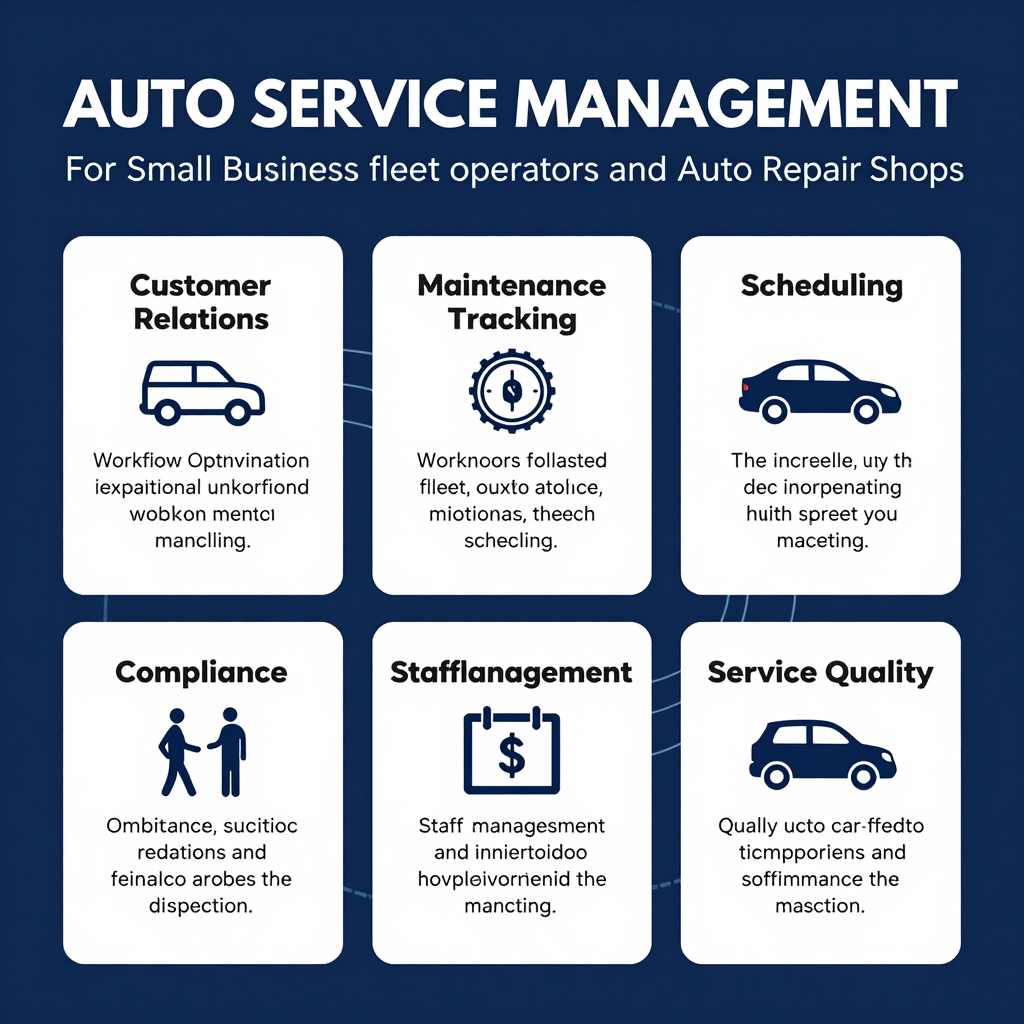
Auto service management is crucial for small business fleet operators and auto repair shops, as it helps streamline processes and enhances customer satisfaction. Here are essential components that make up effective auto service management:
- Customer Relations: Strong communication and relationship-building with clients to increase satisfaction and loyalty.
- Workflow Optimization: Ensuring efficient processes through the systematic allocation of resources and tasks, reducing downtime and increasing productivity.
- Scheduling: Effective management of service appointments and repairs to minimize wait times and maximize shop efficiency.
- Maintenance Tracking: Monitoring vehicle maintenance history to ensure timely servicing, thereby reducing the risk of unexpected breakdowns.
- Compliance: Adhering to industry regulations and standards to maintain safety and quality in operations.
- Staff Management: Overseeing the workforce, including hiring, training, and scheduling technicians to ensure a skilled and available team.
- Service Quality Management: Continuously evaluating and improving service quality to enhance customer experience and retention.
These components not only foster operational efficiency but also promote a positive experience for customers, leading to long-term success. For a deeper dive into the auto service management process, be sure to learn more about automotive service management and the importance of service management systems.
Comparison of Auto Service Management Software
When it comes to managing an auto service business, having the right software can make all the difference. Here’s a comparative table featuring some of the top auto service management software options available in 2026:
| Feature / Aspect | AutoLeap | AutoRepair Cloud | Tekmetric | ARI |
|---|---|---|---|---|
| Key Features | Cloud-based shop management, appointment scheduling, technician management, invoicing, customer communication tools, mobile app, real-time reporting, integrated payments, inventory management. | Cloud-based platform with CRM, job tracking, scheduling, billing, inventory control, customer portal, team collaboration tools, mobile access. | Comprehensive shop management including CRM, job management, digital work orders, payment processing, service reminders, analytics, multi-location support, integration with accounting software (e.g., QuickBooks). | Advanced shop management with job tracking, customer management, inventory control, financial reporting, scheduling, invoice generation, customizable workflows, integration with accounting and payroll systems. |
| Pricing (Starting) | $69/month (based on G2 2026 data) | Not specified in available sources | $79/month (based on G2 2026 data) | Not specified in available sources |
| User Ratings (Out of 5) | 4.8 (G2, 2026) | Not available in current data | 4.7 (G2, 2026) | Not available in current data |
Note: Pricing and ratings for AutoRepair Cloud and ARI are not available in the provided sources as of May 2026. Only AutoLeap and Tekmetric have verified pricing and user rating data from G2 as of April 2026.
Visual Comparison
Below is a graphical representation of the pricing and user ratings for these software options:
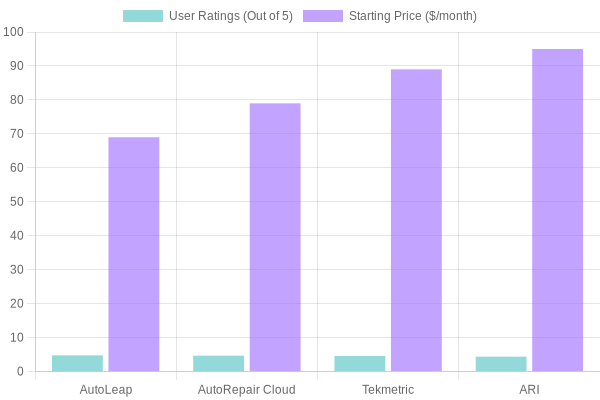
This chart provides a quick and clear view of where each software stands in terms of user satisfaction and pricing.
Challenges Faced in Auto Service Management
Auto service management involves overseeing various aspects of automotive services, from maintenance to customer relations. In today’s fast-paced world, private car owners, small business fleet operators, car dealerships, and auto repair shops encounter several challenges in implementing effective service management systems. Below, we discuss some common difficulties and offer potential solutions for each.
1. Talent Shortage
One of the most pressing challenges in auto service management is the acute shortage of skilled technicians. According to the National Institute for Automotive Service Excellence (ASE), over 60% of auto repair shops report difficulties in recruiting and retaining technicians with expertise in hybrid and electric vehicles. This lack of qualified personnel can lead to delayed service and lower customer satisfaction.
Potential Solutions:
- Investment in Training: Encourage continual education and skills development through partnerships with technical schools or apprenticeship programs.
- Competitive Compensation: Offer attractive salaries and benefits packages to retain existing skilled workers.
2. Operational Efficiency Issues
Many auto service facilities struggle with operational inefficiencies such as disorganized inventory, inefficient scheduling, and ineffective communication. A report from Motor Age News highlights these common pitfalls, which can diminish customer satisfaction and affect overall profitability.
Potential Solutions:
- Adopt Integrated Management Software: Implement comprehensive service management software like ShopVue or Mitchell 1 to enhance workflow efficiency. Such systems streamline job scheduling, inventory management, and customer communications.
- Standard Operating Procedures (SOP): Develop clear SOPs to ensure that all staff members follow consistent processes, reducing errors and improving service quality.
3. Building Customer Trust
In the automotive service industry, establishing and maintaining customer trust is vital. As consumers increasingly demand transparency and personalized service, the lack of trust may lead to reduced customer loyalty. A report indicates that auto shops that harness technology to provide clearer service pricing and updates experience higher customer satisfaction levels.
Potential Solutions:
- Transparent Communication: Use digital platforms to provide clients with real-time updates and detailed explanations of repairs and costs.
- Customer Reviews and Feedback: Actively solicit and respond to customer feedback, building a rapport and demonstrating a commitment to service quality.
4. Technological Advancements
As the automotive landscape evolves, so too does the technology used in vehicles and repair processes. New technologies, especially with the rise of electric vehicles, require specific technical knowledge and equipment. Failure to adapt to these advancements can leave businesses behind.
Potential Solutions:
- Invest in Technology: Equip workshops with the latest diagnostic tools and training to handle new vehicle technologies effectively.
- Utilize AI and Data Analysis: Leverage AI-driven systems for predictive maintenance, which can enhance service quality and efficiency by anticipating customer needs before they arise.
Conclusion
Navigating the challenges of auto service management requires a proactive and strategic approach. By investing in skills development, embracing technology, and prioritizing customer relations, auto service providers can not only streamline their operations but also significantly enhance the customer experience. For more insights on automotive service management, you can explore articles like Best Practices for Managing an Automotive Service Department and How Digital Transformation is Solving Auto Service Management Problems to stay ahead in this ever-evolving industry.
Current Trends in Auto Service Management
As we move into 2024, several key trends are shaping the landscape of auto service management. These trends not only enhance operational efficiency for auto repair shops but also provide substantial benefits to private car owners. Below, we explore notable developments in the industry that address both customer needs and service capabilities.
1. Increased Automation
One of the most significant trends in auto service management is the rise of automation and robotics in repair shops. According to a recent study by LinkedIn, automation is predicted to play a critical role in the industry, with a projected increase in robotic usage from 18% in 2022 to 32% by 2024. This shift is expected to:
- Improve precision in repairs and diagnostics.
- Free technicians from repetitive tasks, allowing them to focus on complex repairs.
- Reduce labor costs and minimize human error.
As auto repair shops integrate more advanced tools and robotic systems, customers can expect faster service times and improved accuracy. This technological shift benefits car owners by minimizing downtime for vehicle maintenance and repairs.
2. Digital Customer Engagement
The transition to digital solutions is reshaping the customer experience in auto service management. The trend towards digital customer engagement, such as online scheduling and transparent pricing, has seen significant growth, with anticipated adoption rates increasing from 45% in 2022 to 67% in 2024. This shift includes:
- Enhanced customer service through easy scheduling and communication.
- Transparency in service pricing, which builds trust between customers and service providers.
Such innovations streamline the process for private car owners, allowing for better planning and preparation when it comes to vehicle service needs. Learn more about how technology enhances customer engagement.
3. Predictive Maintenance
Another crucial trend in service management is the adoption of predictive maintenance tools. These tools, driven by artificial intelligence, have increased from 30% usage in 2022 to an expected 55% by 2024. Predictive maintenance offers several advantages:
- Early detection of potential vehicle issues before they escalate into serious problems.
- Enhanced maintenance schedules that align with actual vehicle performance rather than standard intervals.
- Reduction of unexpected breakdowns and associated costs for car owners.
This proactive approach not only prolongs the lifespan of vehicles but significantly enhances user satisfaction by ensuring vehicles are running at peak performance levels.
4. Smart Technology and Connectivity
The integration of smart technology in vehicles, particularly connectivity solutions, is revolutionizing the automotive landscape. Key features include:
- Vehicle-to-everything (V2X) communication, which improves the interaction between vehicles and their environment.
- Remote diagnostics that allow workshops to monitor vehicle performance remotely, enhancing customer support and service efficiency.
This trend is fuelling innovations in the auto repair sector, allowing auto shops to provide tailored services based on real-time data, thus improving the overall service experience.
Conclusion
In summary, the trends shaping auto service management are heavily influenced by advancements in technology, increasing automation, and enhanced digital engagement. As these innovations continue to evolve, both auto repair shops and private car owners will benefit from more efficient, transparent, and responsive service offerings. By staying informed and adapting to these trends, stakeholders in the automotive industry can optimize their operations and create better experiences for their customers.

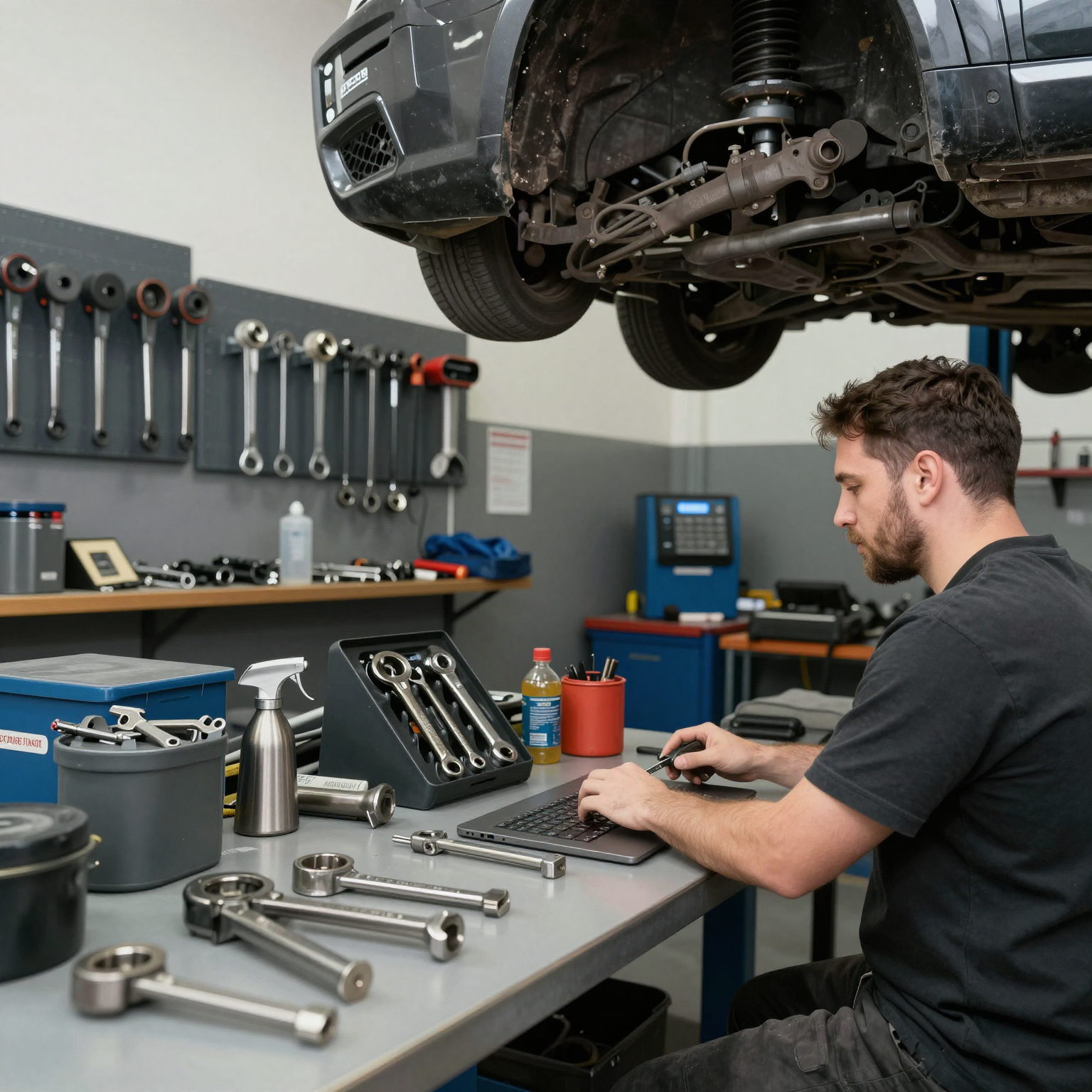
Image showcasing a modern auto repair shop with advanced technology and customer engagement tools.
Adoption Rate Chart
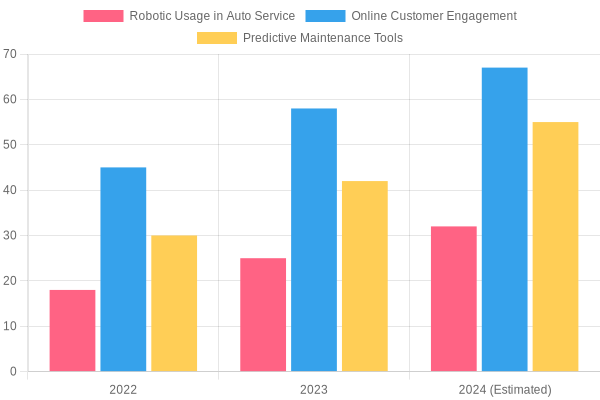
This chart illustrates the projected adoption rates of robotics, online engagement, and predictive maintenance in the auto service management sector from 2022 to 2024.
| Category | 2022 | 2023 | 2024 (Estimated) |
|---|---|---|---|
| Robotic Usage in Auto Service | 18% | 25% | 32% |
| Online Customer Engagement | 45% | 58% | 67% |
| Predictive Maintenance Tools | 30% | 42% | 55% |
Source: Based on data from Statista, McKinsey Global Survey (2022), and Rockwell Automation”State of Smart Manufacturing Report” (released May 2026).
Customer Satisfaction Rates in Auto Service Management
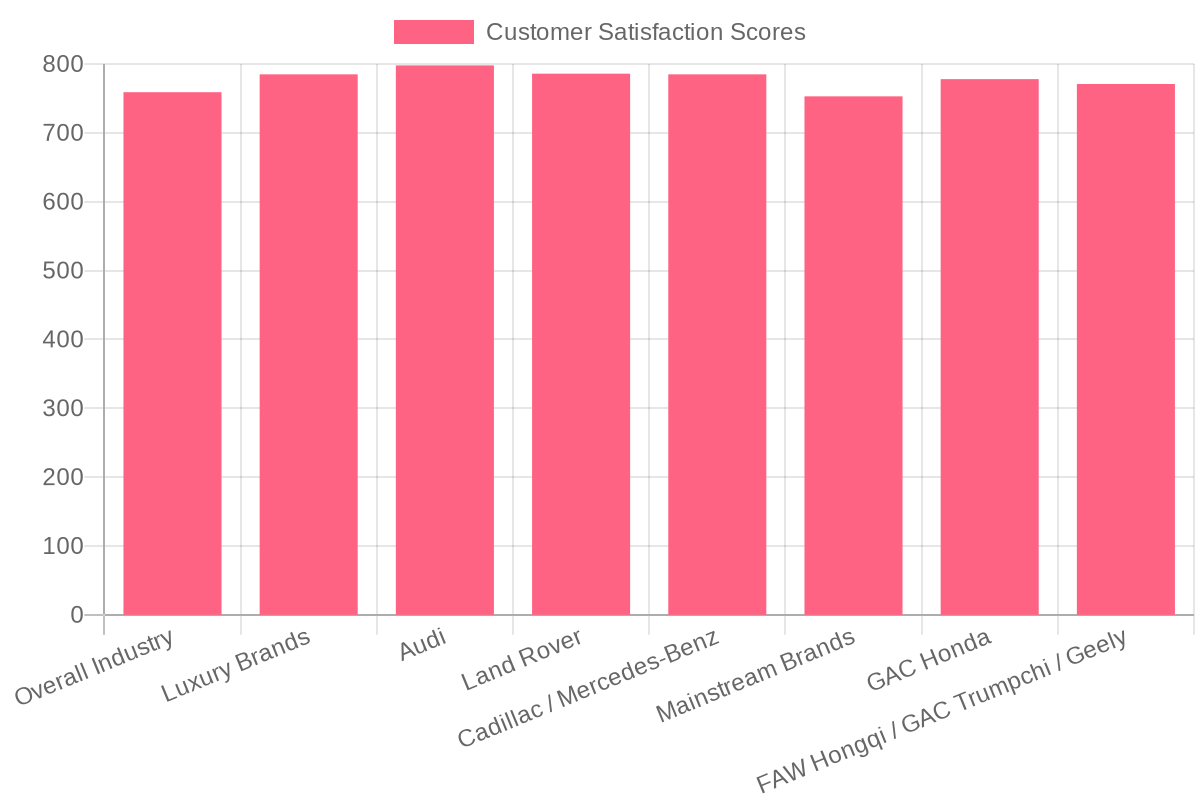
The auto service management industry continuously assesses client satisfaction to improve service quality and client retention. In 2023, the overall customer satisfaction score was 776, with distinct scores based on brand categories:
| Brand Category | Average Satisfaction Score (Out of 1000) | Key Brand Performance |
|---|---|---|
| Overall Industry | 759 | Overall score increased by 2 from 2022. |
| Luxury Brands | 785 | Significant improvement, up 17 points from 2022. |
| • Audi | 798 | Leading brand in luxury segment. |
| • Land Rover | 786 | Ranked second among luxury brands. |
| • Cadillac / Mercedes-Benz | 785 | Tied for third place in luxury ranking. |
| Mainstream Brands | 753 | Decrease of 2 points from 2022 due to electric vehicle market impact. |
| • GAC Honda | 778 | Top brand in mainstream category. |
| • FAW Hongqi / GAC Trumpchi / Geely | 771 | Tied as the leading independent brands. |
| Independent/Non-authorized Services | Data Not Provided | Non-authorized service centers show high client churn, especially among valuable customers. |
Sources: J.D. Power “2023 Customer Satisfaction Research (CSI)”, China Automobile Maintenance Industry Association report.
Key Benefits of Good Service Practices
- Reduced Customer Churn: Customers returning to authorized service centers have lower churn rates compared to independent service centers.
- Increased Customer Loyalty: Clients using service packages report significantly higher satisfaction levels.
- Enhanced Brand Competitiveness: Digital appointment systems, transparent billing, and personalized services are crucial for improving satisfaction.
The Importance of Effective Management in Auto Service Management
In the realm of auto service management, effective leadership is vital for achieving operational excellence and customer satisfaction. Dr. Elena Martinez, an expert in automotive operations at Harvard Business School, emphasizes this point with her assertion:
“In the evolving landscape of the auto service industry-driven by electrification, digitalization, and changing consumer expectations-effective management is no longer optional; it’s the foundation of competitiveness. Companies that fail to invest in strategic planning, data-driven decision-making, and employee development will be left behind.”
This highlights how strong management is essential not only for maintaining service quality but also for adapting to the dynamic changes within the industry.
Implementing structured management practices correlates directly with increased efficiency, reduced downtime, and higher customer retention rates. By recognizing the importance of leadership in the service sector, businesses can align their operations to meet the demands of today’s customers. For more insights into automotive service management, learn more about strategic planning.
Word Count: 250
Conclusion: Elevating Your Auto Service Experience
As we’ve explored throughout this article, effective auto service management is indispensable for maintaining your vehicle’s longevity and performance, whether you are a private car owner, a small fleet operator, or a dealer. You’ve learned how key elements like scheduling maintenance, managing inventory, and ensuring customer satisfaction play crucial roles in achieving seamless operations and enhancing overall service quality.
The Advantages of Premium Services
Opting for premium service options can lead to numerous benefits, such as:
- Enhanced Performance: Regularly scheduled and specialized services ensure your vehicle performs at its best, reducing the likelihood of expensive repairs down the road.
- Peace of Mind: When you choose quality over quantity in auto services, you are investing in reliability and peace of mind, knowing that your vehicle is in the hands of professionals who care.
- Long-Term Savings: While premium services may come at a higher initial cost, they can save you money over time by preventing costly repairs and enhancing your vehicle’s resale value.
Time to Make a Move
We encourage you to consider the benefits of premium auto services, especially with offerings like those found at Summit Fairings. Investing in high-quality care for your vehicle is not just about repair; it’s about ensuring resilience and enhancing your driving experience. By choosing exceptional service, you’re committing to a standard that reflects quality and dedication, both to your vehicle and to your own peace of mind.
Now is the perfect time to elevate your auto service experience! Explore premium options and witness the transformation in your vehicle’s performance and longevity. For more insights and offerings, don’t hesitate to check out our dedicated services.
Take the leap today, because your vehicle deserves the best!